


Demolition of Historical Temple in Pakistan’s Punjab Provokes Calls for Reconstruction
The CSR Journal Magazine

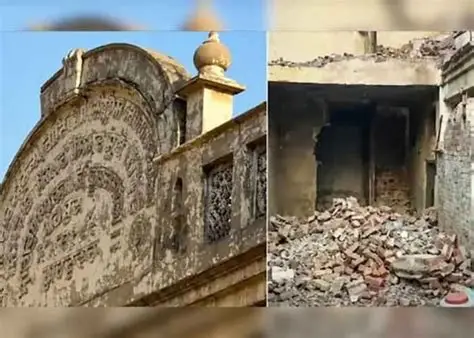
The recent demolition of a Hindu temple in Punjab province, Pakistan, which is believed to be over 100 years old, has sparked significant controversy. Reports indicate that the temple, located in Siraj village of Narowal district, approximately 130 km from Lahore, was allegedly razed to facilitate the merging of its land with a madrassa. Local residents and minority organisations have expressed outrage, contending that the demolition was orchestrated by a group of religious extremists.

According to the Pakistan Masiha Millat Party, the temple was destroyed by adherents of the banned Tehreek-i-Labbaik Pakistan on August 21. The local political faction has called upon the Punjab government to take action against those responsible and to ensure that the temple is rebuilt.

While government officials have stated that heavy rains caused the temple’s structural failure, community members challenge this assertion. They claim it was a premeditated act aimed at appropriating the land for adjacent seminary expansion.

Appeals for Action and Accountability

Aslam Parvez Sahotra, chairman of the Pakistan Masiha Millat Party, reported that he met the Additional Home Secretary of Punjab on August 28 to submit a formal request for action against the alleged perpetrators. He asserts that critical materials, including metal fittings and bricks from the temple’s structure, were removed shortly after the demolition, further validating claims of coordinated misconduct.

Sahotra also revealed that the Evacuee Trust Property Board had previously leased the land adjacent to the temple for a madrassa, but this arrangement was terminated due to unpaid rent and inadequacy of its intended use. He indicated that multiple individuals unlawfully occupied portions of the temple property, exacerbating the already precarious situation facing the site.

A report from the revenue department has implicated specific illegal occupants, which raises questions about the failure of the local authorities to enforce a previous order issued on January 29, 2026, to evict these occupants and secure the area. Sahotra emphasised that this order remained unimplemented, calling into question the adequacy of protective measures afforded to religious sites.

Community Response and Concerns

The Hindu community, represented by leaders like Rattan Lal, has condemned the demolition and demanded the restoration of the historic temple. Lal alleged that both the district administration and the Evacuee Trust Property Board neglected their responsibilities, ultimately contributing to the loss of the structure.

In a response to the exigency surrounding the temple, Rana Iftikhar, a senior official of the Evacuee Trust Property Board, acknowledged the age of the structure and reiterated government claims that it collapsed due to environmental forces rather than human intervention. The future of the temple remains uncertain, with discussions on potential restoration still in the pipeline.

This incident has triggered a wider dialogue regarding the treatment of religious sites belonging to minority communities in Pakistan, with calls for more comprehensive measures to protect such heritage. As the investigation unfolds, the contrasting narratives surrounding the temple’s demolition continue to resonate within local discussions.

Long or Short, get news the way you like. No ads. No redirections. Download Newspin and Stay Alert, The CSR Journal Mobile app, for fast, crisp, clean updates!

App Store –  https://apps.apple.com/in/app/newspin/id6746449540 

Google Play Store – https://play.google.com/store/apps/details?id=com.inventifweb.newspin&pcampaignid=web_share

Latest News

Popular Videos
