


Delhi Introduces Solar Air Purifying Poles at Rajghat to Combat Pollution
The CSR Journal Magazine

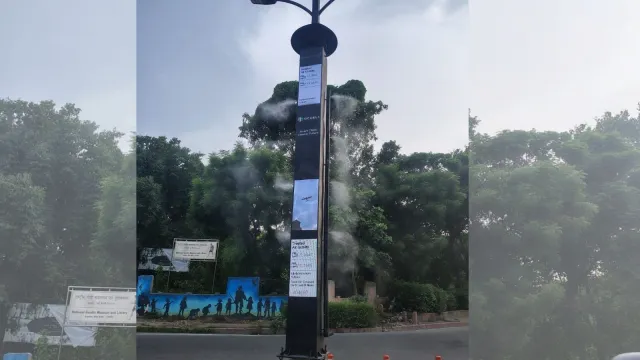
In a bid to address the persistent air pollution in Delhi, climate engineering firm Axelone has initiated a pilot project to deploy multi-functional climate environmental nodes at the historically significant Rajghat. According to Sanjay Kumara, the Chief Executive Officer of Axelone, the project has seen the installation of 23 solar-powered smart poles over the past four weeks. These advanced poles are designed to enhance urban air quality by integrating advanced technology with traditional street lighting.

Features of the Smart Poles

The newly installed smart poles incorporate a range of innovative functions. Each pole serves as a four-in-one environmental node, including direct air capture filtration capabilities. This technology processes ambient air and emits purified air, addressing significant pollutants. Additionally, the poles are equipped with a misting system aimed at reducing particulate matter, specifically PM10 and PM2.5, which are major contributors to air quality issues.

Beyond air purification, the smart poles boast security surveillance cameras, providing enhanced safety features for the area. They also offer public Wi-Fi access, significantly improving connectivity for visitors and residents alike. Furthermore, real-time environmental sensors provide updated pollution metrics every five minutes, ensuring an ongoing assessment of air quality in the vicinity.

Based on predictive mathematical airflow models, it is estimated that each smart pole can supply clean air for up to two thousand individuals daily. This feature highlights the poles’ potential impact on public health amid increasing environmental concerns in urban settings. The strategic placement of the poles in high-traffic areas maximises their effectiveness in improving air quality.

Goals of the Project

The overarching aim of this initiative is to transition towards a net-zero energy design by utilising renewable power sources. By harnessing solar energy, Axelone’s project seeks to not only mitigate air pollution but also advocate for sustainable urban development practices. This dual approach addresses both current environmental challenges and long-term sustainability goals.

Axelone’s efforts are part of a broader movement to enhance air quality in Delhi, a city known for its severe pollution levels. The introduction of these smart poles is regarded as a timely intervention against escalating air quality concerns, which have seen various public health implications. As cities worldwide increasingly grapple with the consequences of environmental degradation, initiatives like this are becoming crucial in setting precedents for innovative solutions.

In summary, the deployment of multi-functional solar air purifying poles at Rajghat represents a significant step toward combating pollution in Delhi. With integrated technology addressing both air quality and safety, these smart poles could serve as a model for future urban improvements. This pilot project illustrates how cities can leverage technology in their fight against pollution, ensuring better health outcomes for their inhabitants.

Long or Short, get news the way you like. No ads. No redirections. Download Newspin and Stay Alert, The CSR Journal Mobile app, for fast, crisp, clean updates!

App Store –  https://apps.apple.com/in/app/newspin/id6746449540 

Google Play Store – https://play.google.com/store/apps/details?id=com.inventifweb.newspin&pcampaignid=web_share

Latest News

Popular Videos
