


Blind Fish Found in Assam Wells: New Species ‘Gitchak Nakana’ Stuns Researchers
The CSR Journal Magazine

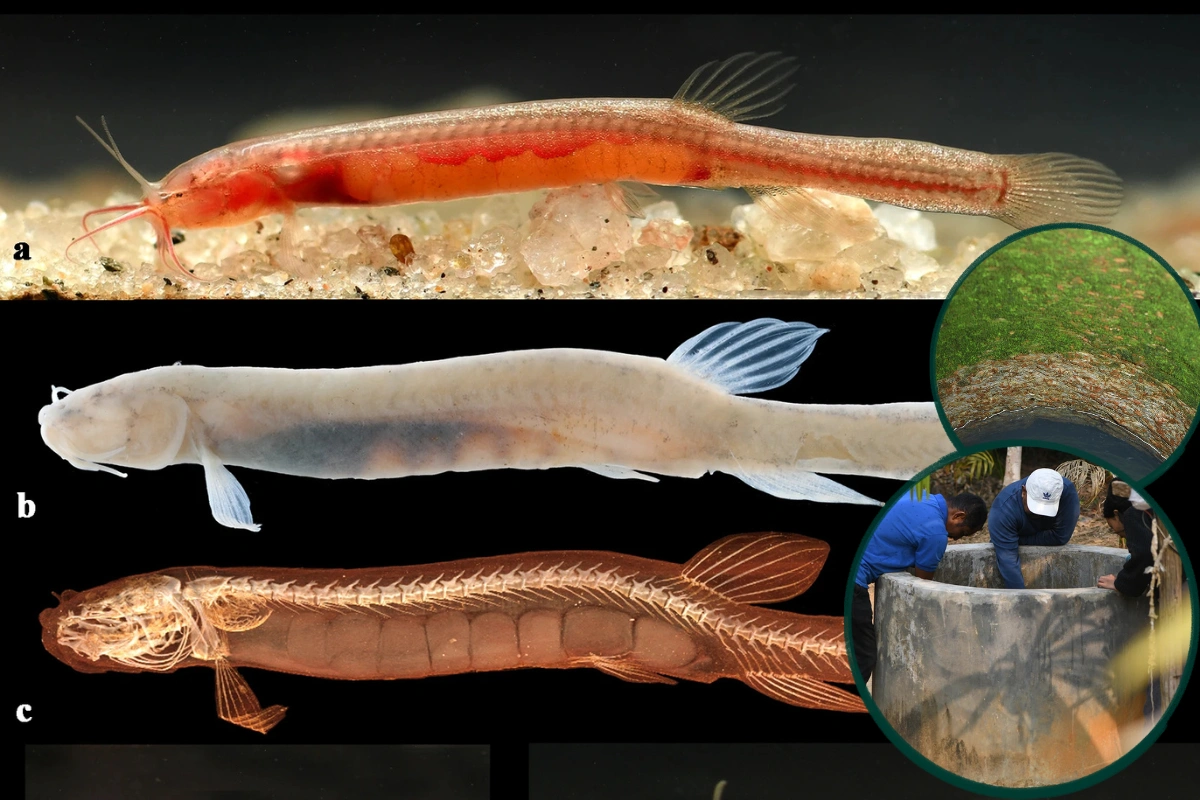
In a remarkable finding that alters the perception of India’s hidden biodiversity, researchers have uncovered a distinctive fish species in the aquifers of Goalpara district, Assam. This tiny, blind, blood-red fish, named Gitchak nakana, is notably the first groundwater-dwelling fish documented in Northeast India. The creature was discovered not during a targeted expedition, but rather by chance, surfacing from a concrete-lined well in a local village near the Shillong Plateau.

Local villagers, while drawing water from the well, unintentionally brought the fish to the surface, presenting scientists with a unique opportunity to examine a lifeform that usually resides in the depths of the earth. This unexpected event has provided researchers a glimpse into a previously unstudied aspect of underground ecosystems.

Characteristics and Anatomy of Gitchak Nakana

The Gitchak nakana measures approximately 20 millimetres in length, categorising it as a miniature species. Its design is striking yet unconventional: it possesses no eyes and lacks pigmentation, with its translucent body allowing visibility of its blood vessels and internal organs, resulting in a vivid red appearance. Such features are well-suited to its environment, where light is absent, and vision is rendered ineffective.

Researchers have expressed astonishment at the fish’s anatomical structure. Unlike the majority of fish species, Gitchak nakana does not have a protective bony roof over its skull, meaning its brain is merely shielded by skin. Moreover, its spine has an unusual construction, characterised by elongated neck bones that curve upwards. In total darkness, the fish navigates its surroundings using highly sensitive, whisker-like barbels equipped with taste buds, which assist in detecting food and movement in the water.

A further intriguing aspect of Gitchak nakana is its reproductive strategy. Rather than laying numerous small eggs, the species produces only a few large eggs, which is believed to enhance the offspring’s survival in the nutrient-scarce conditions of subterranean environments. The name “nakana” is derived from the Garo language, with “na-tok” meaning fish and “kana” denoting blind, reflecting its unique characteristics.

Significance of the Discovery and Future Implications

This exceptional find sheds light on the existence of phreatobitic fishes, which are exceedingly rare, accounting for less than one per cent of all known fish species globally. While similar fish have been discovered in caves in Meghalaya, encountering such a species within the sandy, waterlogged aquifers of the Brahmaputra valley is quite unusual.

Genetic investigations indicate that Gitchak nakana diverged from its relatives over 20 million years ago, evolving independently in isolation below the earth’s surface. This revelation underscores the extent of undiscovered biodiversity within India and highlights how even ordinary village wells can serve as gateways to uncovering ancient secrets formed over millions of years.

The discovery has drawn attention from both scientific communities and local authorities. Assam’s Chief Minister, Himanta Biswa Sarma, remarked on the finding as a “fascinating” illustration of the state’s rich and largely unexplored biodiversity, emphasising the collaborative efforts between Indian and German institutions in this significant research. This exploration encourages further studies in similar environments, potentially leading to more discoveries that could augment the understanding of subaqueous ecosystems.

Long or Short, get news the way you like. No ads. No redirections. Download Newspin and Stay Alert, The CSR Journal Mobile app, for fast, crisp, clean updates!

App Store –  https://apps.apple.com/in/app/newspin/id6746449540 

Google Play Store – https://play.google.com/store/apps/details?id=com.inventifweb.newspin&pcampaignid=web_share

Latest News

Popular Videos
