


Astronomers Discover Thin Atmosphere on Distant Icy World 2002 XV93, Challenging Space Theories
The CSR Journal Magazine

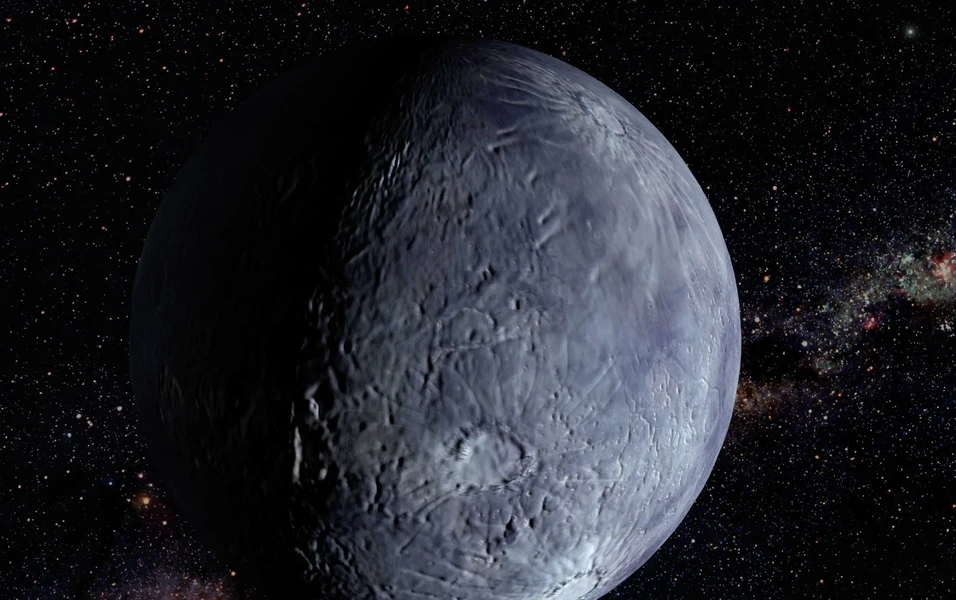
A small icy rock located far beyond Pluto is reportedly holding onto a thin layer of atmosphere, which has caught the attention of astronomers and scientists. The object, designated 2002 XV93, measures approximately 500 kilometres in diameter. For comparison, Pluto is nearly five times larger than this distant body. If confirmed, this finding may challenge existing theories about the atmospheric capabilities of small celestial bodies located in the outer solar system.

Typically, trans-Neptunian objects experience extreme cold and possess weak surface gravity, factors that make it unlikely for them to retain atmospheres. This anomaly raises interesting questions about the characteristics of 2002 XV93, suggesting that it may exhibit properties not observed in its neighbouring celestial objects.

Observations Leading to Discovery

The potential presence of an atmosphere on 2002 XV93 was revealed through a fortuitous astronomical event. On January 10, 2024, the rock passed directly in front of a star as viewed from Japan. Astronomers were keenly observing the star during this event, as the way starlight interacts with an object can provide insights into its atmospheric conditions. If the starlight completely dims, it indicates solid rock; however, a gradual dimming suggests the existence of gaseous layers filtering the light.

A team led by Ko Arimatsu at the NAOJ Ishigakijima Astronomical Observatory, comprising both professional and amateur astronomers, monitored the star closely during the event. Their data indicated a steady decrease in light, consistent with an atmosphere present around 2002 XV93, as the light did not completely vanish. This incremental dimming has sparked further investigation into the celestial body and its characteristics.

As a result of this observation, preliminary findings imply that the small world may hold geophysical secrets that warrant further exploration and analysis.

Questions About the Formation of the Atmosphere

If the discovery of the atmosphere is validated, questions will arise regarding its origin and longevity. Calculations suggest that the atmosphere surrounding 2002 XV93 may persist for less than 1,000 years unless it is replenished, indicating that it must have been created or revitalised recently. This raises the possibility of a significant geological or cosmic event occurring on or near the object.

Scientists have proposed potential scenarios for how the atmosphere could have formed. One possibility includes volcanic-like eruptions, which may have propelled frozen gases from the interior of the object. Another scenario involves a comet collision that could release atmospheric gases. Either option suggests that these overlooked small worlds might be more dynamic and geologically active than previously understood.

Upcoming observational studies will be pivotal in determining the mechanisms behind the presence of the atmosphere on 2002 XV93. Until more evidence comes to light, the object remains an intriguing subject of study, potentially reshaping our comprehension of similar celestial bodies within the solar system.

Long or Short, get news the way you like. No ads. No redirections. Download Newspin and Stay Alert, The CSR Journal Mobile app, for fast, crisp, clean updates!

App Store –  https://apps.apple.com/in/app/newspin/id6746449540 

Google Play Store – https://play.google.com/store/apps/details?id=com.inventifweb.newspin&pcampaignid=web_share

Latest News

Popular Videos
