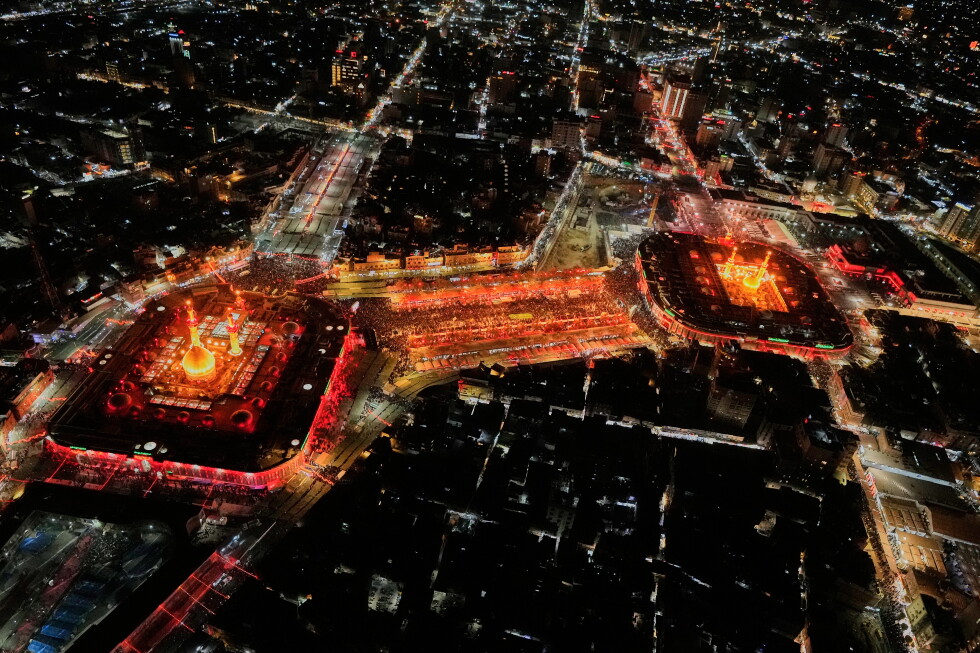
Aerial photo shows Shiite pilgrims gathering between the illuminated holy shrine of Imam Hussein and the holy shrine of Imam Abbas, ahead for Arbaeen, the annual Shiite commemoration marking 40 days after Ashura, in Karbala, Iraq, late Sunday, Aug. 2, 2026. (AP Photo/Hadi Mizban)
The annual Arbaeen pilgrimage attracted over 22 million Shiite Muslims to Karbala, Iraq, on Tuesday. This event drew participants from various regions, making it one of the largest religious gatherings globally. The pilgrimage commemorates the martyrdom of Imam Hussein, the grandson of the Prophet Muhammad, and is held 40 days after Ashoura, marking the significant Battle of Karbala in 680 AD. The event unfolded in a politically charged atmosphere, with escalating regional tensions and concerns about further conflicts in the ongoing US-Iran situation.
Iraqi authorities reported that around five million of the attendees were foreign visitors, with the remainder consisting of citizens from various Iraqi provinces. The impressive turnout highlights the significance of Arbaeen in attracting devotees who make the journey to honour religious traditions, despite the notable economic challenges currently faced by Iraq.
Karbala Governor Nasseif Jassim al-Khattabi confirmed the high number of participants, indicative of the pilgrimage’s lasting importance in the Shiite Islamic faith. The event’s timing coincides with rising economic pressures on Iraq, particularly in light of recent disruptions to oil exports that have affected the country’s earnings.
Impact of Regional Tensions
The Arbaeen pilgrimage occurred amid heightened regional tensions, particularly concerning Iran and the US. However, foreign visitor numbers, excluding Iranian nationals, were reportedly lower compared to previous years. Observers noted a predominance of Iranian flags along the pilgrimage route from Najaf to Karbala, indicating a shift in the demographic composition of attendees. Local pilgrims expressed concerns over the impact of ongoing regional conflicts on the participation of Arab and foreign visitors.
Eyewitness accounts from attendees reflected on the reduced visibility of flags representing European or other Islamic nations. This observation points towards a broader sentiment among pilgrims, who noted that geopolitical factors may have discouraged international visitors from making the journey this year.
Despite the challenges, volunteer groups extended numerous services along the pilgrimage route, providing food, water, and medical assistance. These efforts exemplify the spirit of hospitality and community support, which characterise the Arbaeen festivities.
Broader Context and Local Observations
In addition to the large turnout in Karbala, events in Iran echoed the sentiments of the pilgrimage. Many Shiite Muslims unable to travel held their own Arbaeen observances domestically, some of which carried political undertones. In Tehran, thousands rallied toward a Shiite shrine, expressing their grievances and calling for measures against perceived aggressions from the US and Israel.
These observances included vocal demonstrations that highlighted the political climate in Iran, showcasing the intersection of religious devotion and current affairs. Reports indicated similar gatherings occurred in various Iranian urban centres, underlining the regional significance of the occasion.
The pilgrimage in Karbala not only gathered millions but also did so against a backdrop of significant socio-political challenges both in Iraq and Iran. The ongoing tension, economic strains, and calls for disarmament of militia groups highlighted the complex repercussions of this historic pilgrimage within the modern geopolitical landscape.
Long or Short, get news the way you like. No ads. No redirections. Download Newspin and Stay Alert, The CSR Journal Mobile app, for fast, crisp, clean updates!
The United Arab Emirates has decided to halt all trade, commercial dealings, and financial transactions with Iran indefinitely, following concerns related to regional escalations....