


Active Fault Under China’s Brahmaputra Dam Raises New Safety Concerns
The CSR Journal Magazine

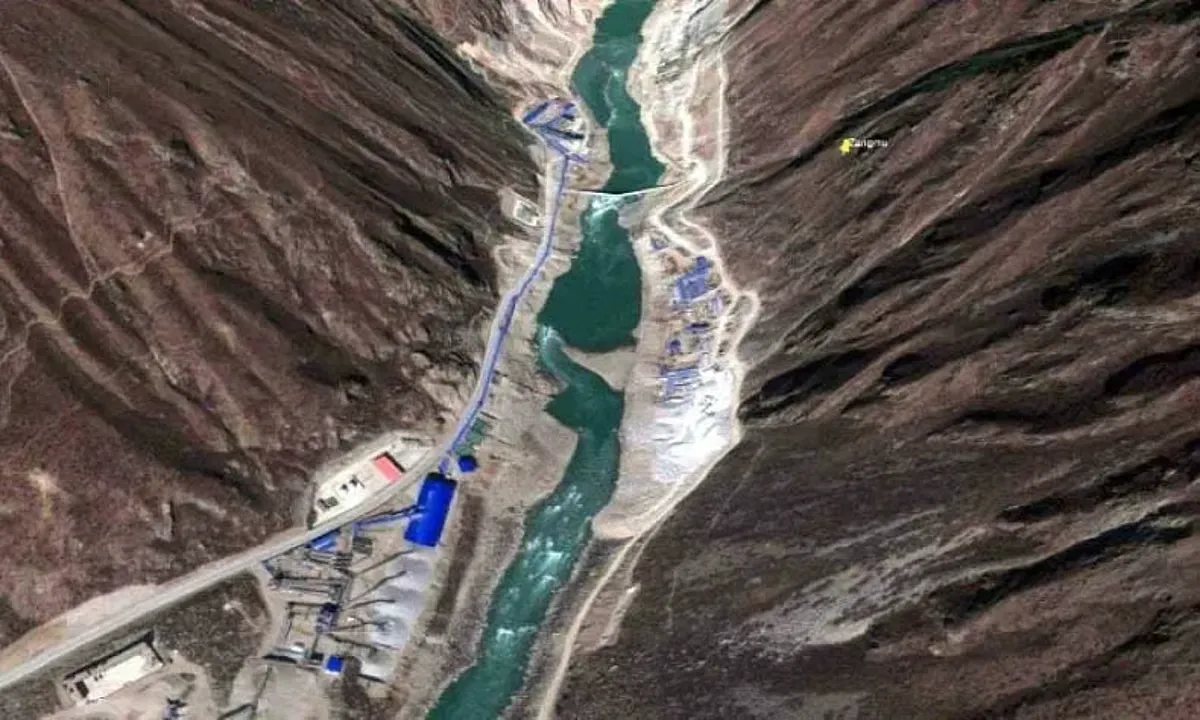
A recent study conducted by Chinese geologists has indicated that an active fault line beneath China’s ambitious hydropower project on the Brahmaputra River, known as the Yarlung Tsangpo, may compromise the dam’s structural stability. This has sparked renewed scrutiny regarding the assurances made by Beijing about the project’s safety and its capability to mitigate disasters in the region. The dam is located in Tibet, near the Indian border in Arunachal Pradesh.

In July 2022, China commenced construction on the Yarlung Tsangpo Dam, estimated to cost approximately USD 167.8 billion. Upon completion, it is projected to generate over 300 billion kWh of electricity annually, catering to the energy requirements of more than 300 million individuals. The construction site is situated in a challenging Himalayan gorge where the river takes a sharp turn before flowing into India and subsequently into Bangladesh, posing significant engineering difficulties due to its location along a tectonic plate boundary that is prone to earthquakes.

Findings From Geological Study

The Hong Kong-based publication South China Morning Post reported on the findings, revealing that researchers have identified a fracture in the Earth’s crust in the eastern Himalayas, which could potentially undermine the dam’s infrastructure. A paper published last month in the journal Sedimentary Geology and Tethyan Geology, under the supervision of the China Geological Survey, indicated that the Paizhen Fault, which has remained active since the Pleistocene era, could significantly influence the safety and construction stability of surrounding structures, including dams, roads, and bridges.

According to the study, prolonged activity of the fault has caused fractures and structural weaknesses in nearby rock formations, thereby increasing the susceptibility of engineering projects to damage. The paper noted that the Paizhen area falls within the reservoir zone of the Yarlung Tsangpo hydropower station, raising alarms over the potential risks to the infrastructural integrity of the project.

The research involved contributions from geologists at Chengdu University of Technology, the Civil-Military Integration Centre of the China Geological Survey, and the Middle Yarlung Zangbo River Natural Resources Observation and Research Station. The team highlighted that the village of Pai, also known as Paizhen, is situated in a region that is part of the Himalayan seismic belt, renowned for its vulnerability to seismic activities. They referenced a significant earthquake measuring 6.9 that hit Milin in Tibet in 2017 as supporting evidence of the fault’s ongoing seismic activity.

China’s Response and Future Safety Measures

Chinese authorities have consistently sought to reassure stakeholders about the safety of the hydropower project. In a December 2024 statement, officials asserted that the Yarlung Tsangpo Dam prioritises ecological protection and has undergone extensive geological assessments to ensure a secure construction process. They claimed that the project’s development would adhere to high industry standards while maintaining environmental safeguards.

In July of the same year, a spokesperson for the Chinese Foreign Ministry affirmed the country’s responsible approach to managing cross-border rivers and its extensive experience in constructing hydropower infrastructure. They further stated that the project would not negatively impact downstream areas or exacerbate potential disaster risks.

Despite these assurances, the new findings regarding the active Paizhen Fault complicate the narrative surrounding the safety of the Yarlung Tsangpo Dam and highlight ongoing concerns regarding structural integrity. As major rivers, including the Brahmaputra, traverse sensitive ecological zones, the implications for both China and neighbouring countries remain significant.

Long or Short, get news the way you like. No ads. No redirections. Download Newspin and Stay Alert, The CSR Journal Mobile app, for fast, crisp, clean updates!

App Store –  https://apps.apple.com/in/app/newspin/id6746449540 

Google Play Store – https://play.google.com/store/apps/details?id=com.inventifweb.newspin&pcampaignid=web_share

Latest News

Popular Videos
