


WHO Seeks Information on Lab Worker Death in Siberia Amid Plague Fears
The CSR Journal Magazine

The World Health Organisation has stated it is uncertain about the cause of a laboratory worker’s death in Siberia, prompting a request for further information from Russian authorities. This incident, which occurred on October 2, has raised global concerns regarding a potential connection to pneumonic plague. Maria Van Kerkhove, WHO’s director of Epidemic and Pandemic Management, indicated that the agency currently lacks clarity on the “causative agent” behind the deceased worker’s illness.

Russian Health Authorities Provide Limited Details

Authorities in Russia have categorised the worker’s condition as pneumonia of unknown origin and have not yet linked it to pneumonic plague. They further noted that the Irkutsk region has not reported any recent cases of the disease. Following the incident, approximately 200 individuals who had contact with the lab worker have been quarantined as a precautionary measure.

Specific testing conducted by Rospotrebnadzor, Russia’s public health watchdog, reportedly found no traces of the pathogens that the deceased worker typically encountered at the Irkutsk Anti-Plague Research Institute. Van Kerkhove expressed the necessity for timely and regular information from Russian counterparts, as the ongoing situation raises significant questions about the circumstances surrounding the infection.

Furthermore, as the investigation continues, reports have surfaced about a second employee exhibiting pneumonia of an undetermined cause, although details remain sparse. The lack of transparency has led to a situation where the WHO possesses more questions than answers regarding the activities and safety protocols within the research institute.

Reactions and Further International Dialogue

Global reactions to the event have been mixed. US President Donald Trump has indicated he will raise the issue with Russian President Vladimir Putin, particularly as the conversation will coincide with Putin’s 74th birthday. Trump noted that while Russia is sharing some information, he expects more comprehensive updates. Kremlin spokesperson Dmitry Peskov reiterated the need for further discussions but highlighted that no calls between Trump and Putin had been scheduled yet.

Despite Russian officials asserting that the situation is under control, uncertainties remain. Reports indicate that Russian health authorities have engaged in contact tracing and medical monitoring, with no dangerous pathogens identified among the affected individuals. WHO Director-General Tedros Adhanom Ghebreyesus has also commented on the established protocols undertaken by the Russian health system to manage this unexpected incident.

Amid escalating concerns, experts have pointed out that pneumonic plague, which is transmitted through respiratory droplets, poses different risks compared to the more widely known bubonic plague. Simon Clarke from the University of Reading explained that while Yersinia pestis, the bacterium responsible for these diseases, persists in nature, its transmission rate is relatively low, and effective antibiotic treatments are available.

Criticism of Russian Communication Tactics

Despite attempts by Russian health authorities to manage the situation, critics have raised concerns about the transparency of information being shared. Judy Twigg, a political science professor at Virginia Commonwealth University, indicated that the response has been focused on maintaining a positive narrative, often resulting in edits or removal of statements that deviate from this stance. Others have noted the historical context of secrecy around public health crises in Russia, reminiscent of the Soviet era’s approach to similar situations.

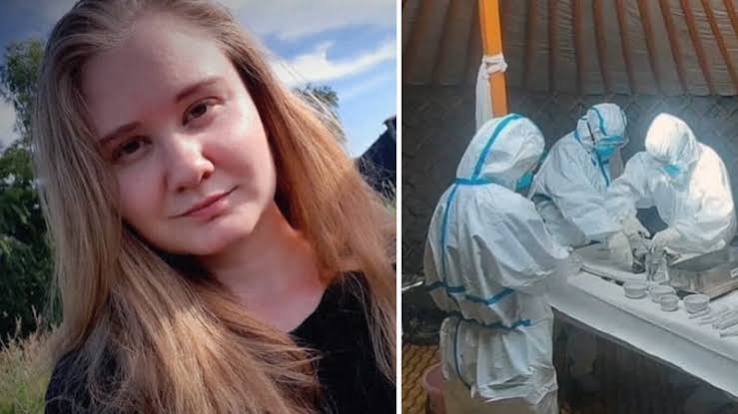
Furthermore, local reports have identified the deceased worker as 28-year-old Darya Shipilova, remembered by colleagues as a dedicated researcher who adhered to strict security protocols at the facility. Neighbours have observed disinfection efforts in her residence, indicating heightened caution among the community.

As the WHO continues to seek further clarification from Russian authorities, the situation highlights the complexities of managing public health communication amid emerging threats and the necessity for transparent information exchange in ensuring effective responses to potential health risks. Authorities have asserted that the sanitary conditions in the regions involved remain stable, but the ongoing investigation underscores the significance of vigilance in public health.

Long or Short, get news the way you like. No ads. No redirections. Download Newspin and Stay Alert, The CSR Journal Mobile app, for fast, crisp, clean updates!

App Store –  https://apps.apple.com/in/app/newspin/id6746449540 

Google Play Store – https://play.google.com/store/apps/details?id=com.inventifweb.newspin&pcampaignid=web_share

Latest News

Popular Videos
