


Supreme Court Seeks Responses on Protest Restrictions and Detentions
The CSR Journal Magazine

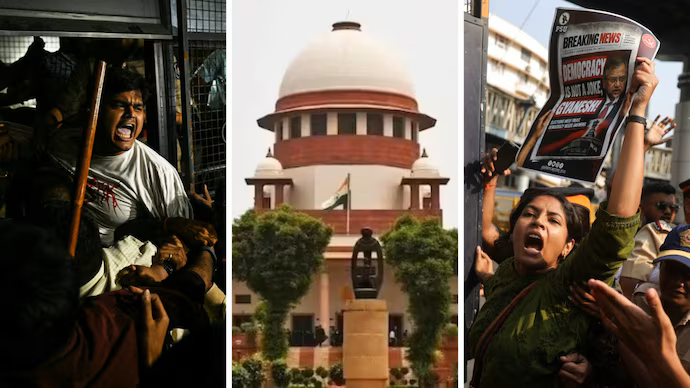
The Supreme Court has requested responses from the Indian government, the Delhi Police, and the Delhi Metro Rail Corporation (DMRC) regarding a contempt plea. This plea concerns allegations of a breach of court directives aimed at ensuring that metro and train services remain operational in Delhi, particularly during the protests related to the CJP.

Justices Joymalya Bagchi and V Mohana were part of the bench that issued this notice on Sunday. The court emphasized the necessity of maintaining public transport services, specifically during periods of civil unrest, to facilitate the movement of citizens.

The petitioners have highlighted instances where metro services were allegedly suspended as a means to quell the protests, arguing that such actions violate the fundamental rights of individuals to assemble and demonstrate peacefully. They aim to hold authorities accountable for these alleged infringements.

Context of the Protests in Delhi

Recent protests in Delhi, which are largely centred around issues raised by the CJP, have sparked significant public interest and involvement. These protests have focused on issues pertaining to social justice and communal harmony, attracting a considerable number of participants.

Activists have expressed concerns that restrictions on public transport, particularly the suspension of metro services, impede the right to protest and the ability for demonstrators to gather effectively. The situation has generated a public discourse on the manner in which authorities choose to respond to such civil movements.

In light of the protests, the role of law enforcement and local governance in maintaining public order while respecting civil liberties has come under scrutiny. The Supreme Court’s intervention highlights the judiciary’s oversight regarding the balance between maintaining law and order and safeguarding democratic rights.

Future Implications and Court Proceedings

The Supreme Court’s request for responses from the Delhi Police, the DMRC, and the central government marks an important development in the ongoing legal discourse surrounding public protests. The outcomes of these proceedings could set significant precedents regarding public transport policies in the context of civil rights.

The authorities are expected to address the court’s concerns in due course, with implications for how similar situations may be handled in the future. A comprehensive examination of the arguments presented by both the petitioners and the government will likely be essential in shaping future public policy regarding protests and associated restrictions.

Following the Supreme Court’s notifications, the timeline for responses will indicate how swiftly the judiciary and the various departments involved can advance the matter. The legal community and the public will be watching closely, as the case could influence broader discussions on the rights of citizens to protest and the responsibilities of the state to facilitate such expressions of dissent.

Long or Short, get news the way you like. No ads. No redirections. Download Newspin and Stay Alert, The CSR Journal Mobile app, for fast, crisp, clean updates!

App Store –  https://apps.apple.com/in/app/newspin/id6746449540 

Google Play Store – https://play.google.com/store/apps/details?id=com.inventifweb.newspin&pcampaignid=web_share

Latest News

Popular Videos
