


Trump Claims He Could Have Won Vietnam War in a Week
The CSR Journal Magazine

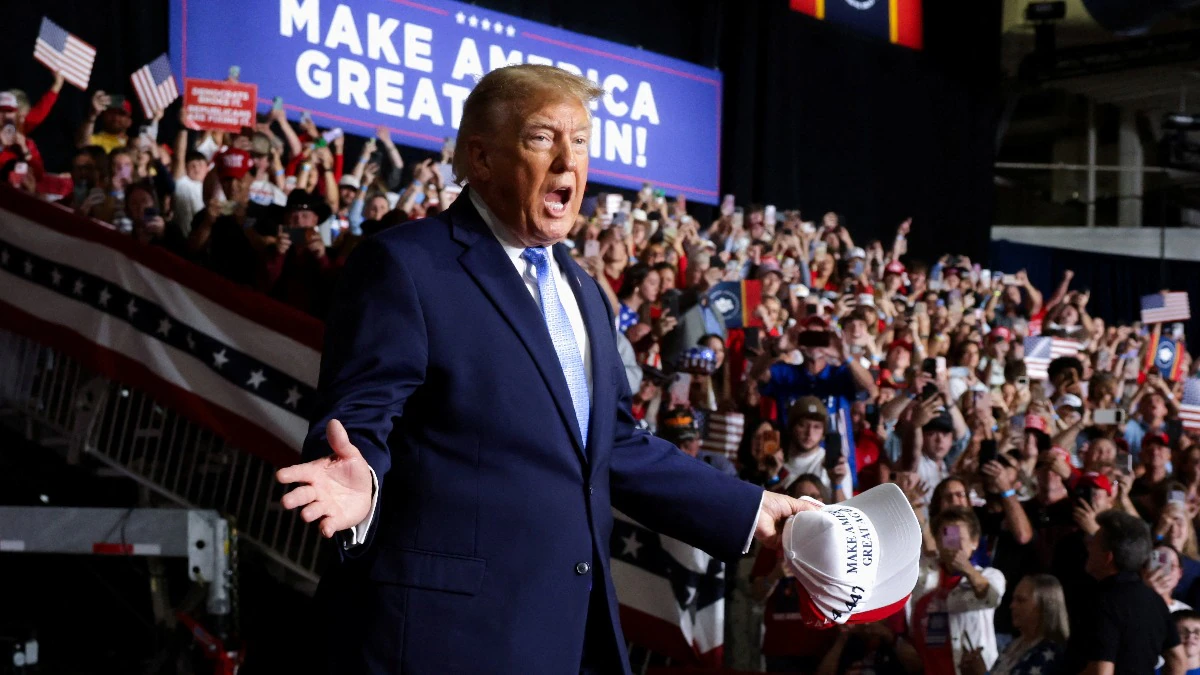
US President Donald Trump has made a controversial assertion regarding the Vietnam War, claiming he could have secured a victory within a week. Speaking at a rally ahead of the midterm elections, Trump expressed dissatisfaction with how prior administrations managed the conflict in Vietnam and Afghanistan. His comments have sparked significant debate and criticism online.

During the rally, Trump stated, “I could have won Vietnam in a week,” and condemned the use of Agent Orange, a herbicide used during the war. He suggested that the focus should have been on targeting Ho Chi Minh rather than the forests. This statement has drawn attention to his understanding of the historical context of the war.

Critics have highlighted factual inaccuracies in Trump’s remarks, particularly regarding the geographical and political landscape of Vietnam during the war. They pointed out that Ho Chi Minh City was known as Saigon at the time and served as the capital of South Vietnam, which was an ally of the United States. The actual enemy capital, Hanoi, was located in North Vietnam.

Public Reaction and Criticism

Trump’s comments have led to a wave of criticism on social media, with users questioning his understanding of the conflict. One user remarked on the absurdity of suggesting that targeting Saigon would have been an effective strategy, while another pointed out that US troops were present in Saigon during the war. This has led to further scrutiny of Trump’s historical claims.

This is not the first time Trump has made such assertions. Approximately a year and a half ago, he claimed he could have concluded the Vietnam War in three to four months. His repeated statements have raised concerns about his grasp of historical events and military strategy.

The Vietnam War, which lasted from 1955 to 1975, was a significant military conflict that involved extensive US engagement. Despite the considerable resources allocated, the United States ultimately failed to achieve its political objectives, leading to a withdrawal of troops prior to the fall of South Vietnam in 1975.

Historical Context of the Vietnam War

The Vietnam conflict began as a struggle for independence from French colonial rule, with Ho Chi Minh declaring independence in 1945. France’s efforts to regain control led to the First Indochina War, which lasted from 1946 to 1954. The Geneva Accords of 1954 temporarily divided Vietnam into communist North Vietnam and anti-communist South Vietnam.

US involvement in Vietnam began under President Harry S. Truman, who provided financial support to France, and expanded under President Dwight D. Eisenhower, who aimed to prevent the spread of communism. Subsequent administrations, including those of John F. Kennedy and Lyndon B. Johnson, increased military involvement, culminating in the deployment of combat troops in 1965.

The war escalated significantly, particularly after the Gulf of Tonkin incident in 1964, which led to greater military intervention. The Tet Offensive in 1968 marked a turning point, revealing the limitations of US military efforts and increasing anti-war sentiment domestically. Following a series of complex negotiations, the Paris Peace Accords were signed in January 1973, leading to the withdrawal of US forces.

After the resignation of President Nixon in 1974, President Gerald Ford oversaw the final stages of the conflict. North Vietnam launched a decisive offensive in March 1975, ultimately capturing Saigon on April 30 and leading to the reunification of Vietnam under communist rule in July 1976. This conflict remains a pivotal chapter in US military history, influencing subsequent foreign policy decisions.

Long or Short, get news the way you like. No ads. No redirections. Download Newspin and Stay Alert, The CSR Journal Mobile app, for fast, crisp, clean updates!

App Store – https://apps.apple.com/in/app/newspin/id6746449540

Google Play Store – https://play.google.com/store/apps/details?id=com.inventifweb.newspin&pcampaignid=web_share

Latest News

Popular Videos
