


Sanjay Kumar Jha Backs Public Examinations Bill, Praises Government’s Reform Push
The CSR Journal Magazine

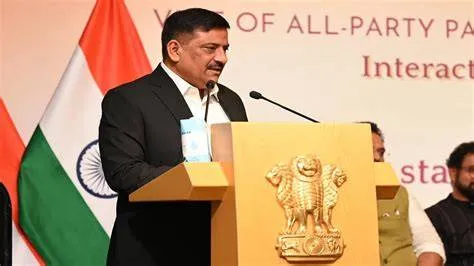
Sanjay Kumar Jha, a Member of Parliament from Janata Dal-United (JD-U), expressed his support for the government’s examination reform measures, specifically the introduction of the Public Examinations (Prevention of Unfair Means) Amendment Bill. Jha highlighted that Prime Minister Narendra Modi has been actively involved in addressing the challenges related to examination integrity, particularly in light of the recent paper leak incidents.

Speaking to ANI, Jha stated, “The Bill being brought to the Lok Sabha today, Public Examinations (Prevention of Unfair Means) Amendment Bill, 2026 will ensure foolproof examinations in the future.” He emphasised that the proposed legislation is a significant step towards reforming the examination system in India and enhancing its reliability.

Jha mentioned the establishment of a high-powered task force, which operates under the leadership of Nandan Nilekani, aimed at reinforcing examination reforms. He affirmed that since the emergence of issues related to examination security, Prime Minister Modi has been at the forefront, taking necessary actions.

Criticism from CPI-M MP John Brittas

In a contrasting view, John Brittas, a Member of Parliament representing the Communist Party of India – Marxist (CPI-M), raised concerns regarding the government’s initiative to form a new task force. He questioned the necessity of this committee, especially given the existence of the earlier Radhakrishnan committee, which submitted a comprehensive report on examination reforms two years ago.

During his comments to ANI, Brittas stated, “I really want to ask the government what has happened to the Radhakrishnan committee, which was appointed clearly two years before. That committee submitted a report with 184 pages. The government has been sitting on it.” His remarks reflect a growing frustration among some lawmakers regarding the government’s commitment to addressing longstanding issues within the examination system.

Brittas further alleged that the creation of a new committee distracts from addressing pressing concerns facing students today. He asserted that the real problem lies not in the formation of committees but in a lack of effective governance and transparency within the current system.

Legislative Intentions and Future Implications

The Public Examinations (Prevention of Unfair Means) Amendment Bill aims to fortify the legal framework surrounding examination security, particularly in response to recent controversies, including the NEET-UG 2026 paper leak. The government views these measures as essential to restoring public confidence in academic assessments.

As the Lok Sabha prepares for the introduction of this Bill, the conversation around examination reforms continues. Lawmakers are keenly observing how the proposed legislation will affect the future of academic integrity in India’s education system.

With tensions clearly evident between differing political perspectives on how best to address examination-related challenges, the outcome of this legislation will be crucial for students and their families across the country. The discourse surrounding this topic reflects broader concerns regarding the effectiveness of current educational governance and its implications for the future of examination processes in India.

Long or Short, get news the way you like. No ads. No redirections. Download Newspin and Stay Alert, The CSR Journal Mobile app, for fast, crisp, clean updates!

App Store –  https://apps.apple.com/in/app/newspin/id6746449540 

Google Play Store – https://play.google.com/store/apps/details?id=com.inventifweb.newspin&pcampaignid=web_share

Latest News

Popular Videos
