


Putin and ASEAN Leaders Strengthen Strategic Partnership at Kazan Summit
The CSR Journal Magazine

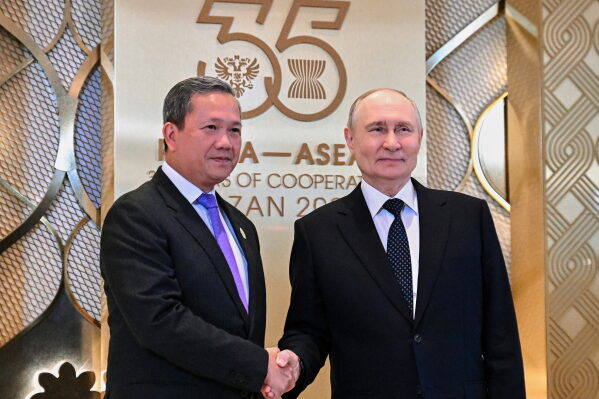
President Vladimir Putin acknowledged the importance of Russia’s relationship with the Association of Southeast Asian Nations (ASEAN) during a summit held on June 19, 2026, in Kazan. This meeting celebrated the 35th year of diplomatic engagement between Russia and ASEAN. Leaders from various member nations convened to discuss global and regional challenges, progress in Russia-ASEAN relations, and potential avenues for future collaboration.

Co-chaired by President Ferdinand Marcos Jr. of the Philippines, the summit provided a platform for bilateral discussions. The Philippines currently holds the rotating presidency of ASEAN. Leaders from Brunei, Cambodia, Indonesia, Laos, Malaysia, Myanmar, Singapore, Thailand, East Timor, and Vietnam also participated, reflecting a broad representation of the ASEAN bloc.

Focus on Economic and Security Cooperation

Putin emphasised the necessity of their strategic partnership as a stabilising influence in the Asia-Pacific region amidst ongoing geopolitical uncertainties. He noted that the collaboration between Russia and ASEAN plays a crucial role in developing a balanced security framework that fosters mutually beneficial partnerships.

Discussions at the summit included various priorities for practical cooperation. These areas encompass combating emerging security threats, enhancing trade and investment, energy markets, agricultural development, digitalisation, scientific collaboration, tourism, and fostering humanitarian links. The wide-reaching scope of these discussions reflects the intent to strengthen ties across multiple sectors.

During the summit, a declaration was signed by participating leaders, reiterating their commitment to a multipolar world built on international law and the principles of the United Nations Charter. This declaration signifies a collective ambition for equitable benefits and mutual respect among countries. The Kazan gathering has been termed a significant milestone in the evolution of Russia-ASEAN relations.

ASEAN’s Diverse Membership and Regional Implications

The diverse affiliations within ASEAN constitute a complex landscape as some member nations, such as the Philippines, align closely with United States policies. Conversely, others maintain significant trade and security connections with Russia and China. This juxtaposition within the bloc was a point of discussion during the summit, demonstrating the various geopolitical influences at play.

Notably, several ASEAN countries, including the Philippines, Indonesia, Thailand, and Vietnam, have publicly expressed interest in importing Russian crude oil. This interest has grown in response to rising global fuel prices, particularly following the recent conflict in Iran. Such economic considerations underscore the importance of energy cooperation in the broader context of international relations.

The summit’s proceedings reflected both parties’ desire to enhance political and economic collaborations. Leaders pledged to maintain high-level communications to successfully advance their strategic partnership, highlighting the intention to foster enduring alliances that can withstand external pressures and promote shared objectives.

Long or Short, get news the way you like. No ads. No redirections. Download Newspin and Stay Alert, The CSR Journal Mobile app, for fast, crisp, clean updates!

App Store –  https://apps.apple.com/in/app/newspin/id6746449540 

Google Play Store – https://play.google.com/store/apps/details?id=com.inventifweb.newspin&pcampaignid=web_share

Latest News

Popular Videos
