


ODOP Initiative Enhances Market Access for Agricultural Products in Uttar Pradesh
The CSR Journal Magazine

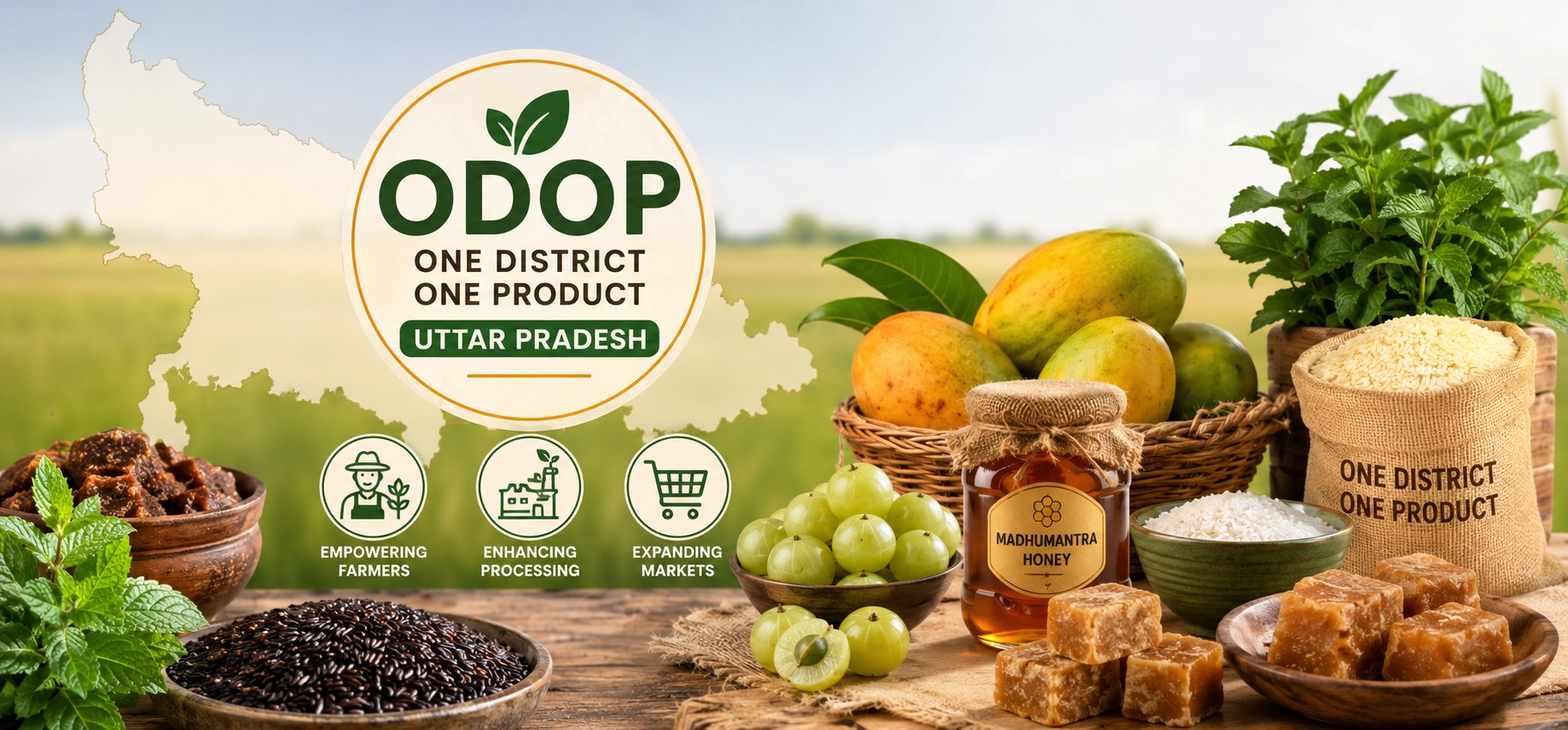
The One District One Product (ODOP) initiative in Uttar Pradesh aims to elevate the reach of agricultural produce beyond traditional boundaries. This strategy focuses on selecting a distinct food product from each of the state’s 75 districts and fostering support structures around these items. It is part of a broader Central Government scheme designed to empower local economies, thereby enhancing market access for farmers and small-scale food producers.

Under the Pradhan Mantri Formalisation of Micro Food Processing Enterprises (PMFME) scheme, initiated in 2020 as part of the Aatmanirbhar Bharat Abhiyan, the one district, one product model is specifically tailored for food items. This scheme facilitates the identification of locally produced goods and assists in developing processing, marketing, and branding capabilities surrounding these products.

The Ministry of Food Processing Industries recently published an ODOP list, encompassing 713 districts across 35 states and Union Territories. This comprehensive list highlights the signature food items for each district, demonstrating the diverse agricultural landscape within Uttar Pradesh.

Product Identification Across Districts

The list of products recognised within Uttar Pradesh reflects the state’s rich agricultural diversity. For instance, mint has been designated for Barabanki, Rampur, Sambhal, and Sultanpur. Indian gooseberry, known as aonla, is acknowledged for Amethi, Fatehpur, Pratapgarh, and Rae Bareli. Additionally, several districts such as Lucknow, Mau, and Sitapur are associated with mango production.

Furthermore, Kala Namak rice has been selected for districts in eastern Uttar Pradesh, including Gorakhpur and Maharajganj. Jaggery is notably associated with various regions, such as Ayodhya, Bijnor, and Meerut. This indicates that certain products can represent multiple districts where significant production occurs, thus enhancing regional branding.

The identification of these key products paves the way for structured support tailored to each district’s strengths, enabling a focused approach to agricultural economics.

Benefits for Farmers and Small Enterprises

The ODOP initiative is intended not merely to identify products but also to empower stakeholders engaged in their production and processing. The PMFME scheme provides avenues for farmers, Farmer Producer Organisations (FPOs), cooperative societies, and Self-Help Groups (SHGs) linked with the identified products to gain access to infrastructural support, branding initiatives, and marketing resources.

This scheme has been allocated a budget of Rs 10,000 crore for the period between 2020 and 2025, distributed between the Central and state governments. By consolidating producers around a common district identity, the initiative aims to tackle the fragmentation often seen in food processing, thereby making it easier for small producers to pool their resources for shared facilities and marketing efforts.

The overarching goal is to enhance the value of agricultural production through improved processing and market access, allowing farmers to better capture the economic benefits tied to their products.

Transforming Local Produce Into Marketable Brands

To expand the market presence of locally significant products, the ODOP approach encourages the formation of a collaborative ecosystem among smaller producers. This collective effort aims to achieve economies of scale in areas such as input procurement and marketing, moving beyond the limitations of local markets.

Partnerships with organisations like NAFED and TRIFED can further assist in building recognised national brands. An example of this initiative is the Madhumantra brand of multiflora honey sourced from Saharanpur, which aims to establish a market identity for locally produced goods.

In conclusion, the ODOP initiative seeks to establish strong connections between agricultural production and food processing, addressing the challenges faced by small producers in accessing necessary infrastructure and markets. By creating a structured framework around each district’s unique products, Uttar Pradesh is poised to enhance its agricultural economy and improve the livelihoods of those involved in food production.

Long or Short, get news the way you like. No ads. No redirections. Download Newspin and Stay Alert, The CSR Journal Mobile app, for fast, crisp, clean updates!

App Store –  https://apps.apple.com/in/app/newspin/id6746449540 

Google Play Store – https://play.google.com/store/apps/details?id=com.inventifweb.newspin&pcampaignid=web_share

Latest News

Popular Videos
