


India’s First Bullet Train Takes Shape with Advanced Features
The CSR Journal Magazine

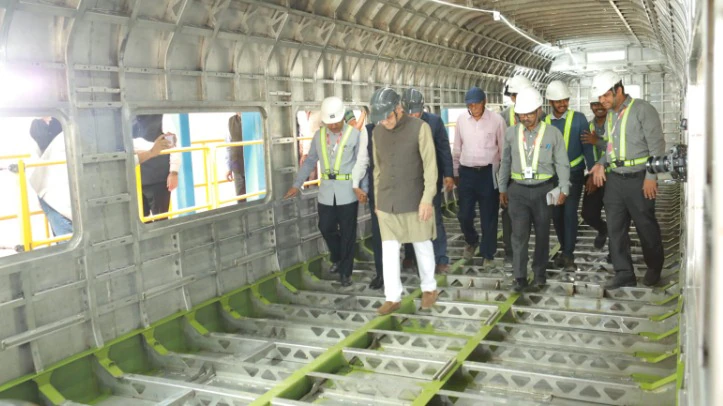
India’s first bullet train is in the process of being constructed, representing a significant advancement in the nation’s high-speed rail capabilities. Railways Minister Ashwini Vaishnaw recently visited the BEML manufacturing facility in Bengaluru, where the train is undergoing structural tests to assess its strength and performance at high speeds. The minister shared insights about the project on social media, highlighting the significance of the initiative for the country.

The bullet train is being developed for the Mumbai-Ahmedabad High-Speed Rail corridor, combining Indian engineering with modern technology. The design prioritises passenger comfort and safety, aiming to cater to the specific travel needs of the Indian populace.

Specifications and Capacity of the Train

The bullet train is engineered to reach a maximum test speed of 280 kmph, with an intended operational speed of 249 kmph. It will measure approximately 202 metres in length and will consist of eight coaches, which include four motor cars and four trailer cars. The train is designed to accommodate around 557 passengers, featuring two dedicated spaces for persons with reduced mobility (PRM).

In terms of seating arrangements, there will be seven standard-class coaches with a 3×2 configuration and one executive-class coach featuring a 2×2 layout. The design includes a driver’s cab at both ends, complemented by an intelligent on-board control system that will aid the driver in making timely decisions and coordinating with the operations control centre.

The eight-coach setup allows for future expansion, enabling two trains to be coupled together to create a 16-coach configuration, thereby increasing passenger capacity.

Passenger Comfort and Amenities

The interior design of the bullet train has been tailored to enhance the travel experience for Indian passengers. The seating will provide ample legroom, while features such as wide windows, LED lighting, and overhead luggage racks are intended to improve comfort during journeys. Passengers will also have access to power outlets for charging devices, along with designated floor-mounted areas for larger bags.

Modern bio-digester toilets will be installed to manage waste efficiently. A sealed, single-piece gangway will connect the coaches, facilitating easier movement for passengers. Additionally, a passenger information system will keep travellers informed throughout their journey, with LCD screens displaying information in multiple languages and audio announcements providing relevant updates.

To further enhance the travel experience, a Wi-Fi-based infotainment system will be available, offering access to preloaded entertainment content. Accessibility features have also been integrated into the design, including a train floor level with the platform for easier boarding, retractable steps to minimise gaps, and wheelchair-friendly doors.

Engineering Innovations for High-Speed Travel

Designing a train capable of high speeds necessitates meticulous attention to factors such as air resistance, noise, and pressure changes, particularly in tunnel environments. To address these challenges, the train’s nose and body have been developed using Computational Fluid Dynamics (CFD) simulations, which help engineers optimise the shape for reduced air resistance.

This aerodynamic design aims to minimise turbulence and pressure waves in tunnels, while also mitigating sonic booms. The integration of roof panels, air deflectors, and HVAC units supports smoother airflow, contributing to overall efficiency.

Noise reduction is another critical aspect of the train’s design. The incorporation of sound insulation in the body and floor, along with specialised noise-damping coatings, will help diminish noise levels during travel. The train will operate on a 25 kV, 50 Hz single-phase AC traction system, powered by an overhead catenary system, and will utilise regenerative braking to recover energy during deceleration.

As construction and structural testing progress at the BEML facility, India’s first bullet train signifies a pivotal development in the country’s pursuit of domestic high-speed rail technology, with a strong emphasis on speed, passenger comfort, accessibility, and energy efficiency.

Long or Short, get news the way you like. No ads. No redirections. Download Newspin and Stay Alert, The CSR Journal Mobile app, for fast, crisp, clean updates!

App Store – https://apps.apple.com/in/app/newspin/id6746449540

Google Play Store – https://play.google.com/store/apps/details?id=com.inventifweb.newspin&pcampaignid=web_share

Latest News

Popular Videos
