


Toxic Air Crisis: India and Its Neighbours Struggle to Breathe
The CSR Journal Magazine

Worsening Air Quality in Northern India

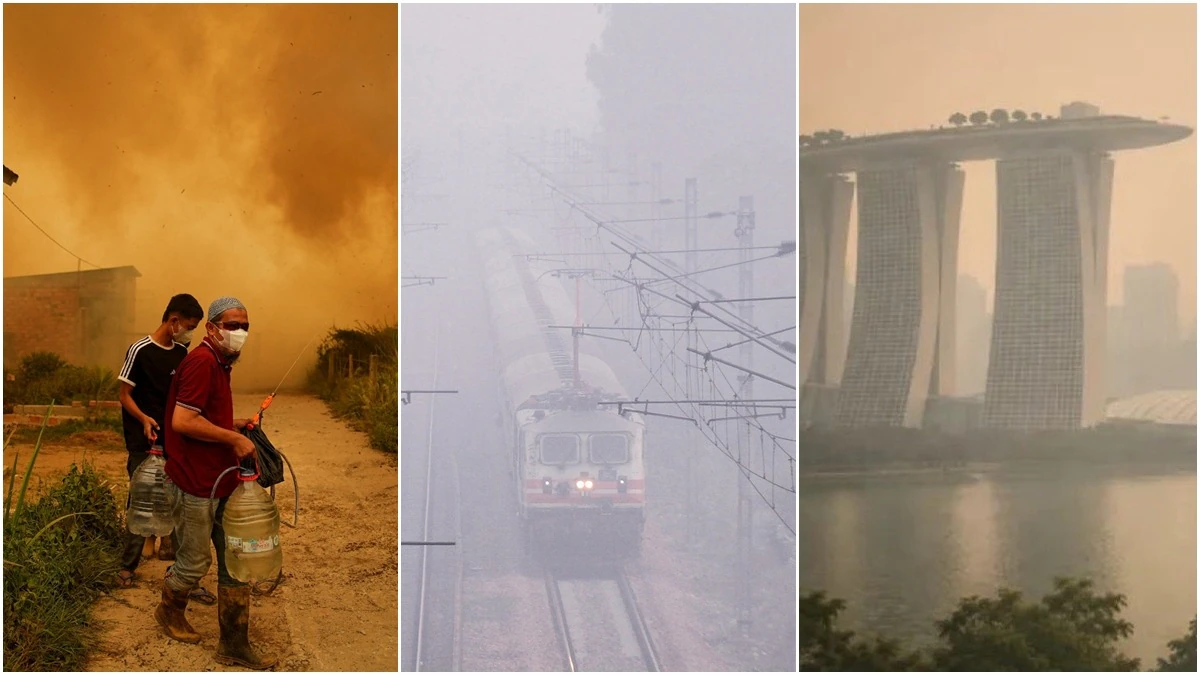
The air quality crisis in northern India is intensifying as winter approaches, with pollution levels rising significantly. Millions of residents are once again facing the prospect of weeks filled with unhealthy air. While Delhi and its surrounding areas often dominate discussions regarding air pollution, the issue extends far beyond these borders, affecting various communities across Asia.

Recent data from AQI.in, published on October 23, highlighted the alarming scale of air pollution in the region. Among the twenty most polluted cities globally, Palembang in Indonesia topped the list with an Air Quality Index (AQI) of 447. This was followed by Sampit at 408 and Palangkaraya at 356. Amritsar emerged as the highest-ranked Indian city at 354, while Lahore in Pakistan recorded an AQI of 341. Notably, India accounted for fourteen of the twenty cities listed, underscoring the widespread nature of the crisis.

Pollution Sources in Indonesia

Indonesia’s air quality issues have been largely driven by forest and land fires, which have generated significant smoke affecting urban areas. Palembang and other regions in Sumatra and Kalimantan have experienced persistent haze due to prolonged dry conditions. Reports indicate that the country is facing its worst fires in eleven years, with officials noting that while fire hotspots have decreased, scattered rainfall has not been sufficient to extinguish the flames.

In response to the crisis, Indonesia has mobilised over 69,000 firefighting personnel and deployed fifty aircraft for firefighting and weather modification efforts. The smoke has not only impacted local air quality but has also affected neighbouring Singapore, where air quality deteriorated sharply earlier this month. On October 14, the western parts of Singapore recorded PM2.5 levels of 284 micrograms per cubic metre, classified as “very high” by local authorities.

As the fires continue, they have resulted in widespread respiratory illnesses, highlighting the urgent human health implications of the situation. Singapore’s National Environment Agency has warned that smoke from Indonesian fires may persist, although changing weather conditions could provide some relief.

Shared Challenges in South Asia

In Pakistan, Lahore experiences severe smog from October to February, attributed to a combination of vehicle emissions, industrial discharges, construction dust, and the burning of crop residue. Despite efforts by Punjab authorities to inspect and regulate polluting sources, cooler temperatures and stagnant winds often exacerbate the problem, trapping pollutants close to the ground.

Northern India faces similar challenges, with AQI.in reporting high pollution levels in cities such as Amritsar at 354, Hapur at 319, and Bathinda at 316. Other cities like Greater Noida, Bulandshahr, and Aligarh recorded AQIs of 306, while Ghaziabad and Jalandhar registered 304. The region’s air quality is severely impacted by traffic emissions, industrial pollution, waste burning, and crop-residue fires.

The World Bank estimates that nearly one billion people across Bangladesh, Bhutan, India, Nepal, and Pakistan are exposed to unhealthy air. Pollution knows no borders, as emissions can travel across state and national lines. The institution has called for coordinated regional action to address air quality issues, emphasising that individual cities cannot tackle this problem in isolation.

Long or Short, get news the way you like. No ads. No redirections. Download Newspin and Stay Alert, The CSR Journal Mobile app, for fast, crisp, clean updates!

App Store – https://apps.apple.com/in/app/newspin/id6746449540

Google Play Store – https://play.google.com/store/apps/details?id=com.inventifweb.newspin&pcampaignid=web_share

Latest News

Popular Videos
