


Nasa’s Swift Telescope Set for Earth Re-entry Following Failed Rescue Attempt
The CSR Journal Magazine

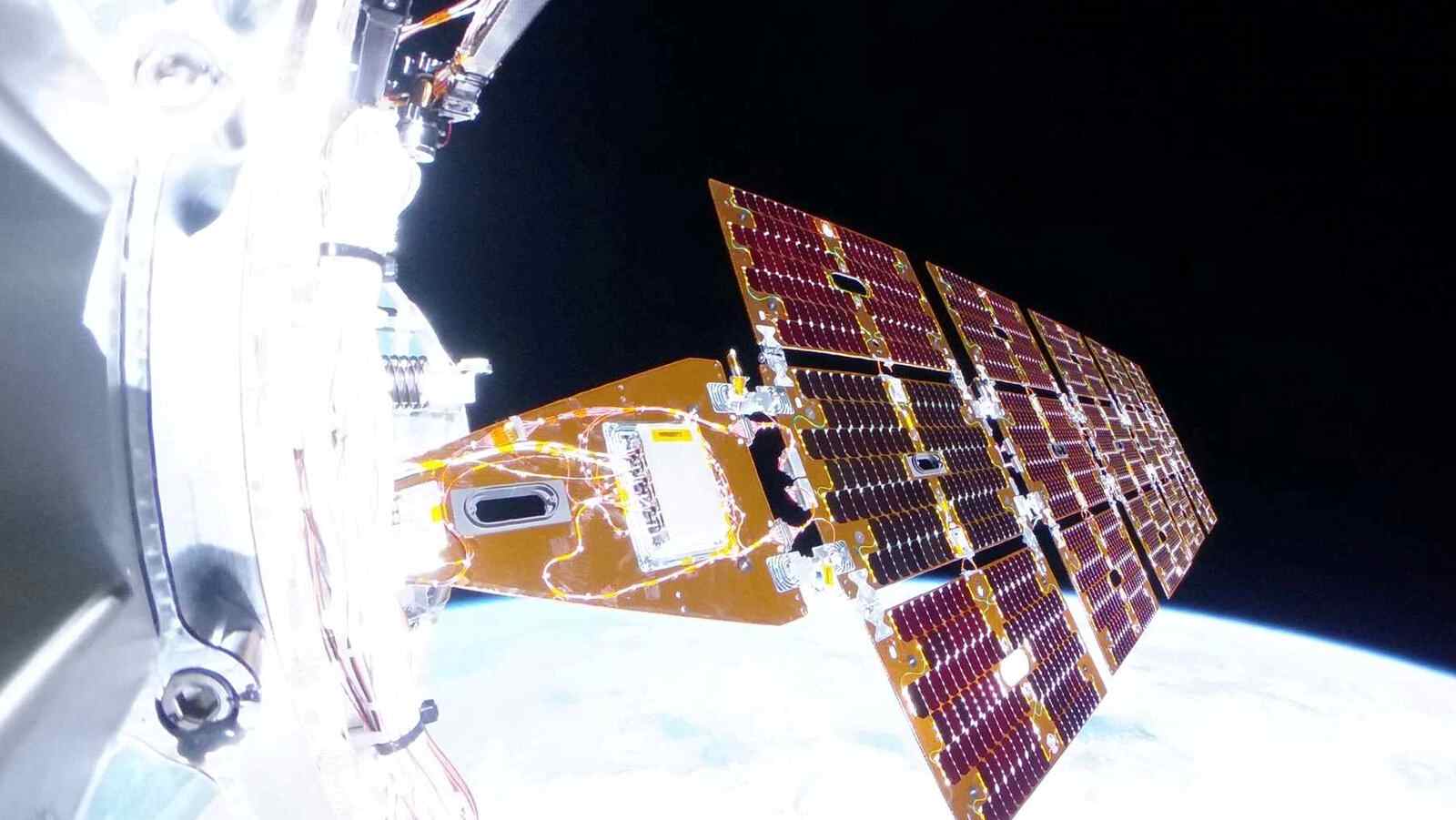
Nasa’s efforts to salvage the Neil Gehrels Swift Observatory have concluded unsuccessfully, leaving the 21-year-old telescope on a trajectory towards re-entry into Earth’s atmosphere later this year. On August 19, 2026, Nasa, in conjunction with Katalyst Space Technologies, announced that the Link spacecraft would cease efforts to capture and elevate the Swift telescope to a higher orbit.

The inability of Link to maintain proper attitude control was identified as the primary reason for the failure of the rescue mission. Consequently, observers have noted that Swift’s orbit has been steadily declining, exacerbated by recent intense solar activity that has caused the upper atmosphere to expand, increasing drag on the spacecraft.

Nasa had paused Swift’s science operations in February 2026 to mitigate atmospheric drag while preparing for the rescue attempt. Despite initial success in establishing communication and conducting early checks after its launch on July 3, 2026, Link faced significant complications in July that rendered the mission infeasible.

Technical Challenges Encountered

Link suffered crucial operational failures when two of its three reaction wheels ceased to function effectively, alongside a malfunction in its cold-gas thruster system. As a result, Link began to spin uncontrollably, which hindered communication capabilities. By early August, engineers managed to reduce the spin rate from approximately nine degrees per second to 1.47 degrees per second.

A software update temporarily restored link’s attitude-control capability, allowing the mission team to continue their approach toward Swift. However, these solutions were insufficient to enable a successful rescue. As a result, plans were modified, transitioning the focus towards gathering data and developing techniques that could benefit future robotic satellite servicing missions.

Despite the setbacks, Link is now poised to perform rendezvous and proximity operations around the Swift observatory to collect valuable insights. This effort is aimed at refining the methodologies for potential future missions involving the servicing of satellites.

Future of the Swift Observatory

Launched on November 20, 2004, Swift is a multi-instrument observatory designed to study gamma-ray bursts and other transient cosmic events. It has made significant contributions to the field by rapidly responding to newly detected gamma-ray bursts and investigating their afterglows. The telescope’s three instruments have been pivotal in observing the universe across gamma rays, X-rays, ultraviolet, and visible light.

As Swift approaches its final operational phase, it will mark the end of an era dedicated to astronomical discoveries over the past two decades. However, the focus will now shift from exploration to the process of its descent back to Earth. Nasa has indicated that while the exact re-entry date of Swift has yet to be determined, it is expected to continue losing altitude due to atmospheric drag.

In conclusion, the mission improvements gleaned from Link’s experiences may provide critical insights, enabling advancements in future satellite servicing technologies. While Swift’s journey is nearing its conclusion, the knowledge gained could enhance Nasa’s future efforts in the realm of space exploration and satellite management.

Long or Short, get news the way you like. No ads. No redirections. Download Newspin and Stay Alert, The CSR Journal Mobile app, for fast, crisp, clean updates!

App Store –  https://apps.apple.com/in/app/newspin/id6746449540 

Google Play Store – https://play.google.com/store/apps/details?id=com.inventifweb.newspin&pcampaignid=web_share

Latest News

Popular Videos
