


NASA Technology Enhances Archaeological Discoveries Worldwide
The CSR Journal Magazine

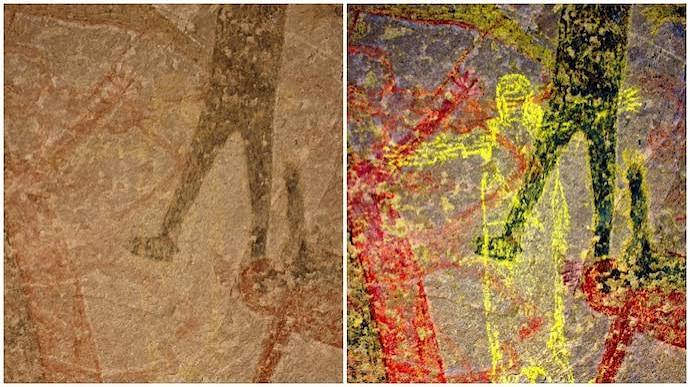
NASA initially developed a technology to study the Martian surface, which is now helping archaeologists reveal hidden ancient artworks and artefacts. This technique, called decorrelation stretch, enhances subtle colour differences in digital images, allowing features that are not visible to the naked eye to be discerned. Its application has led to significant discoveries, including hundreds of ancient paintings at the Angkor Wat temple complex in Cambodia and at archaeological sites around the globe.

Insights from Angkor Wat

Between 2010 and 2012, an archaeologist applying the decorrelation stretch technique at Angkor Wat identified numerous paintings, including depictions of horseback riders and a traditional musical ensemble positioned in the temple’s central tower. Despite thousands of daily visitors passing the temple, many overlook these faded artworks. The total number of paintings discovered at this historic site amounts to approximately 200, enriching the temple’s already vast cultural heritage.

The technique’s success in revealing these artworks illustrates its broader potential in archaeological research. By enhancing overlooked details, researchers are able to appreciate the artistic expressions of ancient cultures, which have often been lost to the passage of time.

Transition from Space to Archaeology

The decorrelation stretch technique was repurposed for archaeological use in about 2005, beginning with an observation made by Jon Harman, an enthusiast of rock art. Noticing that NASA’s images of Mars exhibited greater detail with the application of decorrelation stretch, he hypothesised that the same method could be of use in studying faded ancient paintings. Harman, who possessed a background in medical imaging, successfully adapted the technique after discovering an explanatory paper by NASA detailing the necessary algorithm.

The original academic work was published in 1996 by Ronald Alley, a scientist at NASA’s Jet Propulsion Laboratory (JPL) in California. Alley’s research focused on improving satellite imagery analysis through a tool intended for use with the Advanced Spaceborne Thermal Emission and Reflection Radiometer (ASTER), which is onboard NASA’s Terra satellite. This foundational research provided the groundwork for future applications in diverse fields beyond space exploration.

Harman eventually created DStretch, a plug-in for the open-source image-processing programme ImageJ, developed by the US National Institutes of Health. This tool has since become integral to various archaeological examinations.

DStretch and Its Impact on Archaeology

DStretch has emerged as a vital resource in archaeological investigations, facilitating the identification and documentation of rock art across numerous countries, including Norway, Mexico, Canada, and Egypt. The technique has also proven effective for uncovering buried remains of ancient structures, as well as analysing tattoos preserved on mummified corpses. Harman reportedly receives around 200 requests for DStretch each year.

In addition to the plug-in, he has developed smartphone applications that implement the same technology, which have garnered thousands of downloads. The wide range of applications stemming from this technique is perhaps one of the most surprising aspects, demonstrating that innovations created for planetary exploration can yield significant insights into human history.

This convergence of technology illustrates the ongoing potential for cross-disciplinary approaches in uncovering aspects of ancient civilisations, bringing once-forgotten details back into public consciousness. The ability to rediscover and understand the artistic expressions and narratives of past societies enhances our appreciation of humanity’s historical journey.

Long or Short, get news the way you like. No ads. No redirections. Download Newspin and Stay Alert, The CSR Journal Mobile app, for fast, crisp, clean updates!

App Store –  https://apps.apple.com/in/app/newspin/id6746449540 

Google Play Store – https://play.google.com/store/apps/details?id=com.inventifweb.newspin&pcampaignid=web_share

Latest News

Popular Videos
