


AWS Cloud Capacity Fully Booked for 2026, Mostly Reserved for 2027: Amazon CEO Andy Jassy
The CSR Journal Magazine

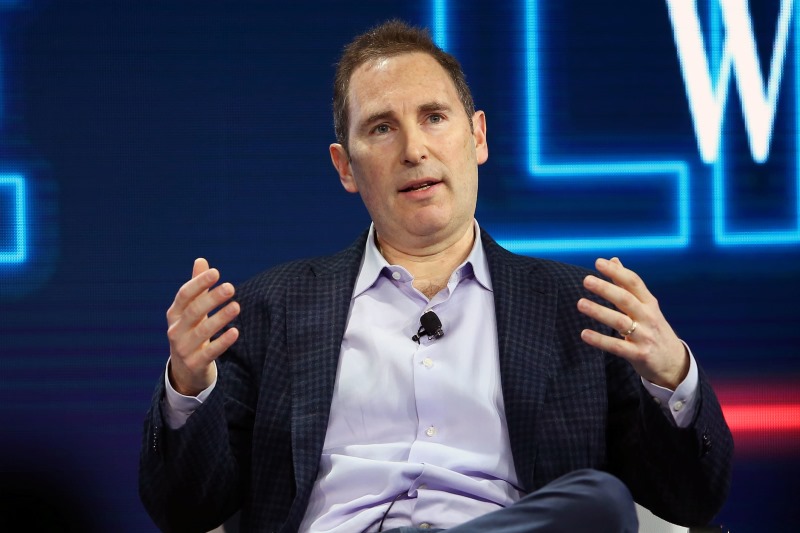
Amazon CEO Andy Jassy has announced that Amazon Web Services (AWS) has completely sold out its cloud computing capacity for 2026, with a significant portion of the capacity for 2027 also reserved. The rapid growth in demand for artificial intelligence (AI) infrastructure has left the company with limited ability to accommodate new customer needs. Jassy’s comments were made during an a16z video podcast released on October 23.

According to Jassy, the increasing demand for AI services is creating challenges for Amazon as it seeks to balance the needs of its traditional cloud business with the burgeoning AI sector. He noted that resources such as memory, electricity, and data centre space are finite, complicating the situation further. “There’s only so much data centre and power today,” he remarked, indicating that this shortage is likely to persist beyond 2027.

The constraints are not merely a matter of constructing additional data centres. AI systems require specialised high-bandwidth memory (HBM) to operate effectively, while Amazon’s conventional cloud services rely on dynamic random-access memory (DRAM). With limited supplies of these essential components, Amazon faces difficult decisions regarding resource allocation.

Investment in Infrastructure Likely to Increase

Jassy indicated that the current circumstances might compel Amazon to invest beyond its planned capital expenditure of $220 billion for 2026 in order to expand its infrastructure. He confirmed that the capacity for 2026 is entirely booked, and a substantial portion of 2027 is also reserved. While some capacity remains available for on-demand services such as Bedrock and EC2, the majority of the larger segments are sold out, with a significant amount of 2028’s capacity already committed as well.

AWS provides various cloud computing services, including EC2, which offers virtual servers, and Bedrock, a platform enabling customers to develop AI applications using diverse AI models. The increasing demand for these services highlights the urgent need for enhanced infrastructure.

As the competition in the AI sector intensifies, Amazon aims to ensure that it can meet the growing requirements of its customers while maintaining its existing cloud services. This balancing act is crucial for sustaining its market position in an increasingly crowded landscape.

Challenges in AI Cost Management

In addition to the challenges of capacity, Jassy pointed out the high costs associated with running AI models as another significant hurdle. Although many businesses are exploring AI tools, the expense of deploying these technologies at scale poses a barrier to widespread adoption. He emphasised that the cost of inference—the process by which AI models respond to prompts—needs to decrease substantially.

Jassy expressed the view that the current costs are prohibitively high, stating, “It’s still an order of magnitude too expensive in my opinion for it to be used as pervasively as possible.” He suggested that costs may need to be reduced by approximately ten times to facilitate broader integration of AI into everyday business operations.

To address these cost challenges, Amazon is developing its own AI chips, known as Trainium, which are designed to enhance performance while lowering expenses. Jassy noted that these chips provide a price-performance improvement of 30 per cent to 40 per cent compared to similar alternatives, potentially making AI technologies more accessible for a wider range of applications.

Long or Short, get news the way you like. No ads. No redirections. Download Newspin and Stay Alert, The CSR Journal Mobile app, for fast, crisp, clean updates!

App Store – https://apps.apple.com/in/app/newspin/id6746449540

Google Play Store – https://play.google.com/store/apps/details?id=com.inventifweb.newspin&pcampaignid=web_share

Latest News

Popular Videos
