


Mark Zuckerberg Launches $500 Million Initiative to Cure Diseases Using AI
The CSR Journal Magazine

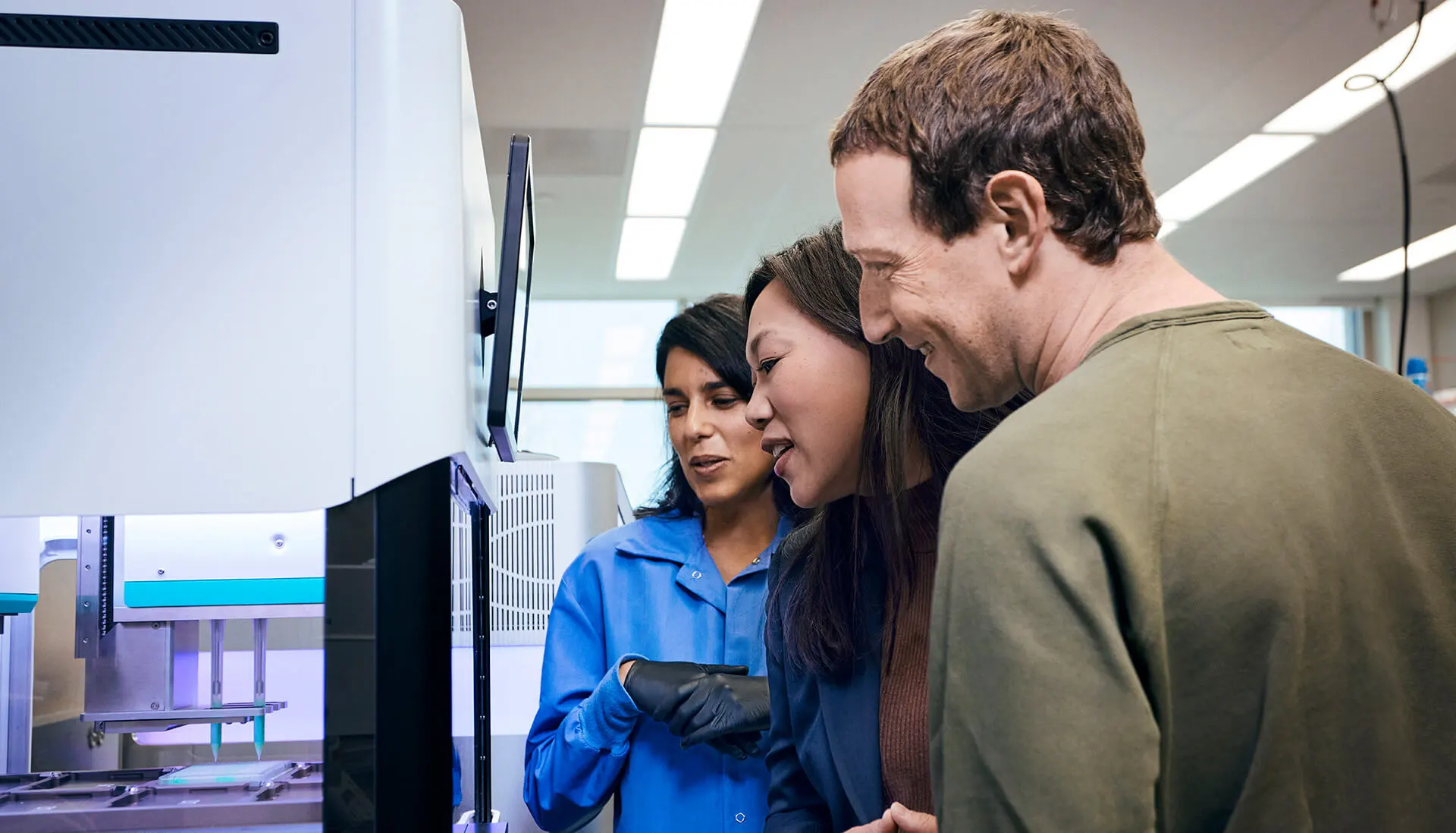
Mark Zuckerberg has announced a significant new initiative aimed at utilising artificial intelligence to enhance our understanding of human cells. In collaboration with his wife, Priscilla Chan, he is supporting the Chan Zuckerberg Biohub’s Virtual Biology Initiative. This venture comprises an extensive $500 million investment dedicated to developing AI systems that can simulate cellular behaviour.

The core objective of this initiative is to create digital models that accurately reflect how human cells function. By leveraging vast amounts of biological data, the initiative intends to facilitate experiments in a virtual environment, thus reducing reliance on traditional laboratory methods. Ultimately, the long-term goal is to utilize these AI-driven models as tools in the pursuit of curing or preventing various diseases.

The programme will be executed over a span of five years, during which scientists will work on creating what are described as “predictive models” of human cells. These AI-powered representations will enable researchers to delve deeper into the study of health and disease.

Resources and Infrastructure for Research Enhancement

The Chan Zuckerberg Biohub is allocating substantial resources to support this programme. This includes the acquisition of large-scale computing capabilities and advanced imaging technologies that will foster a more profound exploration of biological processes. Data generated through this initiative will be openly accessible to researchers worldwide, promoting collaboration and knowledge-sharing.

Biohub plans to invest approximately Rs 3,200 crore into developing advanced tools and infrastructure. This encompasses high-resolution imaging techniques and methods capable of observing millions or even billions of cells within living tissues. An additional Rs 800 crore will be designated to support external researchers and institutions, thereby enhancing the global ecosystem for data generation.

The initiative aims to shift biological research from being predominantly experiment-driven to a more simulation-focused approach. By enabling researchers to run digital experiments beforehand, the programme seeks to expedite scientific discoveries and advancements.

Challenges in Model Accuracy and Biological Complexity

Despite the exciting potential of the Virtual Biology Initiative, several challenges lie ahead. One major concern is the inherent complexity of human biology, which presents difficulties in accurately modelling using existing AI systems. Biohub acknowledges the importance of high-quality data, stating that a vast increase in the quantity and quality of data is necessary to achieve its ambitious goals.

The initiative is particularly focused on understanding the behaviour of cells in both healthy and diseased states. If the project successfully develops accurate models, it could empower researchers to uncover the origins of diseases, forecast their progression, and explore potential reversal strategies.

Current laboratory settings often restrict the scope of experiments due to time and cost constraints. The Virtual Biology Initiative aims to overcome these limitations, offering researchers the ability to conduct a multitude of “what if” scenarios digitally. This could revolutionise the way scientific research is conducted, paving the way for significant advancements in the field.

Long or Short, get news the way you like. No ads. No redirections. Download Newspin and Stay Alert, The CSR Journal Mobile app, for fast, crisp, clean updates!

App Store –  https://apps.apple.com/in/app/newspin/id6746449540 

Google Play Store – https://play.google.com/store/apps/details?id=com.inventifweb.newspin&pcampaignid=web_share

Latest News

Popular Videos
