


Mark Carney To Address European Parliament Amid Trump Warning Over Canada-EU Ties
The CSR Journal Magazine

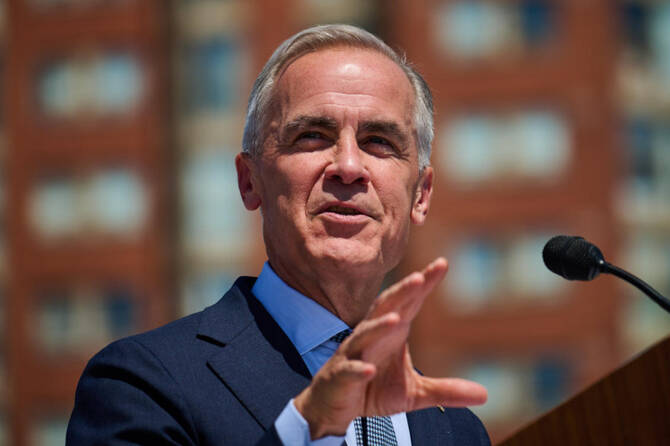
Canadian Prime Minister Mark Carney is set to address the European Parliament on Thursday, with his speech coming amid heightened tensions with the United States over Ottawa’s efforts to strengthen ties with Europe. The address has drawn particular attention after US President Donald Trump warned that allowing Canada to become an associate member of the European Union could be a “hostile act”.

Carney’s remarks will be closely watched for indications of whether he reiterates the warning he made at the World Economic Forum in Davos in January, when he said major powers could use economic dependence as a tool to pressure smaller countries.

Europe Proposes New Status For Canada

The backdrop to Carney’s address is a proposal from European Commission President Ursula von der Leyen to make Canada the EU’s first associate member. Von der Leyen announced the proposal on Wednesday as Ottawa seeks to diversify its economic and strategic relationships amid worsening tensions with Washington.

Trump’s tariffs, demands for economic concessions and repeated comments about making Canada the 51st US state have encouraged Ottawa to pursue closer economic, security and political links with Europe.

Von der Leyen said the European Union wanted to take its relationship with Canada to “the highest level possible”. The proposed associate membership would establish a new status that does not currently exist under EU treaties.

She also called for Canada and the EU to move beyond their existing free trade agreement and create an “Alliance for the Future” centred on a “common prosperity and economic security space”.

Carney, who was seated in the front row of the European Parliament chamber, nodded following von der Leyen’s remarks before rising to embrace her as lawmakers gave the proposal a standing ovation.

The next major discussion on the proposed relationship is expected at a Canada-EU summit in Montreal on October 29 and 30, which Carney will host with EU leaders.

Trump Threatens Tariffs Over Canada-EU Move

Trump reacted to the proposal while speaking in Charlotte, North Carolina, suggesting that Washington could respond with additional tariffs on the European Union.

Linking his threat to what he described as the “intention” of European leaders, Trump said, “If it’s a good intention, that’s fine. If it’s a bad intention, we’ll put very heavy tariffs on Europe.”

He also suggested that the US could restrict trade with Europe in certain areas. Trump described the proposal for Canada to join the EU as “laughable” and called Canada a “terrible trade partner”.

Canada has traditionally built its economy around close integration with the US. Roughly 70 per cent of Canadian exports currently go to the US, leaving Ottawa particularly exposed to changes in American trade policy and tariffs.

The Canadian government has pushed back against US demands that Carney says threaten Canadian sovereignty. Europe, meanwhile, has pursued a different approach, shelving retaliation and accepting tariffs of up to 15 per cent on most EU exports to the US.

Ottawa Seeks Closer Ties Without Giving Up Sovereignty

Canada is not seeking full EU membership, according to Jonathan Wilkinson, the country’s ambassador-designate to the EU. He said full membership would involve giving up some sovereignty.

Instead, Wilkinson said Ottawa wants “to get as close as we possibly can” to Europe while simultaneously strengthening Canada’s independence.

The precise nature of associate membership remains to be negotiated, as the proposed status does not currently have an established framework within EU treaties.

Canada has already taken steps towards deeper European cooperation. Earlier this year, it became the first non-European country to join the EU’s 150-billion-euro SAFE defence procurement programme, allowing Canadian companies to participate in joint procurement as European countries increase defence spending.

Ottawa and Brussels have also discussed greater cooperation in areas including energy, critical minerals, artificial intelligence and digital trade.

Carney’s Economic Coercion Warning In Focus

Carney has repeatedly argued that middle powers should guard against economic coercion by larger countries. Speaking in Davos in January, he said countries negotiating individually with a dominant power could find themselves at a disadvantage.

“We negotiate from weakness. We accept what is offered,” Carney said at the time.

Trump criticised Carney the following day, and his latest comments have added further sensitivity to the Canadian prime minister’s upcoming appearance before European lawmakers.

Analysts said Washington would be watching Carney’s remarks closely. Daniel Beland of McGill University said, “The policies and rhetoric of the Trump administration are clearly pushing both Canada and the EU to imagine a world without strong US leadership and to act accordingly.”

Nelson Wiseman of the University of Toronto said, “Carney’s shrewdness in dealing with Trump has captured Europe’s attention.”

Beland said Carney could avoid referring to Trump directly while still making the intended message clear. “He knows that, beyond Europe, the world will be watching, including the White House,” he said.

As Carney prepares to speak in Strasbourg, Canada and the EU are considering a significantly closer partnership at a time when relations between Ottawa and Washington remain strained. The proposed associate membership, along with expanding cooperation in defence, energy and emerging technologies, could further reshape Canada’s economic and strategic engagement with Europe.

Long or Short, get news the way you like. No ads. No redirections. Download Newspin and Stay Alert, The CSR Journal Mobile app, for fast, crisp, clean updates!

App Store –  https://apps.apple.com/in/app/newspin/id6746449540 

Google Play Store – https://play.google.com/store/apps/details?id=com.inventifweb.newspin&pcampaignid=web_share

Latest News

Popular Videos
