


Cyclone Arnab Disrupts Moon Visibility for Karwa Chauth Celebrations
The CSR Journal Magazine

Cyclone Arnab has caused significant disruption along India’s eastern coast, bringing heavy rainfall and strong winds just before the festival of Karwa Chauth, which is set to be observed on 29 October 2026. This weather phenomenon raises concerns for women who are fasting, particularly regarding the visibility of the Moon, which is an essential aspect of the ritual. The traditional observance requires the sighting of the Moon to complete the fast, making the current weather conditions particularly challenging.

It is important to note that the rising of the Moon and its visibility are not the same. While clouds may obscure the Moon from view, they do not prevent it from rising. This distinction is crucial for those observing the fast, as there are alternative methods to fulfil the ritual even when direct sighting is not feasible.

Alternative Practices for Observing Karwa Chauth

In light of these circumstances, there are several traditional practices that women can adopt to complete their fast. One such method involves seeking Chandra Darshan through Lord Shiva, who is often referred to as Chandrashekhar, the bearer of the Moon. If the Moon is hidden, women may visit a local Shiva temple or use an image of Lord Shiva at home. After the designated moonrise time, they can offer prayers to Chandra Dev through the crescent Moon depicted on Lord Shiva’s head and perform the Arghya ritual.

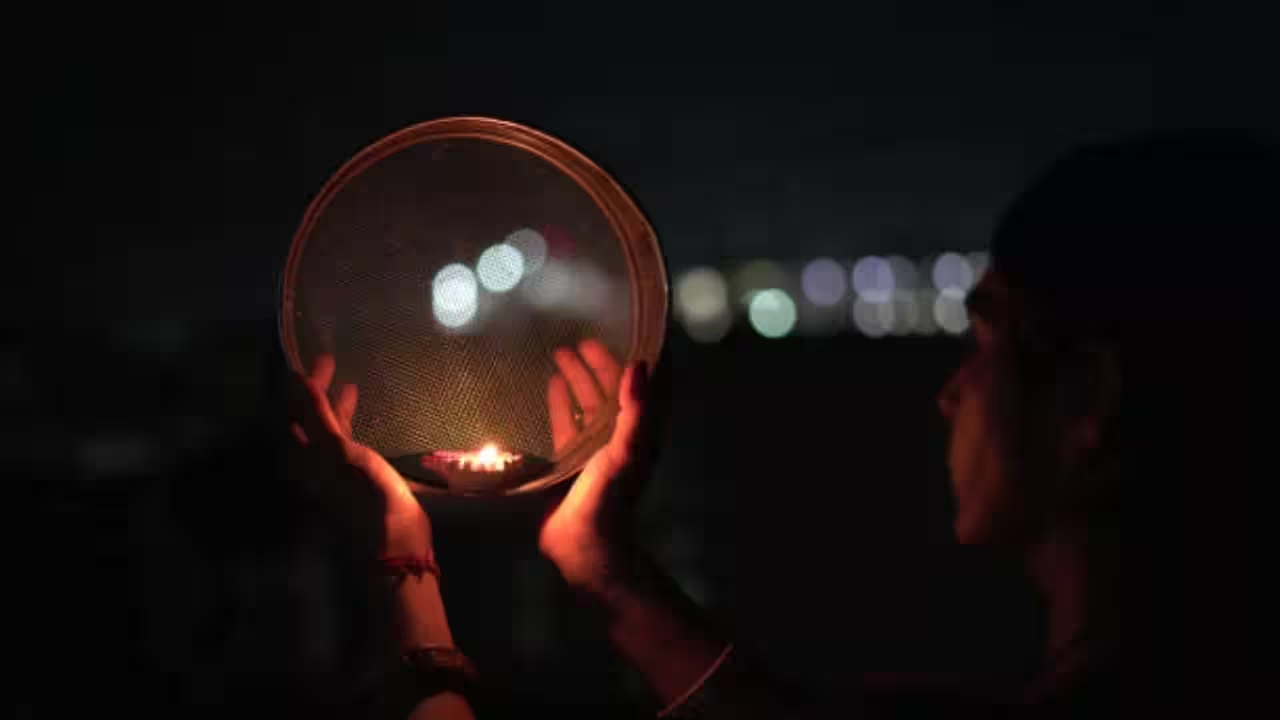
Another practical alternative is to create a symbolic representation of the Moon using uncooked rice, known as Akshat. This can be done by placing a red or yellow cloth on a clean wooden chowki and shaping the rice into a Moon form. After the local moonrise time, women can view this symbolic Moon through a Karwa Chauth sieve, offer prayers, and chant the appropriate mantras before completing the puja and Arghya as per family traditions.

Additionally, astrology associates silver with Chandra Dev. If available, a silver coin or round silver piece can serve as a symbolic representation of the Moon. This coin should be placed on a clean plate, worshipped with reverence, and the Arghya offered after the prescribed moonrise time. Families can then continue with the remaining rituals according to their specific customs.

Precautions During Adverse Weather Conditions

Before engaging in these alternative practices, it is advisable for individuals to verify the local moonrise time for their respective cities. These methods are designed for scenarios where the Moon has risen but remains obscured due to weather conditions. Furthermore, it is essential to acknowledge that family and regional traditions may vary in how the fast is completed when direct sighting of the Moon is not possible.

In light of the ongoing cyclone and heavy rainfall, it is crucial for individuals to prioritise safety. Those in affected areas are advised to refrain from venturing onto rooftops or outside solely for the purpose of sighting the Moon. Observing safety precautions is paramount during such adverse weather events, ensuring that the festival can be celebrated with respect and care.

As the festival approaches, women are encouraged to embrace these alternatives, allowing them to fulfil their rituals while remaining mindful of their safety amidst the ongoing weather challenges. The essence of Karwa Chauth lies in devotion and tradition, which can still be honoured even when faced with obstacles.

Long or Short, get news the way you like. No ads. No redirections. Download Newspin and Stay Alert, The CSR Journal Mobile app, for fast, crisp, clean updates!

App Store – https://apps.apple.com/in/app/newspin/id6746449540

Google Play Store – https://play.google.com/store/apps/details?id=com.inventifweb.newspin&pcampaignid=web_share

Latest News

Popular Videos
