


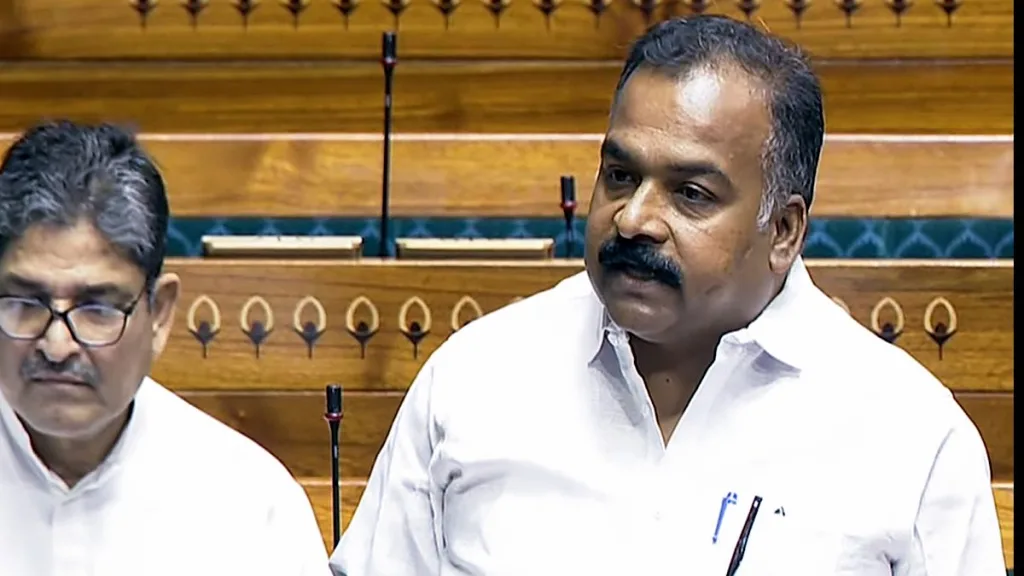
Manickam Tagore Claims Delimitation Bill Discriminated Against Southern and Eastern States
The CSR Journal Magazine

Congress Member of Parliament Manickam Tagore has asserted that the opposition has successfully defeated the delimitation bill in Parliament, labelling it as discriminatory towards the regions of South, East, and Northeast India. Tagore made these statements on April 18, following the gazette notification for the Women’s Reservation Act issued on April 16. He stated that the delimitation process did not reflect fairness and would adversely impact Tamil Nadu.

Tagore emphasised the significance of the opposition in defeating the bill, remarking that it is not simply about women’s reservation, despite the Women’s Reservation Bill being passed in 2023. He credited Congress leader Rahul Gandhi for his pivotal role in mobilising resistance against the bill and indicated that Gandhi is well-regarded in Tamil Nadu.

As Tamil Nadu prepares for elections scheduled for April 23, Tagore expressed confidence that Gandhi’s involvement would reinforce the Secular Progressive Alliance in the state. He clarified that the upcoming election is primarily a contest between the DMK-led alliance, which includes Congress, and the NDA, headed by AIADMK alongside the BJP and PMK.

Concerns Over Institutional Integrity

Tagore also raised concerns about the integrity of Indian institutions, alleging that the Indian government is experiencing significant “institutional capture” by the RSS. He claimed that individuals with differing ideologies have infiltrated essential institutions, thus undermining the democratic framework. The Congress MP accused the ruling party and Union Home Minister Amit Shah of engaging in conspiracies detrimental to the nation.

Stating that women across the country are vigilant and informed, Tagore dismissed any attempts by the government to mislead them regarding the Women’s Reservation Bill. He underscored that the recent legislative changes, such as the implementation of the bill passed in 2023, should not face undue delays attributed to procedural matters like the census and delimitation process.

Further, he remarked that, should the processes develop as intended, women’s reservation could feasibly be realised by the 2029 general elections, contingent upon the timely conclusion of the census by 2027. He explained that redrawn constituencies could enable adequate representation of women from various marginalized backgrounds within Parliament.

Political Tensions Around Legislative Proposals

The discussions surrounding the delimitation bill have intensified political tensions, particularly following its failure to achieve a two-thirds majority in the Lok Sabha, where 298 members supported the bill and 230 opposed it. Lok Sabha Speaker Om Birla announced that the bill was not passed, and Parliamentary Affairs Minister Kiren Rijiju noted that the government would not advance with the other connected bills.

The BJP has countered that opposition parties are obstructing a significant initiative aimed at securing 33 per cent reservation for women in Parliament and state assemblies. Union Home Minister Amit Shah accused parties such as Congress and TMC of impeding this critical legislation, warning that they might face political repercussions for their actions.

As the opposition rallies against the government’s handling of the bill, Tagore’s statements highlight ongoing challenges in ensuring equitable representation and addressing perceived inequities within legislative processes in India. The outcome of these discussions may have lasting implications for upcoming elections and the broader political landscape.

Long or Short, get news the way you like. No ads. No redirections. Download Newspin and Stay Alert, The CSR Journal Mobile app, for fast, crisp, clean updates!

App Store –  https://apps.apple.com/in/app/newspin/id6746449540 

Google Play Store – https://play.google.com/store/apps/details?id=com.inventifweb.newspin&pcampaignid=web_share

Latest News

Popular Videos
