


JD(U) MP Sanjay Kumar Jha Criticises Opposition Over Delimitation Bill Opposition
The CSR Journal Magazine

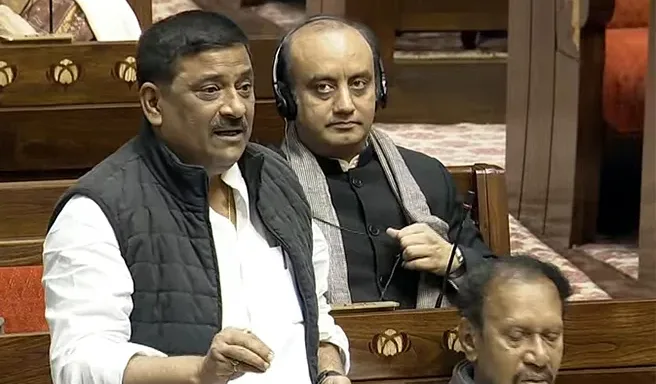
JD(U) MP Sanjay Kumar Jha has criticised the opposition for opposing the introduction of the Constitutional Amendment Bills, which includes the delimitation bill. Jha labelled the opposition’s claims that the bill would exacerbate the divide between South and North India as unfounded, asserting that the intention behind their objections is driven by a desire to resist the women’s reservation initiative.

During an interview with ANI, Jha stated, “How can the gap between South and North India widen? There’s a 50 per cent increase going to happen in every state.” He expressed belief that the opposition are fabricating issues to complicate discussions surrounding the Women’s Reservation Bill, which was passed in 2023, indicating their reluctance to engage with effective legislative measures.

He further reinforced that his party has consistently supported the Women’s Reservation Bill, with Nitish Kumar’s backing throughout the legislative process. Jha’s remarks highlight a growing tension between the ruling party and opposition, particularly in relation to women’s representation in governance.

Introduction of Constitutional Amendment Bills

The amendment bills necessary to operationalise the Nari Shakti Vandan Adhiniyam of 2023 were presented in the Lok Sabha on April 16, 2023. The opposition has been vocal in its disapproval, advocating for a division vote instead of a simple voice vote. This request for division was formally addressed by the Secretary General of the Lok Sabha, Utpal Kumar Singh, who began to outline the voting procedures for the session.

Amidst the tension, Lok Sabha Speaker Om Birla facilitated the division, which queued the introduction of the Constitution (One Hundred and Thirty-First Amendment) Bill, 2026. The division resulted in 251 votes supporting the introduction and 185 votes opposing it, out of a total of 333 cast.

Subsequently, three critical bills were introduced: The Constitution (One Hundred and Thirty-First Amendment) Bill, 2026, the Delimitation Bill, 2026, and the Union Territories Laws (Amendment) Bill, 2026. These legislative proposals are significant as they outline foundational changes to India’s political landscape, including adjustments to constituency boundaries based on the 2011 census.

Delimitation Bill and Future Plans

The proposed delimitation bill intends to transform the political framework by altering the size and composition of state legislative assemblies alongside the Lok Sabha. The controversy surrounding this bill has intensified, particularly following the recent approval of draft amendment bills aimed at implementing the Nari Shakti Vandan Adhiniyam, 2023.

The government aims to actualise the women’s reservation ahead of the upcoming 2029 General Elections. To facilitate this, an amendment to the 2023 Act and a constitutional alteration to separate the delimitation process from the 2027 census are in the pipeline. In its proposals, the government plans to enlarge the Lok Sabha to 850 seats, comprising 815 for states and 35 for Union Territories, in contrast to the current 543 seats.

As discussions continue, the implications of these legislative changes remain under scrutiny. The government positions these moves as critical steps towards increasing representation and addressing gender disparities in political empowerment, while opposition members ascertain concerns about the potential consequences of such widespread reforms.

Long or Short, get news the way you like. No ads. No redirections. Download Newspin and Stay Alert, The CSR Journal Mobile app, for fast, crisp, clean updates!

App Store –  https://apps.apple.com/in/app/newspin/id6746449540 

Google Play Store – https://play.google.com/store/apps/details?id=com.inventifweb.newspin&pcampaignid=web_share

Latest News

Popular Videos
