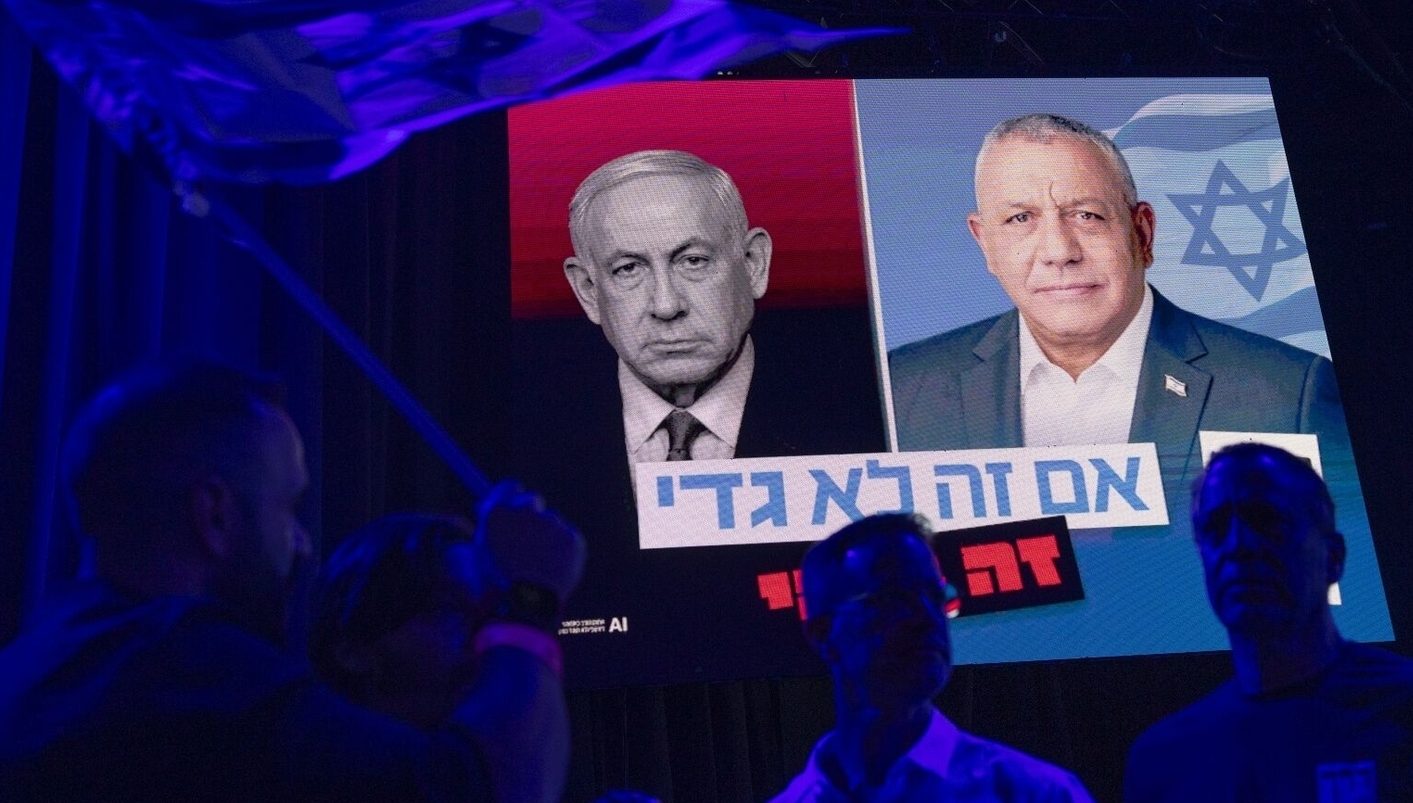
Images of Israeli Prime Minister Benjamin Netanyahu and Gadi Eisenkot, leader of Yashar, displayed on screens during a final election campaign rally in Tel Aviv, Israel, on Sunday, Oct. 25. Israel is gearing up for an election on Oct. 27 that will effectively be a referendum on Benjamin Netanyahu, the countrys longest-serving prime minister. Photographer: Kobi Wolf/Bloomberg
Today, Israelis are participating in a significant national election, with Prime Minister Benjamin Netanyahu facing a formidable challenge from former military chief Gadi Eisenkot and other opposition figures. The elections are taking place against a backdrop of increasing scrutiny of Netanyahu’s leadership, particularly following the Hamas attack on October 7, 2023, and the subsequent conflicts that ensued.
A total of 7,331,981 citizens are eligible to vote in this election, which commenced at 7 am local time and will continue until 10 pm. Exit polls are anticipated to be released shortly after voting concludes, providing an initial glimpse into the electoral outcome.
Netanyahu, who has held the position of prime minister for more than 19 years across various terms, is striving to maintain his leadership. His opponents are campaigning on issues related to national security, accountability, and the government’s response to the events of October 7.
Opposition Campaign and Last-Minute Appeals
Gadi Eisenkot, leading the Yashar party, has made a last-minute appeal to voters by referencing the October 7 attack. He urged citizens to reflect on that day as they head to the polls, framing the election as a crucial opportunity for change in leadership. Eisenkot’s message emphasised the need to replace what he termed the “government of October 7th” and to pursue a new direction for Israel.
In a post on X, Eisenkot stated, “Remember this hour when you go to vote. Today we have an opportunity to put a slip in the ballot box, to replace the government of October 7th and the shirking, and to set Israel on a new and better path. To be worthy. I am committed.” His campaign has positioned Netanyahu’s continued leadership as a potential threat to national security, advocating for a change in governance.
In response, Netanyahu has sought to shift the focus towards the potential composition of an opposition government, portraying his rivals as a left-leaning coalition that may rely on Arab parties to achieve a parliamentary majority. This strategy aims to highlight the challenges that a new government might face in maintaining stability.
Understanding the Electoral System in Israel
The electoral framework in Israel operates on a proportional representation basis, where citizens cast their votes for political parties rather than individual candidates for the prime ministerial position. The Knesset, Israel’s parliament, consists of 120 seats, necessitating that a party or coalition secures at least 61 seats to establish a majority government.
To gain entry into the Knesset, parties must obtain a minimum of 3.25 per cent of the national vote. Once the votes are counted, seats are allocated among qualifying parties in accordance with their share of the total votes. The official counting process will commence after the polls close, with the final vote tally expected by October 30.
The formal announcement of the results is scheduled for November 4. Following the release of the final results, Israeli President Isaac Herzog will engage with political party leaders to determine which candidate is most likely to form a government. This candidate will then have a period of up to 42 days to negotiate with other parties and establish a governing coalition.
Long or Short, get news the way you like. No ads. No redirections. Download Newspin and Stay Alert, The CSR Journal Mobile app, for fast, crisp, clean updates!
Israel is set to conduct parliamentary elections on Tuesday, with Prime Minister Benjamin Netanyahu aiming to maintain his position in light of scrutiny over...
Israeli Prime Minister Benjamin Netanyahu allegedly intended to initiate new military strikes against Iran earlier this month, focusing on nuclear facilities, regime-affiliated sites, and...
Israeli Prime Minister Benjamin Netanyahu has lauded Indian pilot Smit Machchhar as a “hero of the entire world” following an incident where he thwarted...