


Government Rejects Rahul Gandhi’s Criticism of Great Nicobar Project
The CSR Journal Magazine

The government has firmly dismissed the accusations made by Congress leader Rahul Gandhi regarding the proposed Great Nicobar infrastructure project. Gandhi has referred to the initiative as a “crime against nature,” asserting that it poses a significant threat to the environment. In response, the Union Ministry of Environment clarified that the project is of “strategic national importance” and is designed to enhance India’s maritime presence as well as its economic and security interests in the Indo-Pacific region.

Following Gandhi’s remarks on Wednesday, the ministry stated that the project at Campbell Bay in the Andaman and Nicobar Islands aims to integrate development with the protection of ecological systems and the indigenous populations. The ministry emphasised that it is committed to achieving a balance between economic growth and environmental conservation.

Rahul Gandhi’s comments labelled the infrastructure plan as one of the “biggest scams” that could lead to severe destruction of natural and tribal heritage. He claimed that approximately 160 square kilometres of pristine rainforest would be compromised, urging that the developments are misleadingly presented as progressive. In stark contrast, the governmental response outlined the ecological and social safeguards incorporated into the planning.

Details of the Great Nicobar Project

The ambitious project involves extensive infrastructure initiatives aimed at establishing Great Nicobar as a key economic and maritime hub. Key components include the construction of an International Container Transshipment Terminal (ICTT) with a capacity to handle 14.2 million Twenty-foot Equivalent Units (TEUs), a new international airport designed for peak-hour traffic of 4,000 passengers, and a 450 MVA gas and solar power plant. Additionally, a township covering 16,610 hectares is in the planning stages.

The government has stated that these developments are intended to support port-led economic growth and to position Great Nicobar as an essential logistics and connectivity centre in the region. Environmental considerations remain at the forefront of the project’s planning, with reassurances that no communities will be displaced, particularly those of the Shompen and Nicobarese tribal groups.

Concerns regarding deforestation have been addressed, noting that only 1.82 per cent of the total forest cover in the Andaman and Nicobar Islands will be affected. The estimated number of trees that might need to be felled stands at approximately 7.11 lakh across 49.86 square kilometres, which will be executed in phases to minimise environmental impact. Furthermore, the project has acquired environmental clearance under the Environmental Impact Assessment Notification of 2006, with numerous conditions focusing on pollution control and biodiversity conservation.

Reactions from Rahul Gandhi and Indigenous Communities

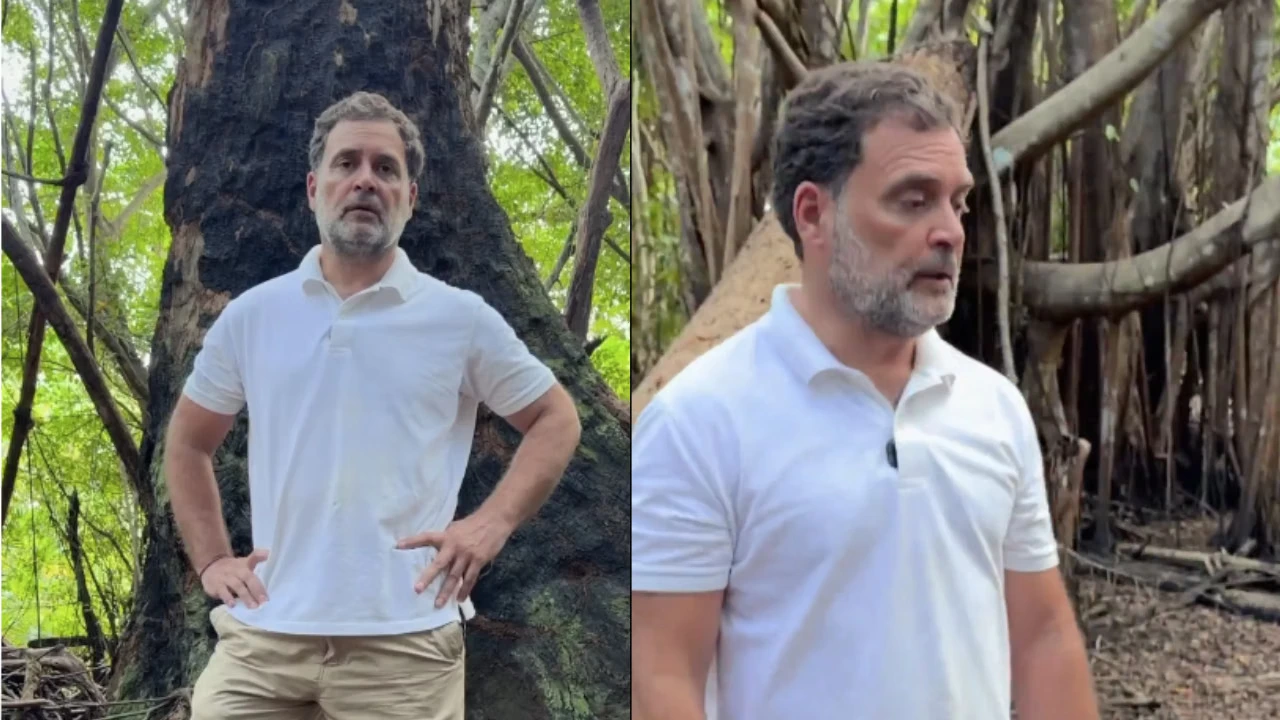
During his visit to Campbell Bay on April 26, Rahul Gandhi expressed concerns over the environmental implications of the Great Nicobar Project. He described the region’s forests as ecologically invaluable and remarked that the project threatens to undermine natural heritage. Gandhi asserted that these ancient forests are irreplaceable and warned that the ongoing developments constitute significant ecological harm.

Following discussions with the Nicobarese tribal community and settler groups, he claimed that many residents had voiced apprehensions regarding environmental risks, a lack of transparency, and perceived neglect of tribal rights. Emphasising the potential consequences, Gandhi has labelled the project a “wholesale theft” of ecological resources, urging national awareness about the issue.

Furthermore, he reiterated that the ongoing initiatives are detrimental to both Adivasi communities and settlers, potentially leading to their displacement. He called for a collective recognition of the situation, emphasising that it represents one of the most significant threats to India’s natural and tribal heritage. Gandhi has advocated for a dialogue in Parliament to bring attention to these critical matters affecting both the environment and indigenous communities.

Long or Short, get news the way you like. No ads. No redirections. Download Newspin and Stay Alert, The CSR Journal Mobile app, for fast, crisp, clean updates!

App Store –  https://apps.apple.com/in/app/newspin/id6746449540 

Google Play Store – https://play.google.com/store/apps/details?id=com.inventifweb.newspin&pcampaignid=web_share

Latest News

Popular Videos
