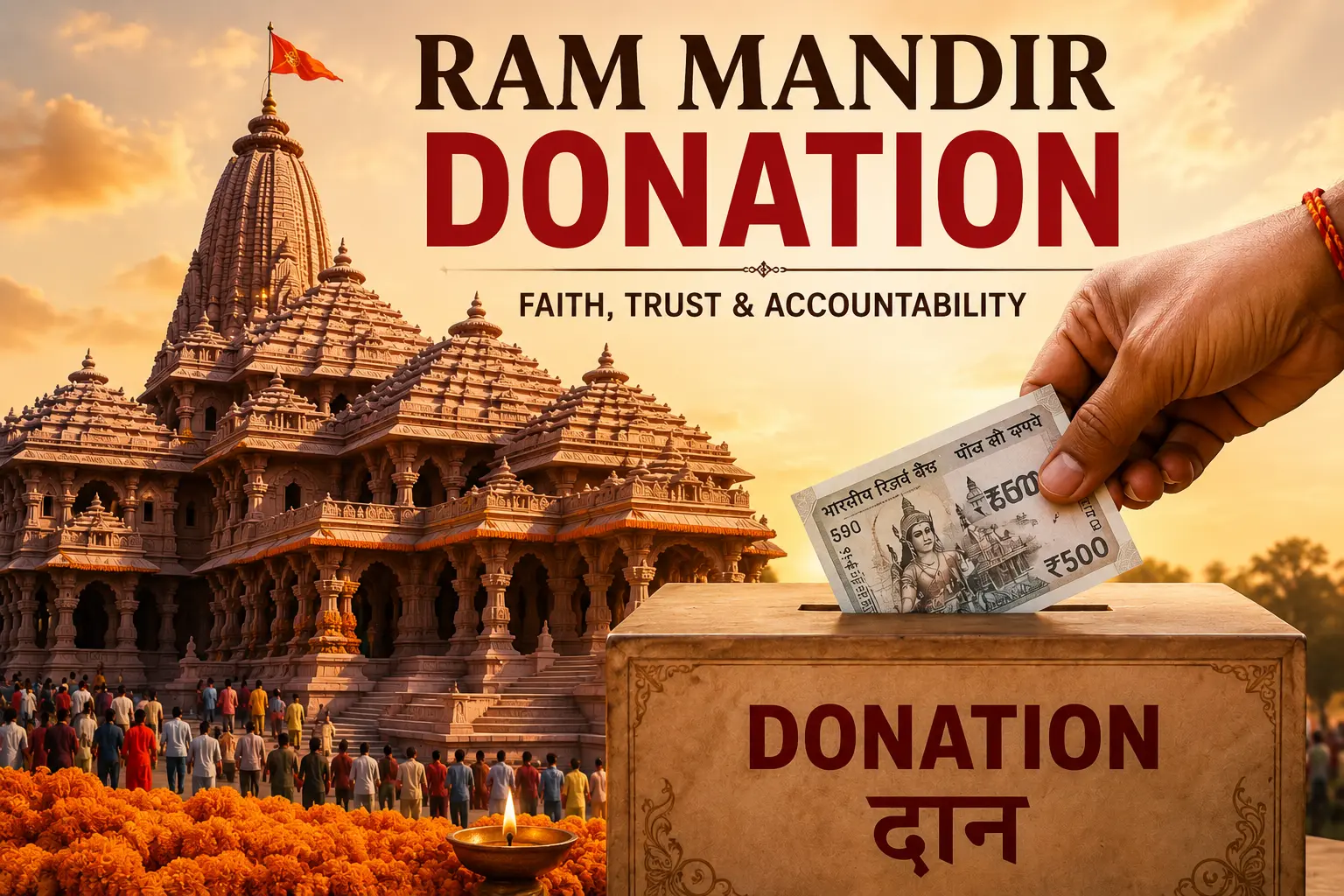
They did not donate for corruption.
They did not donate for hidden deals.
They donated with pure faith.
For millions of Indians, the Ram Mandir in Ayodhya was never just a political promise or a construction project. It was a sacred dream carried through generations — a symbol of faith, sacrifice, devotion, and cultural identity. People believed they were contributing not merely to a temple, but to history itself.
“And above all, people trusted”.
They trusted that the government standing behind the Ram Mandir movement was acting with honesty, dignity, and respect for the emotions of crores of devotees. They trusted that every rupee donated would be treated as sacred. They trusted that Lord Ram’s name would never be used for personal gain, political profit, or financial manipulation.
Today, that trust appears deeply shaken.
As allegations and controversies surrounding Ram Mandir donations and related financial dealings continue to surface, anger and heartbreak are spreading among ordinary citizens. Across social media, religious gatherings, and public discussions, one painful sentiment is becoming impossible to ignore:
“Were the emotions of devotees exploited?”
For many people, this issue is no longer only about missing accountability or questionable transactions. It has become a moral and emotional crisis — one that directly challenges the credibility of those in power.
The government must understand one harsh reality: It did not receive public support merely because of speeches or campaigns. It received the trust of millions because people believed the Ram Mandir movement was a genuine, honest, and sacred mission. Citizens stood by the government because they believed it was fulfilling a centuries-old dream with sincerity — not turning faith into a political tool or an emotional business model.
If even a fraction of these allegations prove true, the damage will go far beyond money. It will mean that people who donated out of devotion were reduced to emotional targets. It will mean that Lord Ram’s name was used as a shield while powerful individuals benefited behind closed doors and it will mean that the faith of ordinary Hindus — the poor, the elderly, the struggling families who donated with tears in their eyes — was treated as expendable.
That betrayal cannot be measured in rupees.
A retired school teacher from Lucknow, holding back tears outside the temple premises, said: “We trusted them because they spoke in the name of Ram. If faith itself becomes a tool for politics and profit, then what is left for ordinary people to believe in?”
That question now echoes across the nation.
Many devotees are openly asking whether the Ram Mandir became an emotional “eye wash” for political benefit — a way to secure votes, gain public sympathy, and strengthen power while presenting an image of religious devotion. Critics argue that if transparency is absent, then the government cannot escape responsibility by remaining silent.
Silence, in such moments, only deepens suspicion.
The emotional wound is especially painful because countless ordinary citizens sacrificed beyond their means. Some donated from life savings. Laborers gave portions of daily wages. Women contributed jewelry kept for emergencies. Children offered coins believing they were helping build the home of Lord Ram.
And now, millions want answers.
How will the government repay the trust of people who feel cheated? How will leaders look into the eyes of devotees who believed every promise made in the name of Ram? How will they heal the pain of citizens who now feel their emotions may have been manipulated for political and financial gain?
The government owes the nation more than statements, it owes transparency, it owes accountability and above all, it owes honesty to the people whose faith gave it power in the first place because governments survive on votes but nations survive on trust and when trust built in the name of Lord Ram begins to collapse, the pain reaches far deeper than politics.
The grand Ram Mandir may stand tall in Ayodhya, shining under golden lights and echoing with chants of “Jai Shri Ram.” But for many broken-hearted devotees today, one disturbing question remains unanswered: Was this truly a sacred mission for the people or merely a carefully crafted illusion to win their faith and secure power?