



India put a digital health ID in almost every village because issuing one takes a phone, an Aadhaar number and a minute. Filling that ID with medical records takes a clinic with working software, reliable power and a doctor who has time to type, and that has arrived far more slowly.
Why an ID is Easy and a Record is Hard
An ID is easy because it is a number, and a record is hard because it is a workflow. Creating an account needs an Aadhaar number, a mobile number and a one-time password.
A health record needs a doctor or nurse to write down what happened, scan or type it, and attach it to the right person’s account. That is a change to how a clinic has worked for decades.
One can be done at a camp table. The other cannot be done at all until the building has power, a connection and a screen.
Who Creates the Health IDs in a Village
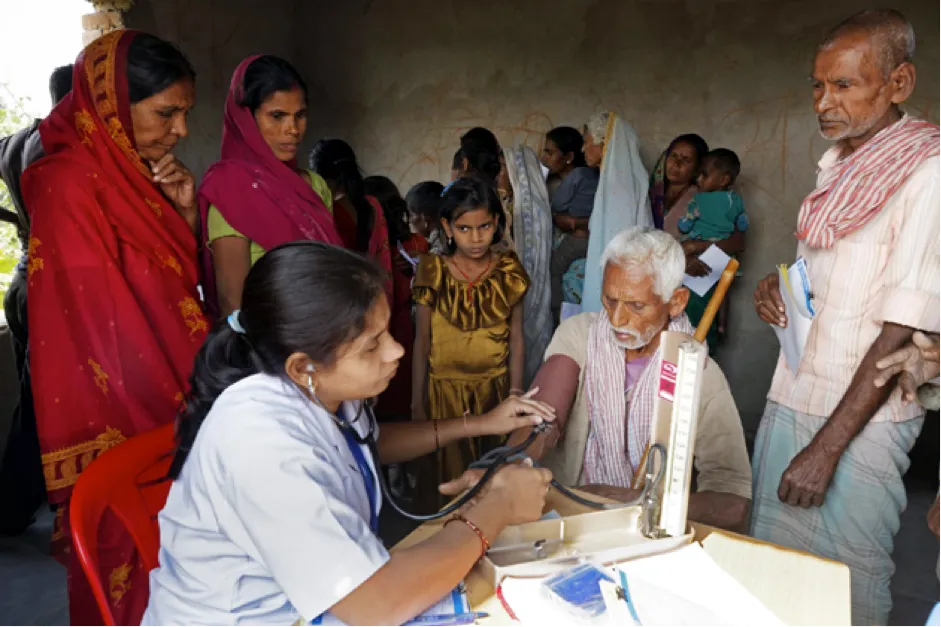
Frontline health workers create most of the health IDs in a village, and they do it outside any clinic. Accredited social health activists and auxiliary nurse-midwives carry a phone and register people door to door.
Camps do the rest. Existing programmes with their own registration drives generated accounts in bulk alongside whatever they were already doing.
That is why the national count climbed so quickly. The Ministry of Health and Family Welfare recorded 90 crore accounts in May 2026, up from 14.7 crore in 2021.
Where the Records Actually Get Made
Records get made where a facility is connected, and most rural care does not happen in one. A primary health centre needs broadband that stays up, power that does not cut and a device on the desk.
Where any of those is missing, the consultation still happens and the record does not. Nothing about the patient’s visit reaches their account.
An abha card in a village works perfectly at a district hospital and does nothing at a sub-centre twenty minutes away that is not on the network.
What the Field Study Found
A field study in rural Jharkhand measured use rather than enrolment, which almost nothing else does. Researchers from the Department of Community Medicine at Manipal Tata Medical College, Jamshedpur, surveyed 262 people aged 16 to 70 in rural East Singhbhum.
Only 42 of them, 16.8 percent, reported actually using the card and receiving timely benefits. The findings were published in the Indian Journal of Medical Research.
The authors describe a critical gap between the digital tools being available and being used effectively at community level. That is the whole story in one sentence.
Why Enrolment is Not the Same as Real Use
Enrolment counts people reached, while real use counts people helped, and the same study separates the two. The same study found a more encouraging picture on attitudes than on practice.
Just over 40 percent agreed the scheme had improved health access, and 41.2 percent said it boosted their confidence in handling a health crisis. Around 34.7 percent said it improved their digital awareness.
So people are willing. What is missing sits on the other side of the counter.
What a Rural Clinic Would Need
A rural clinic needs four ordinary things before it can create a single record, and none of them is exotic.
-
Power that stays on through an outpatient session.
-
A connection fast enough to reach the national network, and stable enough to finish a request.
-
A device at the point of care, not in an office at the back.
-
Staff time. A clinic seeing a hundred patients before lunch cannot add a data-entry step without losing something else.
For example, a sub-centre that gets a 40,000 rupee tablet and a working connection can link every consultation it already holds, while the same money spent on a camp adds accounts and no records. Money on the facility side produces records; money on the enrolment side produces sign-ups.
What Would Change the National Numbers
What would change the national numbers is measuring something other than accounts, and funding the side that is behind.
-
Report use, not sign-ups. The 16.8 percent found in that field study is the kind of figure that should be tracked routinely.
-
Fund connectivity and devices at sub-centres, where the gap is widest and the cost per facility is lowest.
-
Train the people already there. Frontline workers proved they can register a village; they can be equipped to link a record too.
Women hold 49.75 percent of all accounts nationally, which is an unusually even split for a programme of this size. Maternal and child health contacts are where many of those records could begin. Whether a family also holds government cover or one of the best health insurance in India policies, none of it substitutes for a history that follows the patient.
Frequently Asked Questions
Is the ABHA card the same as an Ayushman card?
No. The ABHA card is a health record number open to everyone. The Ayushman card is a treatment benefit for eligible families and for everyone aged 70 and above.
Do rural households actually use the card?
Often not. A study of 262 people in rural East Singhbhum published in the Indian Journal of Medical Research found only 16.8 percent had used it and received timely benefits.
Who creates ABHA accounts in villages?
Frontline health workers, including accredited social health activists and auxiliary nurse-midwives, along with camps run alongside existing programmes.
What stops a village clinic creating records?
Power, connectivity, a device at the point of care and staff time. Without all four, the consultation happens but nothing is linked.
What is Ayushman Arogya Mandir?
It is the current name for the health and wellness centres that deliver primary care, and it is the level at which most rural digital record creation would have to happen.
Key Takeaways
-
Issuing an ID is light work and putting a clinic online is heavy work. That difference, not policy intent, explains the gap between the two numbers.
-
Enrolment reached 90 crore; use is far behind. A rural field study found 16.8 percent had actually used the card and received timely benefits.
-
Attitudes are ahead of infrastructure. Around 40 percent of the same group said the scheme improved health access, so the demand side is not the problem.
-
The spend should move to the facility side. Power, connectivity, devices and staff time at sub-centres produce records; another registration drive produces accounts.