


Delhi Police to File FIR Over Pellet Gun Incident During Protest
The CSR Journal Magazine

The Delhi Police is set to register a First Information Report (FIR) concerning the alleged use of pellet guns during protests held on July 20 in the city, as reported on August 21. The decision comes after a complaint was lodged by Sahil Lochav, a victim of the pellet gun incident, who expressed concern that no FIR had been registered thus far.

Sahil Lochav’s complaint includes serious injuries he sustained during the protests. He described that the use of pellet guns occurred in Connaught Place, leading to over 200 pellet shells being found in his body, with three located in his eye, resulting in a loss of vision. According to reports, some shells are lodged near his heart and cannot be safely removed. Authorities indicated that they are assessing the complaint in light of directives from the Supreme Court.

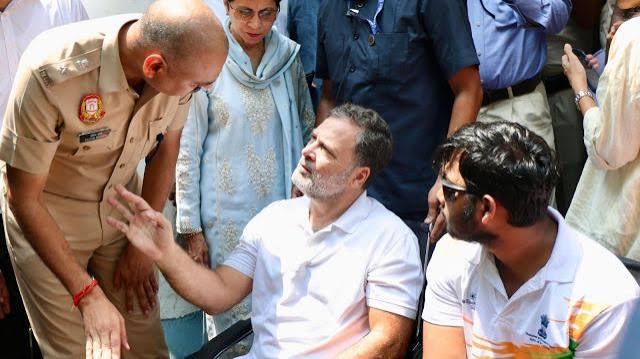
In response to this situation, Rahul Gandhi visited the Parliament Street police station for a sit-in protest, demanding that an FIR be registered based on Lochav’s complaint. Gandhi argued that the police’s claim of not having fired pellet guns raises serious questions, insisting that “a crime has indeed happened” and demanding justice for Lochav’s family.

Protest Dynamics and Political Reactions

The protest organized by Gandhi attracted various Congress party members, who voiced their support for the cause of justice for Lochav. Rahul Gandhi highlighted his belief that the police’s inaction is linked to political pressures within the Home Ministry. He urged authorities not to obstruct justice and vowed to maintain the protest until an FIR was filed.

Union Minister JP Nadda condemned Gandhi’s actions, suggesting that the Congress leader was merely seeking media attention rather than genuinely advocating for the victims. He referenced the Supreme Court’s existing investigation regarding the July 20 incident, which has resulted in the establishment of a five-member High-Powered Expert Committee to look into the allegations against the police and protesters.

Nadda critiqued Gandhi’s sit-in, framing it as politically motivated and a diversion from ongoing criticisms faced by the Congress party concerning respect for national symbols. He accused Gandhi of staging a “camera-centric drama” to deflect attention from these issues.

Supreme Court Involvement and Committee Formation

The Supreme Court had previously taken cognisance of the events of July 20, forming an expert committee headed by retired Justice R Subhash Reddy to investigate the matter. The committee comprises other legal and law enforcement experts tasked with examining the allegations of police violence as well as misconduct by protesters.

This High-Powered Expert Committee is directed to prioritise complaints of excessive force used by police and assess allegations related to the treatment of women protesters. Additionally, it has been granted the authority to determine whether to recommend interim compensation for those injured during protests, encompassing both law enforcement and demonstrators.

The Supreme Court has also mandated the preservation of evidence, including CCTV recordings and body camera footage from the protest incidents. The establishment of the committee does not preclude police actions against officers found to have behaved improperly, signalling that accountability is expected to be enforced simultaneously with the inquiry.

Long or Short, get news the way you like. No ads. No redirections. Download Newspin and Stay Alert, The CSR Journal Mobile app, for fast, crisp, clean updates!

App Store –  https://apps.apple.com/in/app/newspin/id6746449540 

Google Play Store – https://play.google.com/store/apps/details?id=com.inventifweb.newspin&pcampaignid=web_share

Latest News

Popular Videos
