


BJP’s surge in minority belt signals major shift in Bengal politics
The CSR Journal Magazine

In a striking development, the Bharatiya Janata Party has made unexpected gains in West Bengal’s minority-dominated regions, reshaping long-standing electoral patterns and accelerating the decline of the All India Trinamool Congress after 15 years in power.

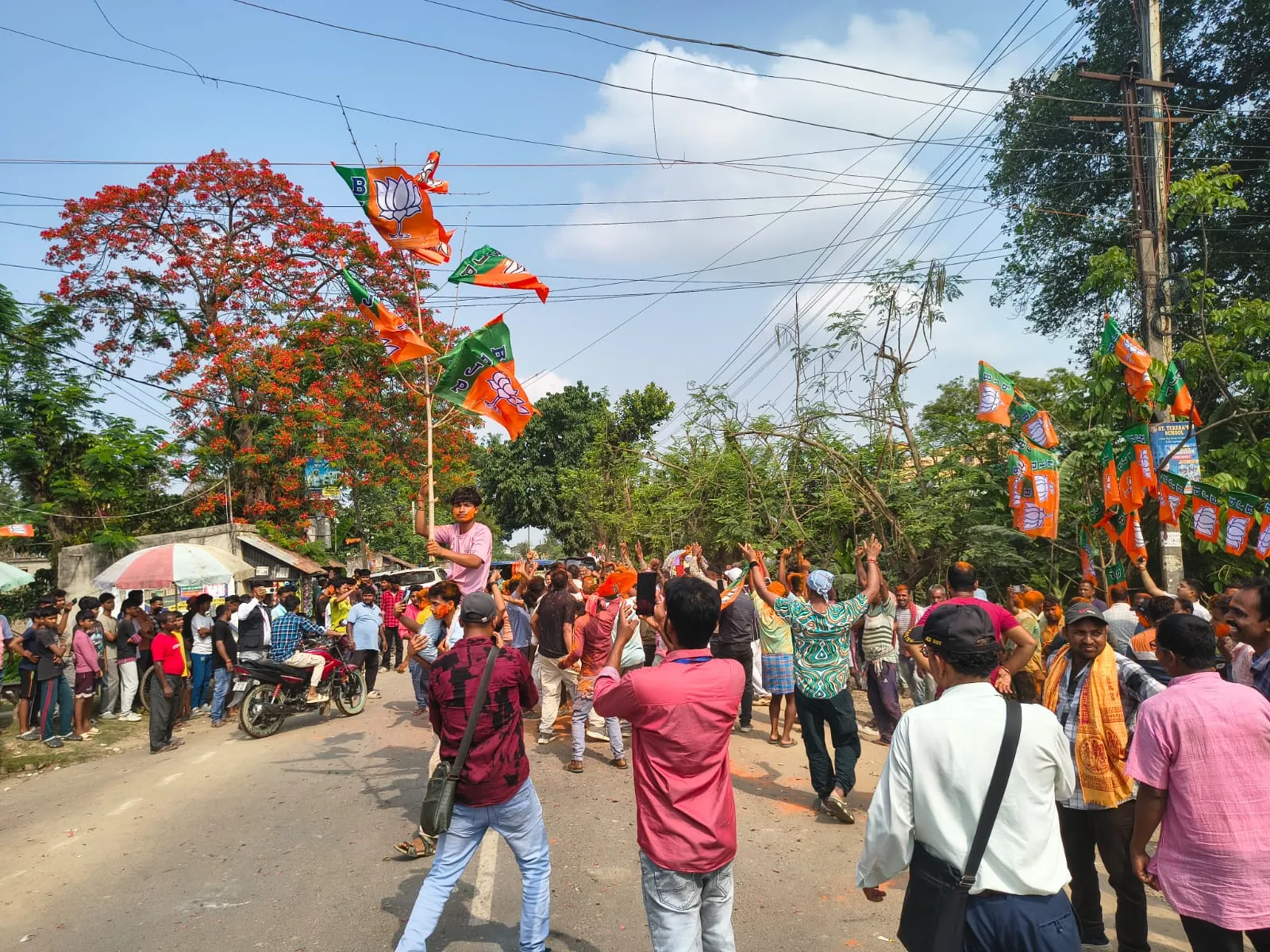
Trends observed till 5 pm indicated a sweeping mandate in favour of the BJP, with what political observers describe as a “saffron wave” sweeping across the state—particularly in North Bengal. The party is now poised to form the government with a massive majority, marking a historic political transition.

Despite the broader wave, the Trinamool managed to retain limited ground in the minority-heavy districts of Murshidabad and Malda. However, the party’s performance in these regions has fallen significantly short of expectations.

In the 2021 Assembly elections, the Trinamool had secured 28 out of 34 seats across these two districts. This time, the numbers have dropped sharply. In Murshidabad, which comprises 22 constituencies, the party has been reduced to just nine seats, with the rest divided among the BJP, Congress, CPI(M), and smaller regional players.

Malda, too, has witnessed a similar erosion. While the Trinamool has retained some constituencies, key areas such as Manikchak and Baishnabnagar have shifted away, indicating a clear change in voter sentiment.

Demographic dynamics and electoral Math

Official data suggests that minorities constitute approximately 51.2% of the population in Malda and 66.8% in Murshidabad, making these districts electorally significant. Yet, the fragmentation of minority votes among multiple opposition parties appears to have diluted the Trinamool’s traditional advantage.

At the same time, a consolidation of majority votes in several constituencies has worked in favour of the BJP, altering the electoral arithmetic.

Polarisation and policy priorities

According to political analyst Biswajit Ghosh, the election reflected a mix of identity-driven and issue-based voting patterns. “There is little doubt that elements of polarization were present,” he observed, noting that constituencies with a Hindu majority largely favoured the BJP, while minority-dominated areas continued to back the Trinamool.

However, beyond identity politics, economic concerns played a decisive role. Employment opportunities, particularly for the younger generation, emerged as a key issue. While welfare schemes such as Lakshmir Bhandar continued to benefit rural households, voters appeared to prioritise long-term economic stability.

Migrant workers and welfare calculus

In districts like Malda—long associated with migrant labour—the hardships faced by workers outside the state became a significant electoral factor. Many returning migrants expressed a desire for better job opportunities within Bengal to avoid leaving their homes in search of work.

Women voters, meanwhile, were seen weighing existing welfare schemes against alternative promises such as the BJP’s Annapurna Yojana. Sections of the business community also leaned towards the idea of a “double-engine” government, expecting improvements in infrastructure, industry, and public services.

Localised incidents further influenced voting patterns. In parts of Murshidabad, including Shamsherganj, recent communal tensions are believed to have led to a consolidation of Hindu votes in favour of the BJP. Simultaneously, the division of minority votes among Congress, the Left Front, and smaller parties weakened the Trinamool’s position.

A historic political transition

With the BJP now set to form government in West Bengal for the first time since independence, the results mark a watershed moment in the state’s political history. For Chief Minister Mamata Banerjee and her party, the outcome signals a major setback and will likely trigger a detailed internal review.

As Bengal prepares to enter a new political phase, expectations are high. Voters across districts—including Malda and Murshidabad—are looking toward the incoming administration with hopes of improved governance, economic opportunity, and lasting stability.

Long or Short, get news the way you like. No ads. No redirections. Download Newspin and Stay Alert, The CSR Journal Mobile app, for fast, crisp, clean updates!

App Store –  https://apps.apple.com/in/app/newspin/id6746449540 

Google Play Store – https://play.google.com/store/apps/details?id=com.inventifweb.newspin&pcampaignid=web_share

Latest News

Popular Videos
