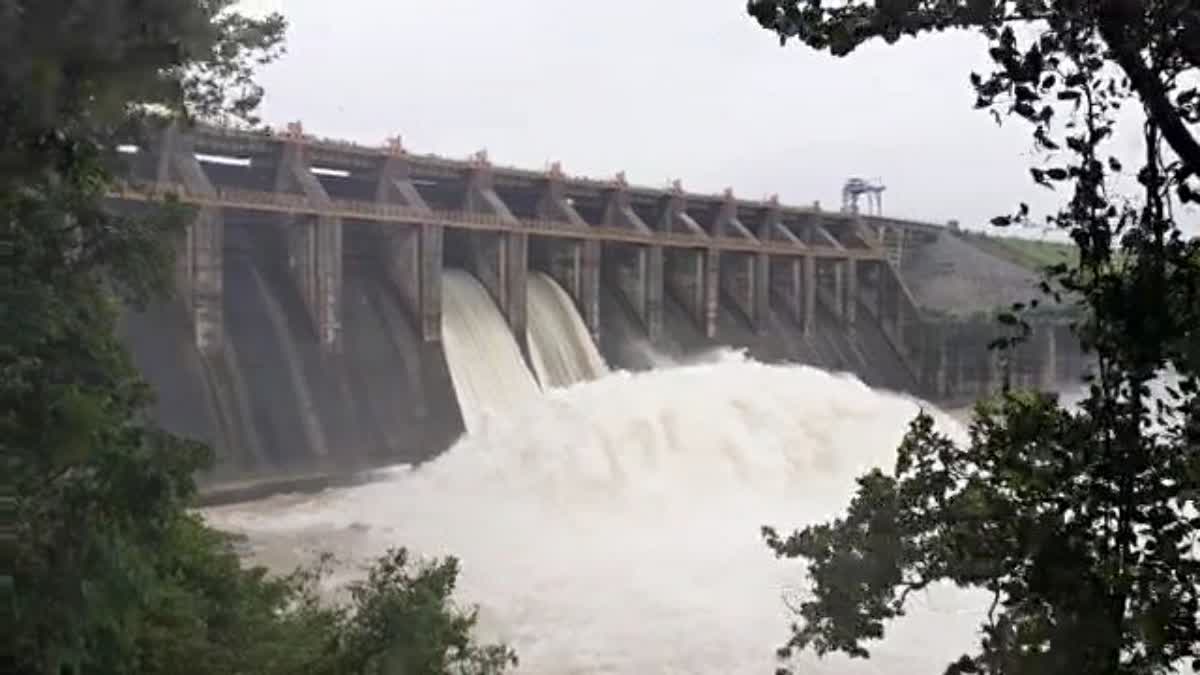
With sand prices rising steadily across the state and illegal extraction from riverbanks brought to a halt, the search for alternative sources has gained urgency. Amid this situation, the Damodar Valley Corporation (DVC) has identified a massive reserve of sand beneath the Maithon Reservoir, estimated at around 100 million cubic metres, or approximately 353 crore cubic feet.
The discovery has opened up the possibility of large-scale dredging and extraction, potentially providing construction-grade sand while also helping restore the reservoir’s storage capacity.
The proposed removal of accumulated silt and sand could serve two purposes for the DVC. First, dredging the reservoir bed could improve navigability and increase its water-holding capacity. Second, the extracted sand could be sold for construction and other commercial uses, creating a new source of revenue for both the DVC and the state government.
The DVC is now considering a phased programme for removing the deposits. A global tender for silt-removal work is reportedly under consideration.
Four million cubic metres to be removed annually
According to the proposed plan, the DVC could undertake silt extraction at a rate of around four million cubic metres every year. Since fresh silt continues to accumulate in the reservoir, officials believe that dredging would have to become a regular operation rather than a one-time exercise.
An expert agency has already conducted a survey to assess the volume of material deposited on the reservoir bed. The survey confirmed the presence of a substantial quantity of sand mixed with silt.
Experts are now being consulted to determine how much the removal of these deposits could improve the dam’s storage capacity, operational efficiency and navigability without affecting the stability of the structure.
57% of the Dead Zone already filled
The DVC divides the reservoir into three principal zones—the Dead Zone, the Live Zone and the Flood Zone. The Dead Zone is the lowest portion of the reservoir, followed by the Live Zone, while the Flood Zone occupies the uppermost section.
Surveys indicate that approximately 57 per cent of the Dead Zone has already been filled with silt. Deposits are also gradually spreading into the Live and Flood Zones.
Experts have warned that continued accumulation could progressively reduce the reservoir’s effective water-holding capacity. Removing the deposits could therefore help preserve the reservoir’s long-term utility.
From flood demands to a concrete plan
Dredging Maithon has been a long-standing political demand in West Bengal. During the Trinamool Congress government’s tenure, former Chief Minister Mamata Banerjee repeatedly called for dredging of the reservoir, particularly during periods of flooding and flood-like conditions.
However, the proposal was never implemented. The DVC had previously maintained that the cost of removing the accumulated silt would be comparable to the cost of constructing an entirely new dam, making the exercise economically difficult to justify.
The change in the political landscape has now coincided with renewed interest within the DVC in taking up the project.
Sand disposal remains a major challenge
While the commercial value of the sand has emerged as a major attraction, several practical questions remain. One of the biggest concerns is how the enormous quantity of material extracted from the reservoir will be separated, transported and stored.
Dredging technology could be used to remove the accumulated silt and sand, but separating commercially usable sand from silt will be crucial to the project’s financial viability.
If a significant portion of the material can be recovered as usable sand, the DVC could potentially generate substantial income through its sale to the construction sector.
Potential revenue stream for DVC and state
The commercial exploitation of the sand could transform the proposed dredging operation from a costly maintenance exercise into a potential revenue-generating project.
At the same time, increased availability of legally extracted sand could provide an alternative source for the construction industry at a time when supplies have tightened because of restrictions on illegal riverbank mining.
Officials, however, will have to balance the commercial opportunity with environmental concerns, technical feasibility and the need to protect the structural safety of the reservoir.
The DVC has yet to announce a definite timeline for the start of large-scale extraction. The project remains under discussion, with technical and financial aspects still being examined.
DVC Project Head Subir Saha said, “Deliberations are underway regarding the initiative to extract silt from the DVC dam.”
If approved and implemented, the Maithon dredging programme could simultaneously address three major concerns—preserving the reservoir’s capacity, creating a long-term source of construction sand and generating additional revenue for the DVC and the state. The key question now is when the proposed project will move from planning to execution.
Long or Short, get news the way you like. No ads. No redirections. Download Newspin and Stay Alert, The CSR Journal Mobile app, for fast, crisp, clean updates!
Ranchi, India: Maithon Power Limited (MPL), a subsidiary of Tata Power, is thrilled to celebrate the outstanding achievement of Jharkhand’s Under-14 football team, which...