


Supreme Court Issues Notice to Centre on Denotifying Jantar Mantar as Protest Site in Delhi
The CSR Journal Magazine

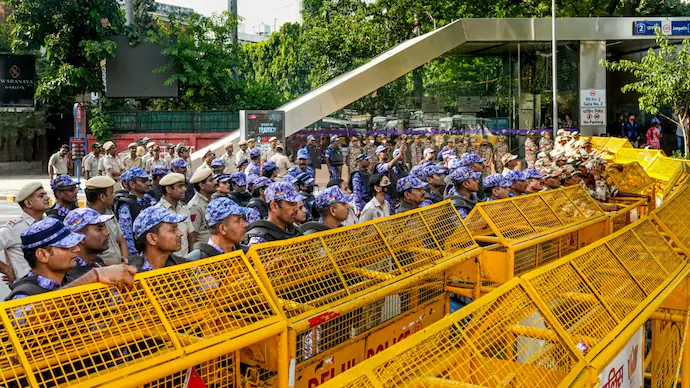
On 15 October, the Supreme Court requested a response from the Union Government and the Delhi Police regarding a petition that challenges the recent denotification of Jantar Mantar as a designated protest site. This request came during the court’s examination of a writ petition that contests the Standing Order issued on 11 October, which removed Jantar Mantar’s status as a protest venue while designating three alternative locations for such activities.

The petition was submitted by advocate Swaty Singh, who contended that moving protests to more remote areas could undermine the fundamental rights to peaceful assembly and freedom of expression. Singh argued that the proximity of protest sites to the political centre is crucial for ensuring that voices are heard by those in power.

Concerns Over Relocation of Protest Sites

During the proceedings, former judge and senior advocate Mukta Gupta emphasised the importance of having a site where protesters can effectively communicate their grievances to the authorities. Gupta highlighted that the essence of protest lies in being visible and audible to decision-makers. Justice Joymalya Bagchi, who was also part of the bench, made an oral observation regarding the need to consider technological advancements in understanding the term “heard.” This remark indicates that the court is contemplating the implications of modern communication methods on traditional forms of protest.

For over thirty years, Jantar Mantar has served as a significant location for protests in the national capital. It has been a gathering point for individuals seeking to voice their concerns, frustrations, and demands. The recent decision by the Delhi authorities to relocate this iconic site has raised alarms about the accessibility of protest venues and the potential marginalisation of dissenting voices in the political landscape.

The relocation of protests to less central areas may not only hinder the visibility of dissent but could also affect the dynamics of public engagement with political issues. Critics argue that such measures could lead to a dilution of the impact that protests have historically had in influencing policy and public opinion.

Notice Issued to Election Commission of India

In a separate but related matter, the Supreme Court also issued a notice to the Election Commission of India (ECI) following a petition filed by opposition leaders, including Rahul Gandhi. The court sought responses from the ECI, Chief Election Commissioner Gyanesh Kumar, and Election Commissioners Sukhbir Singh Sandhu and Vivek Joshi regarding allegations of irregularities in the electoral roll process.

This notice also extends to Rahul Gandhi and Samajwadi Party chief Akhilesh Yadav, among others, in connection with a petition concerning a march to the Supreme Court aimed at addressing alleged discrepancies in the electoral process. The court expressed strong objections to the behaviour of one of the thirteen petitioners who questioned the ECI’s handling of the electoral rolls.

The developments in both cases illustrate ongoing tensions between governmental authorities and opposition parties in India. The Supreme Court’s involvement underscores the judiciary’s role in mediating disputes related to civil rights and electoral integrity, both of which are critical for the functioning of democracy in the country.

Long or Short, get news the way you like. No ads. No redirections. Download Newspin and Stay Alert, The CSR Journal Mobile app, for fast, crisp, clean updates!

App Store – https://apps.apple.com/in/app/newspin/id6746449540

Google Play Store – https://play.google.com/store/apps/details?id=com.inventifweb.newspin&pcampaignid=web_share

Latest News

Popular Videos
