


Supreme Court Orders ₹6 Lakh Compensation for Man Acquitted After Six Years in Jail
The CSR Journal Magazine

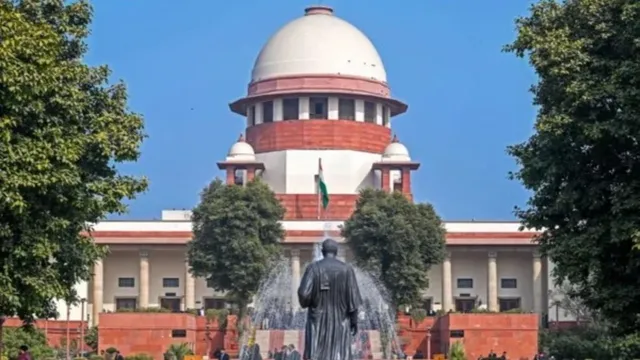
The Supreme Court has awarded ₹6 lakh in compensation to a man who spent six years in jail as an undertrial before being acquitted in a murder case. The court held the Uttar Pradesh police accountable for a poorly conducted investigation that endangered the man’s life and liberty, labelling the case as “a classic case of how an investigation should not be proceeded with.”

A bench comprising Justices JB Pardiwala and K Vinod Chandran stated that six years had been “erased from the life of a man on the strength of a concocted story built on mere surmises and conjectures.” The justices condemned both the investigating and prosecuting agencies for failing to establish even the most fundamental facts regarding the alleged crime.

In its ruling, the court directed the Uttar Pradesh government to pay the compensation within one month, effectively granting ₹1 lakh for each year the individual spent in custody. Should the state fail to comply within the specified period, the amount will accrue interest at a rate of 18 per cent per annum.

Details of the Case

The case in question revolved around a kidnapping and murder that was registered in October 2019 in Agra district. Notably, the man was not named in the first information report or the initial police statement. He was later implicated based on CCTV footage and the alleged confession of a co-accused.

He remained in custody from November 14, 2019, while the case relied solely on circumstantial evidence. In March 2023, the Supreme Court, while considering his bail plea, instructed the trial court to conclude the proceedings within three months. The trial ultimately resulted in his acquittal, prompting the Supreme Court to review the trial court’s judgment and the evidence presented by the prosecution.

The bench identified numerous investigative shortcomings. Only six witnesses were examined by the prosecution, and crucial links connecting the accused to the alleged crime were not substantiated. Furthermore, the charred bones recovered were never conclusively identified as belonging to the missing individual, and neither the time nor the cause of death was established through medical evidence.

Criticism of Investigative Practices

The court also noted that the CCTV footage presented was unclear and had not been validated according to legal standards. Additionally, the call detail records collected by investigators lacked the necessary certification under Section 65B of the Evidence Act. There was no credible proof of an alleged ransom demand, and the prosecution’s assertion that the accused had used petrol to incinerate the body was unsupported by basic forensic evidence.

The forensic laboratory’s findings regarding the bones were not disclosed during the trial, and investigators failed to match the remains with a DNA sample from the deceased’s father. The bench lamented that “not even a rudimentary investigation was carried out,” describing the probe as “slipshod” and the prosecution as “haphazard.”

The justices emphasised that both investigating and prosecuting agencies should not view their roles solely as securing convictions “by whatever means.” Instead, they are essential stakeholders in the justice delivery system, responsible for ensuring justice not only for victims and complainants but also for those accused of crimes.

Long or Short, get news the way you like. No ads. No redirections. Download Newspin and Stay Alert, The CSR Journal Mobile app, for fast, crisp, clean updates!

App Store – https://apps.apple.com/in/app/newspin/id6746449540

Google Play Store – https://play.google.com/store/apps/details?id=com.inventifweb.newspin&pcampaignid=web_share

Latest News

Popular Videos
