


Satellite Images Indicate Duststorm and Rain Cloud Approaching North India
The CSR Journal Magazine

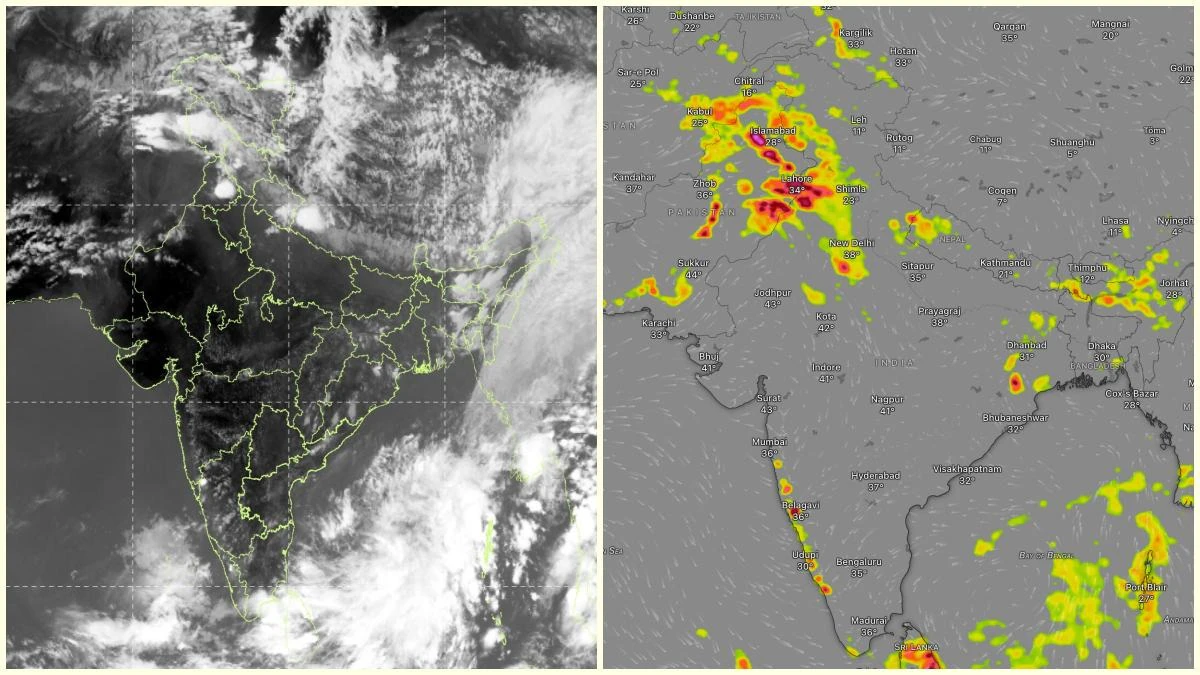
The Indian Space Research Organisation’s INSAT-3DS weather satellite has provided crucial satellite images revealing a duststorm system alongside rapidly forming thundercloud activities approaching North India. These developments suggest increased potential for severe weather later in the evening across various states. Observations made by the India Meteorological Department (IMD) show thick cloud formations extending over parts of Pakistan and the regions of northwest India.

Simultaneously, clusters of thunderstorms are intensifying over the Himalayan foothills and the central plains, indicating a dynamic weather situation. Meteorologists have issued warnings regarding the likelihood of dust-laden winds, thunderstorms, and lightning, along with moderate rainfall affecting substantial portions of Punjab before shifting towards Haryana and the Delhi-NCR region later tonight.

Forecasts and Expected Impact

Forecasts based on satellite data indicate that dust storms with wind speeds varying between 40 and 70 kilometres per hour are anticipated across the majority of north and central Punjab in the coming hours. Cities such as Amritsar, Ludhiana, and Jalandhar are expected to face sudden gusty winds followed by intermittent spells of rain and thunderstorms.

The storm system is projected to progress southeast toward the tricity region, encompassing Chandigarh, Mohali, and Panchkula, between 5 pm and 8 pm. In addition, forecasters noted that new clusters of thunderstorms are forming in adjacent areas and could extend their impact into parts of Haryana and the Delhi-NCR during the night.

As the weather situation continues to develop, residents are advised to remain vigilant and heed any forecasts provided by local authorities. Precautionary measures are essential to ensure safety as the system intensifies.

Role of INSAT-3DS Satellite

The INSAT-3DS satellite, specifically launched by ISRO for advanced meteorological monitoring, plays a vital role in tracking weather patterns across the Indian subcontinent. Designed to provide high-resolution imaging, it assists the IMD in monitoring cloud systems, atmospheric moisture, storm movements, and other weather-related phenomena.

The latest imagery from the satellite showcases dense cloud formations linked to powerful convective activity. This activity is characterised by the rapid ascent of warm air in the atmosphere, which can lead to the generation of lightning and heavy rainfall. Such events are often associated with severe thunderstorms and can significantly affect daily life in the regions they impact.

Dust storms typically emerge when strong winds, intensified by thunderstorms, lift loose soil and dry particles into the atmosphere, resulting in drastically reduced visibility and deteriorating air quality. The authorities emphasise the need for caution during such occurrences, particularly in affected areas, where air quality may substantially decline.

Weather experts recommend that individuals in the storm-affected regions stay indoors during the peak hours of storm activity, limit unnecessary travel, and remain alert for sudden changes in conditions, including potential lightning strikes and gusty winds. These precautions are critical as the impending weather system reaches its peak intensity this evening.

Long or Short, get news the way you like. No ads. No redirections. Download Newspin and Stay Alert, The CSR Journal Mobile app, for fast, crisp, clean updates!

App Store –  https://apps.apple.com/in/app/newspin/id6746449540 

Google Play Store – https://play.google.com/store/apps/details?id=com.inventifweb.newspin&pcampaignid=web_share

Latest News

Popular Videos
