


Palestinian Prisoner’s Day Commemorates Thousands Held in Israeli Detention
The CSR Journal Magazine

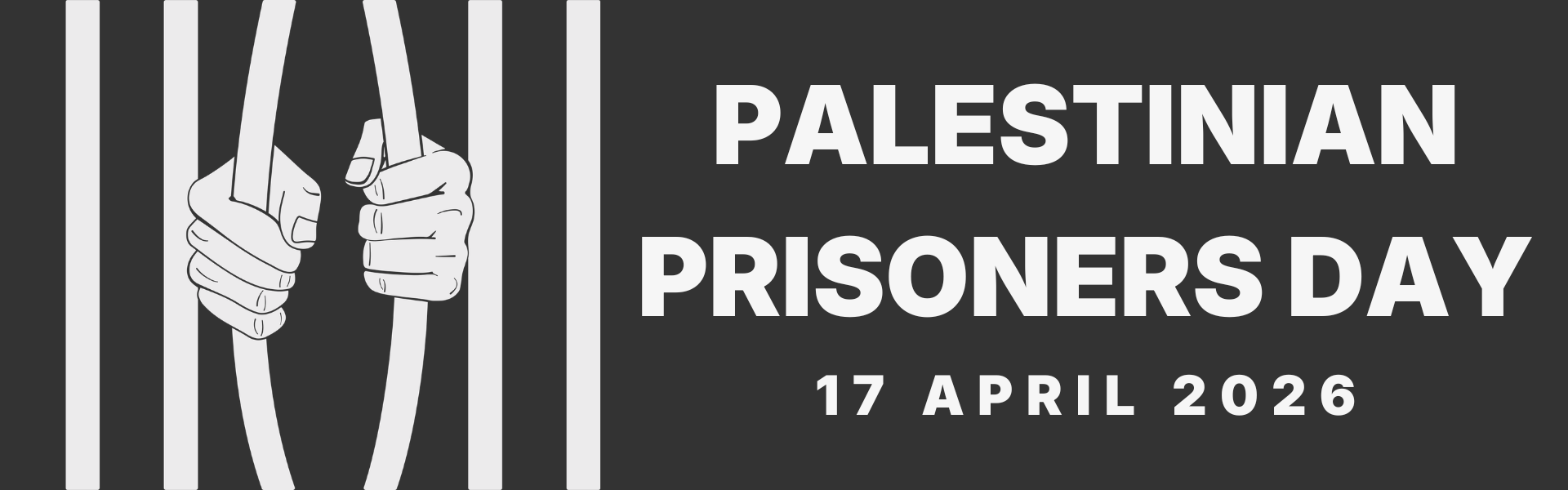
Palestinian Prisoner’s Day is observed annually on April 17 to draw attention to the situation of numerous men, women, and children held in Israeli prisons. This established date is significant as it marks the release of Mahmoud Bakr Hejazi in the first prisoner exchange between Israel and Palestine in 1971. Following this event, in 1974, the Palestinian National Council officially designated April 17 to honour and advocate for the rights of these detainees.

Since its inception, the day has served as a platform for national and international solidarity, focusing on the Palestinian struggle against Israeli occupation. Currently, it highlights the plight of around 10,000 Palestinians, who, according to the prisoners’ rights group Addameer, are incarcerated under various circumstances, including political motives.

Current Situation of Palestinian Prisoners

As of early April 2026, approximately 9,600 Palestinians were reported to be in Israeli custody. A significant aspect of this situation is Israel’s policy of administrative detention, which allows the holding of individuals without charge or trial for renewable six-month terms. Critics, including various human rights organisations, argue that this policy is frequently misapplied and undermines due process.

Over one-third of those imprisoned—3,532 individuals—were noted to be under administrative detention. In stark contrast, children are also affected, with Israel being the only nation that prosecutes minors in military courts. Reports indicate that 342 children are currently detained, often facing severe mistreatment and interrogation tactics that violate their rights.

Since 2000, more than 12,000 Palestinian minors have been subjected to detention, and child rights organisations have highlighted the physical and psychological torture that many endure. The system often sees these children interrogated without legal representation, leading to accusations of coercing them into becoming informants.

Legal Framework and New Legislative Developments

Palestinian prisoners typically face trial in military courts, divergent from the civilian legal processes applied to Israeli settlers in the West Bank and East Jerusalem. This duality creates a legal context where Palestinians are tried under military law enforced by Israeli officers. A recent development is the approval of a new law, which gives military courts the authority to impose the death penalty on Palestinians convicted of attacks against Israelis. This controversial law, expected to be enacted by the end of April, does not extend the same penalties to Jewish Israelis.

The Palestinian Authority has condemned this legislative measure, labelling it a potential “war crime” and asserting that it violates international conventions on fair trials and human rights. The rights group B’Tselem has noted a striking conviction rate of around 96 per cent for Palestinians in military courts, raising concerns about the fairness of these legal proceedings. Many of these convictions rely on confessions reportedly obtained under duress.

Israel’s detention practices have profoundly affected Palestinian society, with an estimated one million individuals incarcerated since 1967. This figure translates into approximately 20 per cent of the Palestinian population having experienced imprisonment at some stage in their lives. As mass arrests persist, many families have been placed in perpetual distress, contributing to community fragmentation and a cycle of trauma.

Impact on Palestinian Communities

The ongoing situation has led to concerns among Palestinians that mass imprisonment may not be merely an outcome of the occupation, but a strategic method of control. As Israeli raids and arrests continue, the quest for freedom remains elusive for those detained, mirroring the struggles faced by previous generations. This reality underscores the deep-seated challenges within the broader context of the Israeli-Palestinian conflict.

The commemoration of Palestinian Prisoner’s Day thus not only highlights the urgency of addressing the legal and humanitarian issues faced by prisoners but also serves as a reminder of the broader implications of these detentions on Palestinian society as a whole.

Long or Short, get news the way you like. No ads. No redirections. Download Newspin and Stay Alert, The CSR Journal Mobile app, for fast, crisp, clean updates!

App Store –  https://apps.apple.com/in/app/newspin/id6746449540 

Google Play Store – https://play.google.com/store/apps/details?id=com.inventifweb.newspin&pcampaignid=web_share

Latest News

Popular Videos
