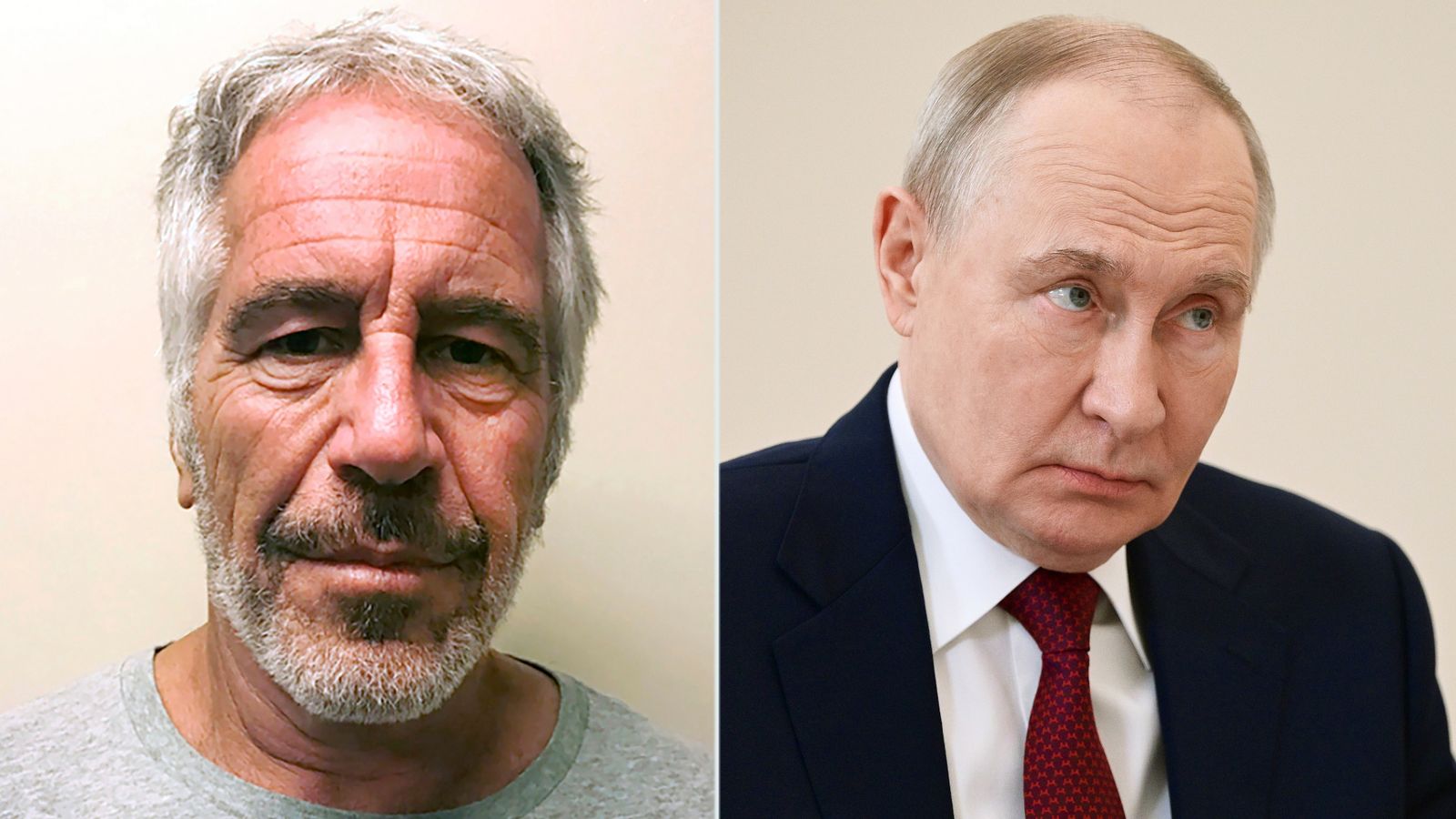
Newly disclosed documents from the United States Justice Department reveal that Jeffrey Epstein made multiple attempts to establish connections with high-ranking officials in Russia, including President Vladimir Putin. However, there is no evidence to suggest that he was ever successful in these endeavors.
Interactions with Former Ambassador Churkin
One significant instance occurred in June 2018, following the unexpected passing of Vitaly Churkin, who had served as Russia’s ambassador to the United Nations. Epstein previously had regular meetings with Churkin in New York, even offering assistance to his son, Maxim Churkin, in securing employment at a wealth management firm. After Churkin’s demise, Epstein looked for alternative ways to engage with Moscow.
On June 24, 2018, Epstein sent an email to Thorbjørn Jagland, a Norwegian politician and then-secretary general of the Council of Europe, requesting that he convey a message to the Kremlin. Epstein suggested that Jagland communicate to Putin the potential for Russian Foreign Minister Sergey Lavrov to gain insights from him, as he had previously done so with Churkin. In his response, Jagland mentioned he would discuss the matter with Lavrov’s assistant and relay the message.
Patterns of Communication and Diplomacy
The correspondence sheds light on a broader pattern of Epstein’s interactions with notable international figures over several years. Despite his efforts to engage with Putin, there is no documentation confirming that any meetings took place. Earlier communications from 2013 show that Epstein expressed a desire to meet Putin in Sochi, claiming he could provide guidance on attracting Western investments to Russia. He emphasized the need for “real time and privacy” to facilitate such a meeting.
Furthermore, several emails suggest Epstein believed he was close to establishing contact with the Russian leader, although the documents do not verify any meetings having occurred.
Speculation and Reactions from Officials
These revelations have sparked speculation across Europe. Notably, Polish Prime Minister Donald Tusk announced that Poland would launch an investigation into Epstein’s potential connections to Russian intelligence, labeling the allegations as a severe security concern. In contrast, the Kremlin has dismissed such claims. Dmitry Peskov, the spokesperson for President Putin, urged that any assertions of Epstein’s ties to Russian intelligence should not be taken seriously.
Connections with Russian Individuals and Participation in Forums
Epstein maintained relationships with several Russians associated with the government, including Sergey Belyakov, a former official linked to the FSB and Russia’s sovereign wealth fund. His engagement extended to attending the St. Petersburg International Economic Forum, where he offered to assist Russian officials and investors.
While Epstein did make trips to Russia and sought visas as recently as 2019, experts caution that the documents primarily illustrate a figure intent on projecting influence and aligning himself with powerful individuals, rather than providing concrete evidence of having gained substantial leverage in Moscow.