


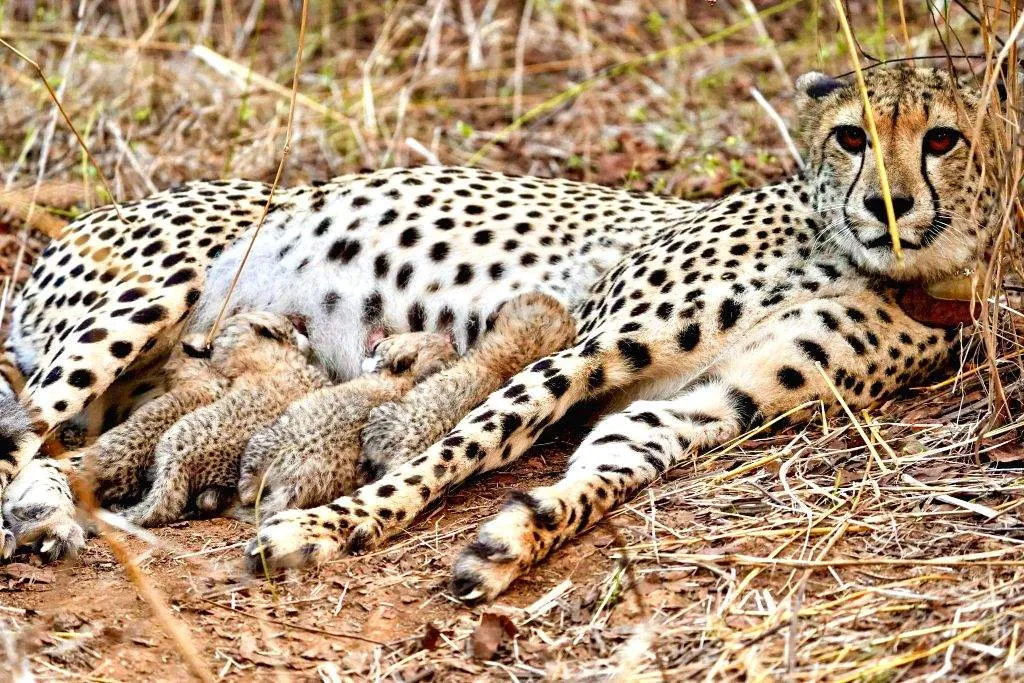
Indian-Born Cheetah KGP12 Gives Birth to Four Cubs in Kuno
The CSR Journal Magazine

KGP12, a female cheetah born in India, has welcomed four cubs in Kuno National Park, marking a significant milestone for Project Cheetah. This event occurred just one day after the initiative celebrated its four-year anniversary. Union Environment Minister Bupender Yadav took to X to express his joy, calling this a “truly historic and joyous moment” for the project. He commended the birth of these cubs as a symbol of hope and success in conserving cheetahs in India.

Current Cheetah Population in India

According to a recent report on the cheetah reintroduction programme, India’s cheetah population has risen to 52. This total includes 32 cubs that were born within the country. Currently, 49 of these cheetahs live in Kuno National Park, while three are located in Gandhi Sagar Sanctuary. The status review released by Kuno National Park highlighted the mixture of surviving cheetahs from Namibia, South Africa, and newly introduced cheetahs from Botswana.

The review specified that of the eight cheetahs brought from Namibia on September 17, 2022, three are still alive, contributing to a total of 25 cheetahs when including their Indian-born offspring. For the 12 South African cheetahs introduced on February 18, 2023, eight remain, along with 10 Indian-born young, bringing their total population to 18. Presently, 15 of these cheetahs reside in Kuno, while three are in Gandhi Sagar Sanctuary.

Furthermore, nine cheetahs from Botswana were introduced on February 28, 2026. The review outlines that of the 49 cheetahs in Kuno National Park, 17 are living freely in the wild, consisting of 10 males and seven females. The remaining 32 are housed in Soft Release Bomas, comprising five males, eight females, and 19 cubs younger than one year.

Progress and Future of the Cheetah Reintroduction Programme

Kuno National Park has indicated that the reintroduction project is advancing well, highlighting the establishment of breeding females and the survival of the second generation of cubs. This underscores a crucial consolidation phase for cheetah conservation efforts in India. The report reflected on the journey over the past four years, noting initial challenges that included learning and adaptation, followed by successes in breeding during the second year.

The third year saw the successful release of cheetahs into the wild, where they were monitored extensively across 12 districts. This extensive monitoring allowed for accurate assessment of their survival and adaptation in the wild. The fourth year has been characterised by the establishment of cheetahs in their new habitat, showcasing natural behaviours that are vital for their long-term survival.

Looking forward, Kuno National Park emphasised that the programme has evolved from merely protecting introduced cheetahs to ensuring that the newly born generations thrive and integrate successfully into the wild. The focus is now on enhancing the ecological sustainability of these cheetahs, paving the way for potential future expansion across additional habitats in India.

Long or Short, get news the way you like. No ads. No redirections. Download Newspin and Stay Alert, The CSR Journal Mobile app, for fast, crisp, clean updates!

App Store –  https://apps.apple.com/in/app/newspin/id6746449540 

Google Play Store – https://play.google.com/store/apps/details?id=com.inventifweb.newspin&pcampaignid=web_share

Latest News

Popular Videos
