


Global Freshwater Reserves Shrink by 324 Trillion Litres a Year, Raising Alarm Over Water Security

The CSR Journal Magazine

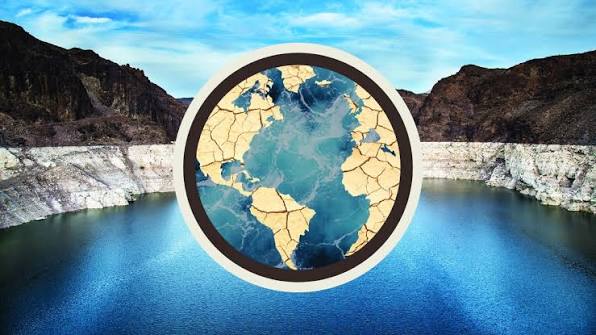
The world is reportedly losing approximately 324 trillion litres of freshwater each year, according to a World Bank report published in 2025. This alarming figure is enough to meet the needs of 280 million people annually. The ongoing decline in freshwater resources is attributed to a phenomenon known as “continental drying,” which is exacerbated by severe droughts and unsustainable water management practices.

To raise awareness about the issues of desertification and drought, the United Nations has designated June 17 as World Day to Combat Desertification and Drought. This initiative aims to encourage action for the restoration of degraded land and to highlight the urgent need for water conservation globally.

In light of this pressing issue, Al Jazeera has examined ten critical examples worldwide where lakes, rivers, and reservoirs are experiencing dramatic shrinkage.

Examples of Shrinking Water Bodies Worldwide

The Parana River, which stretches approximately 4,900 km, is the second-longest river in South America, following the Amazon. Recent satellite imagery comparisons from 1990 to 2026 indicate that water levels at the port of Rosario have significantly declined due to prolonged drought conditions. This reduction has disrupted grain shipping activities and diminished hydroelectric power generation at the nearby Itaipu Dam, with many riverbed flats and new islands becoming visible.

Lake Poope in Bolivia is a notable high-altitude lake situated at an altitude of 3,700 metres. Satellite imagery comparisons from 1984 and 2020 reveal that this lake, once covering around 1,000 square kilometres, has almost entirely dried up. Factors including water diversions, rising temperatures, and ongoing drought have turned it into a salt flat, adversely affecting the local fisheries and the livelihoods of the Indigenous Uru people.

In Botswana, Lake Ngami showcases extreme variability in water levels. Satellite imagery analysis from 1984 to 2020 illustrates its fluctuations, particularly during drought periods. At its lowest, the lake nearly vanished, transforming fertile fishing and pasture areas into a cracked basin, though it has recently entered a partial recovery phase.

The Impact of Drought and Water Management Issues

The Aculeo Lagoon, located near Santiago, Chile, has faced severe challenges due to prolonged drought. A review of satellite imagery from 2007 to 2026 indicates that this previously thriving recreational area has largely dried up due to water stress, impacting nearby communities that depended on it.

Lake Urmia in Iran was once the largest saltwater lake in the Middle East, spanning nearly 6,000 square kilometres in the 1990s. Recent comparisons from 1984 to 2020 reveal that it has shrunk to about 581 square kilometres, which is less than 10 per cent of its original size. Severe drought, water extraction for agricultural use, river diversions, and groundwater depletion have led to vast regions of exposed salt flats.

In southern Iraq, the al-Chibayish Marshes represent crucial wetland ecosystems within the Mesopotamian Wetlands, a UNESCO World Heritage site. Satellite imagery comparisons from 1984 and 2020 show that significant drying occurred during the 1990s due to excessive drainage and drought; however, parts of the marshes have begun to recover in recent years, thanks to increased rainfall and restoration efforts.

Long or Short, get news the way you like. No ads. No redirections. Download Newspin and Stay Alert, The CSR Journal Mobile app, for fast, crisp, clean updates!

App Store –  https://apps.apple.com/in/app/newspin/id6746449540 

Google Play Store – https://play.google.com/store/apps/details?id=com.inventifweb.newspin&pcampaignid=web_share

Latest News

Popular Videos