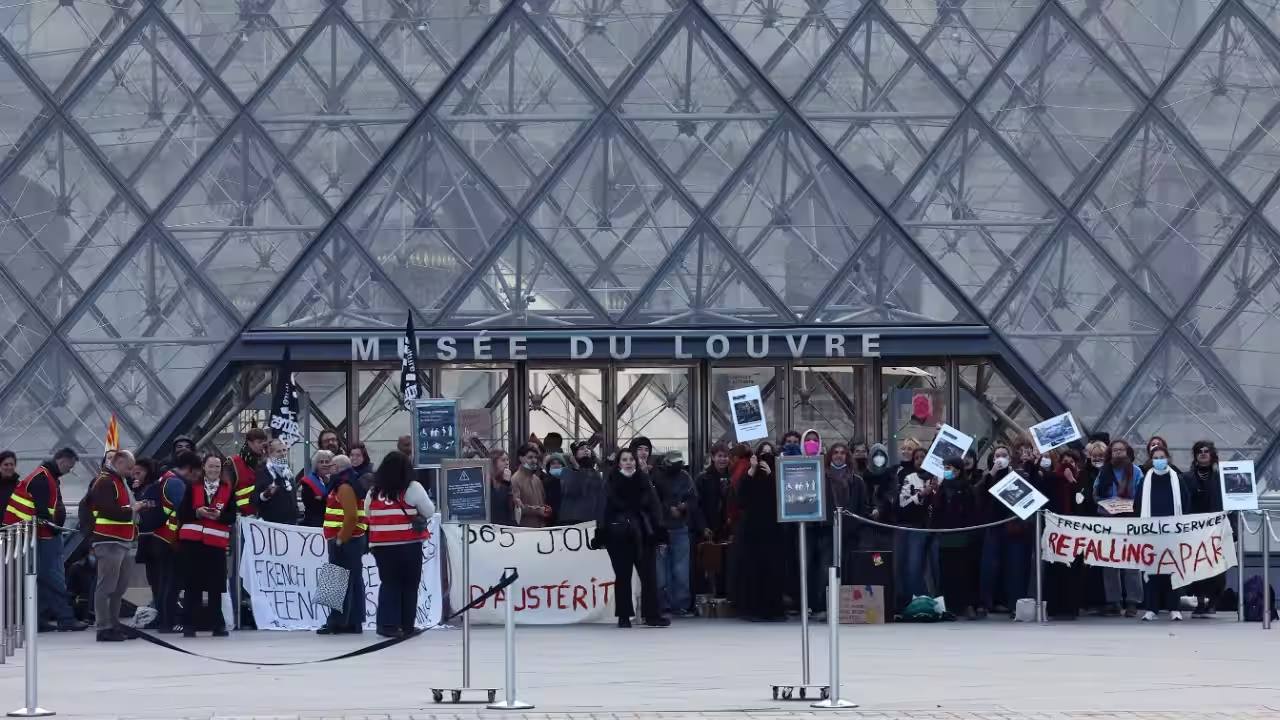
The Louvre Museum in Paris has temporarily closed its doors following protests supporting a student movement. The museum announced the closure on Monday, citing the ongoing social movement and strikes as the reasons for the disruption. In a message posted on X, the museum expressed regret for the inconvenience caused to visitors, stating, “Dear visitors, due to a student social movement, the museum is closed for the time being. We apologise for the inconvenience caused.”
The museum has not specified when it expects to reopen. This closure follows a significant event that occurred exactly one year ago, when the Louvre became the target of a high-profile heist. The robbery involved a daylight theft in which thieves utilised a vehicle-mounted ladder to gain access to the museum’s Apollo Gallery. They entered through a window and managed to steal eight pieces of historic French royal jewellery, including tiaras, necklaces, and brooches, in a matter of minutes.
The total value of the stolen items was estimated at approximately 88 million euros ($102 million), raising serious concerns about security measures at one of the world’s most visited cultural institutions. The museum’s recent closure has drawn attention not only because of its historical significance but also due to the ongoing unrest in France.
The protests that have erupted since early September were initially triggered by student frustrations over teacher shortages, inadequate school infrastructure, and declining education standards. However, the movement has since expanded, encompassing broader issues such as rising living costs and deteriorating public services.
Widespread Protests Across France
As the protests continue, more than half a million people reportedly took to the streets on Saturday, demonstrating against various socio-economic issues. The demonstrations have turned violent in several cities, including Paris, Marseille, and Lyon, resulting in numerous arrests and clashes with law enforcement. The unrest reflects a growing discontent among the populace regarding the current state of affairs, particularly in relation to education and public services.
The protests have been marked by a significant student presence, with many young individuals expressing their dissatisfaction with the educational system. They argue that inadequate resources and poor infrastructure are severely impacting their learning experiences. The movement has garnered support from various sectors of society, highlighting a collective demand for change.
In light of these developments, the Louvre’s closure serves as a poignant reminder of the intersection between cultural heritage and social movements. The museum, which houses some of the world’s most renowned artworks, is now caught in the midst of a larger conversation about societal issues affecting the nation. The management has not indicated how long the museum will remain closed, leaving many visitors uncertain about future access to its collections.
Impact on Cultural Institutions
The ongoing protests and the Louvre’s temporary closure raise questions about the impact of social movements on cultural institutions in France. Museums and galleries play a vital role in preserving history and art, yet they are not immune to the socio-political climate surrounding them. As protests continue to unfold, other cultural venues may also find themselves affected, either through closures or disruptions.
Furthermore, the security concerns raised by last year’s heist have likely intensified discussions regarding the protection of cultural assets. The Louvre, as a high-profile target, must navigate the challenges of ensuring visitor safety while also addressing the broader societal issues that have prompted the current unrest. The museum’s management will need to balance these competing demands as they consider their next steps.
In conclusion, the Louvre Museum’s closure amid ongoing protests highlights the complex relationship between cultural institutions and social movements in France. As the nation grapples with significant challenges, the future of such iconic venues remains uncertain, prompting reflections on their role in society and the importance of safeguarding both cultural heritage and public discourse.
Long or Short, get news the way you like. No ads. No redirections. Download Newspin and Stay Alert, The CSR Journal Mobile app, for fast, crisp, clean updates!