


Pollution Surveillance Expanded in Delhi with 13 New Air Quality Monitoring Stations
The CSR Journal Magazine

Delhi has expanded its air quality monitoring network from 47 to 60 stations with the inauguration of 13 new continuous ambient air quality monitoring stations (CAAQMS) on Tuesday, 13 October 2026. These new stations have been strategically positioned in various locations, including Ghummanhera, Chhawla, Karala, Hastsal, Jharoda Kalan, Burari, Narela, Maidan Garhi, Nangloi, Vasundhara Enclave, and Badarpur. The initiative aims to enhance the continuous measurement of air pollutants, specifically PM2.5 and PM10, alongside relevant meteorological parameters.

Integrated Digital Monitoring Platform Established

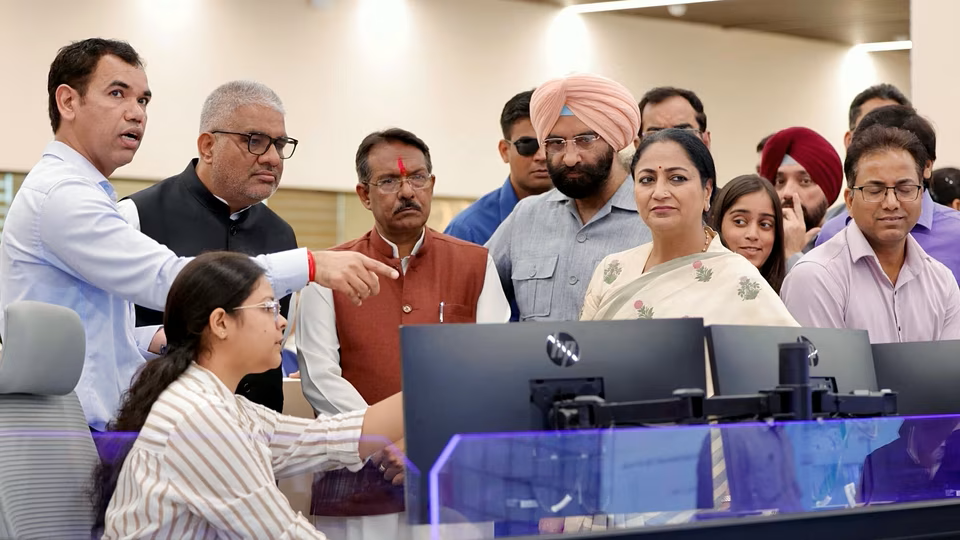
Union Environment Minister Bhupender Yadav and Chief Minister Rekha Gupta reviewed the measures taken to combat air pollution at Anand Vihar, a significant pollution hotspot in Delhi. They also visited the Delhi Pollution Control Committee’s (DPCC) AI-enabled Integrated Command and Control Centre (ICCC) located at Shastri Park for the virtual inauguration of the CAAQMS. Yadav noted that the expansion of the monitoring network is not solely based on population density but follows a five-kilometre-by-five-kilometre grid approach, allowing for a comprehensive assessment of pollution levels in peri-urban and suburban areas. This method is crucial for understanding the flow of pollutants into and out of the city.

The ICCC serves as a centralised digital platform that integrates various data sources concerning air quality, dust-control measures, ambient noise, industrial emissions, stubble burning, citizen complaints, and enforcement vehicles. Of the planned 15 external data systems for integration, nine have already been connected, while the remaining six are being integrated in phases. This system employs artificial intelligence, advanced cameras, real-time data, and GPS tracking to monitor pollution-control activities, including mechanical road sweeping, construction projects, and incidents of open burning.

Chief Minister Gupta emphasised that pollution control remains a top priority for her government. She stated that efforts are focused on monitoring, infrastructure development, and coordinated enforcement to ensure effective pollution management. Gupta highlighted the importance of modern technology and collaboration between the Centre and the Delhi government in enhancing the effectiveness of pollution-control measures.

Monitoring of Construction Sites and Pollution Control Activities

Delhi Environment Minister Manjinder Singh Sirsa remarked that the ICCC operates as a “war room” against pollution. The centre is currently monitoring over 700 construction sites across the city to ensure compliance with pollution-control regulations. This extensive monitoring is part of a broader strategy to address the increasing levels of air pollution in the capital.

The newly established monitoring stations are expected to provide real-time data on air quality, which will be accessible through the Central Pollution Control Board’s server and the SAMEER mobile application. This initiative aims to empower citizens with information regarding air quality in their vicinity, thereby fostering greater public awareness and engagement in pollution-control efforts.

As the capital continues to grapple with air quality challenges, the expansion of the monitoring network and the establishment of the ICCC are steps towards a more systematic approach to managing and mitigating pollution. The integration of technology and data-driven strategies is anticipated to play a pivotal role in improving air quality and public health in Delhi.

Long or Short, get news the way you like. No ads. No redirections. Download Newspin and Stay Alert, The CSR Journal Mobile app, for fast, crisp, clean updates!

App Store – https://apps.apple.com/in/app/newspin/id6746449540

Google Play Store – https://play.google.com/store/apps/details?id=com.inventifweb.newspin&pcampaignid=web_share

Latest News

Popular Videos
