


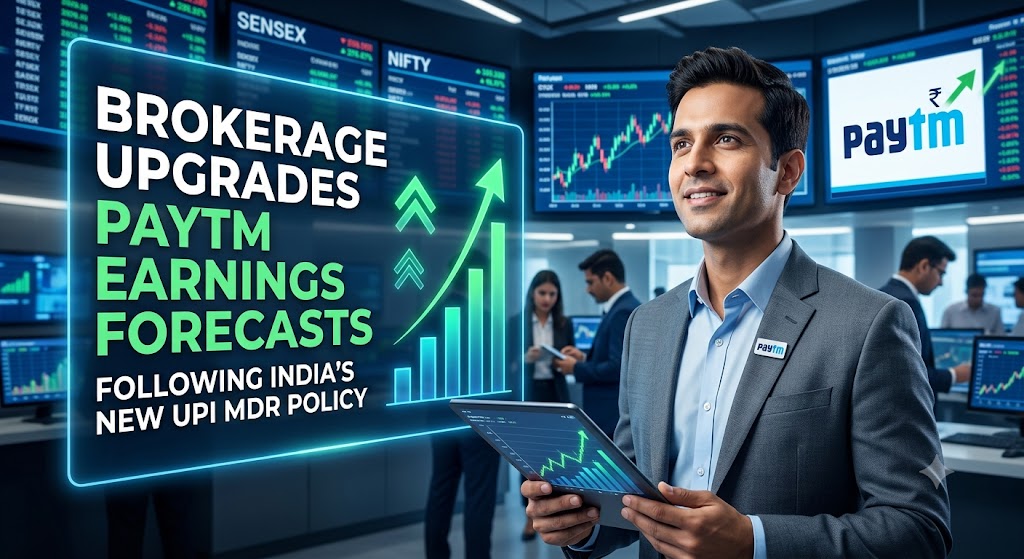
Brokerages Upgrade Paytm Earnings Forecasts Following India’s New UPI MDR Policy
The CSR Journal Magazine

India’s recent introduction of a merchant discount rate (MDR) on UPI transactions exceeding Rs 2,000 has led various brokerages to significantly revise their earnings expectations for One 97 Communications, the parent company of Paytm. Analysts observe that this regulatory change signifies a shift in UPI acquiring from a subsidised service to a commercially viable enterprise.

Emkay Global has increased its target price for Paytm by 41.2 per cent, raising it from Rs 1,700 to Rs 2,400. The brokerage maintains a BUY rating, suggesting a potential upside of nearly 39 per cent based on the closing price of Rs 1,731 recorded on September 15. Emkay’s forecast includes an anticipated UPI MDR revenue of approximately Rs 1,120 crore for Paytm in FY28, based on conservative assumptions regarding the take-rate.

According to Emkay, the newly established revenue model for UPI acquiring is characterised as contractual and recurring, which would enhance the resilience of Paytm’s business model. This change is viewed as pivotal for the payment industry, allowing it to function self-sustainably, devoid of annual subsidies.

Goldman Sachs Highlights Earnings Growth Potential

Goldman Sachs, which also holds a Buy rating for Paytm, indicates that the new MDR framework could lead to a substantial increase in earnings. The brokerage estimates an upside of 40-70 per cent to Paytm’s EBITDA estimates for FY28, projecting a potential additional EBITDA of around Rs 1,400 crore in a favourable scenario.

The firm has assessed the overall industry revenue generated from the announced MDR to be roughly Rs 20,600 crore at current transaction rates. Goldman Sachs emphasises that the MDR rates exceed expectations previously set by investors, with several notable advantages arising from the new framework. A higher 40 basis points MDR for person-to-merchant transactions, new parameters for capital-market transactions, and a lack of turnover requirements for small merchants are among the enhancements.

The National Payments Corporation of India (NPCI) has stipulated that a 0.4 per cent fee will be applied to person-to-merchant UPI transactions above Rs 2,000 starting from October 15, 2026. However, transactions under this threshold and all peer-to-peer transfers will continue to be free of charge. This policy ensures that small merchants, receiving up to Rs 1 lakh monthly through UPI, will also remain exempt from MDR charges.

Impact on Paytm’s Recent Performance and Market Position

The implementation of the MDR framework arrives at a time of robust operational performance for Paytm. The company posted a 79 per cent increase in net profit, reaching Rs 220 crore for the quarter ending June 2026. Additionally, revenue from operations surged by 28 per cent to Rs 2,448 crore, with earnings before interest, tax, depreciation, and amortisation (EBITDA) rising by 182 per cent to Rs 203 crore.

Furthermore, Paytm has reported a 31 per cent growth in gross merchandise value (GMV), and its UPI market share by value has seen consistent increases over five consecutive quarters. Analysts suggest that the revenue generated from the MDR will tap into the existing merchant relationships and infrastructure, leading to an efficient flow-through to profits.

NPCI has communicated that the transaction volumes below Rs 2,000, which represent over 95 per cent of UPI person-to-merchant transactions, will not be affected by this new rate structure. This measure aims to ensure UPI remains accessible for regular payments, while also fostering the long-term sustainability of the broader payment ecosystem in India.

Long or Short, get news the way you like. No ads. No redirections. Download Newspin and Stay Alert, The CSR Journal Mobile app, for fast, crisp, clean updates!

App Store –  https://apps.apple.com/in/app/newspin/id6746449540 

Google Play Store – https://play.google.com/store/apps/details?id=com.inventifweb.newspin&pcampaignid=web_share

Latest News

Popular Videos
