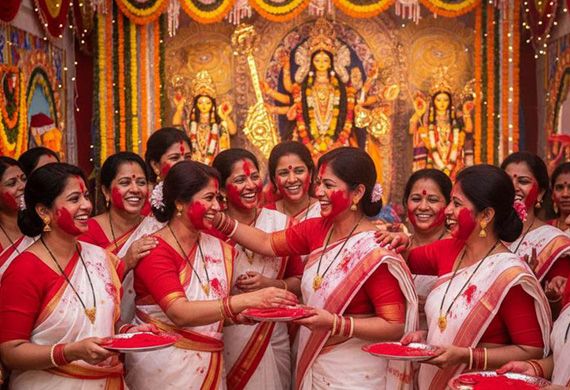
The tradition of Bengali women donning white sarees with red borders during Sindoor Khela is a visually striking representation of cultural heritage. This attire is not merely a festive choice but is deeply rooted in the historical and cultural narratives of Bengal. The combination of these colours has been celebrated for generations, reflecting the values and beliefs of the community.
Experts elaborated on the cultural importance of this attire. The white saree with a red border is emblematic of traditional notions of womanhood in Bengal. It serves as a visual language that resonates with the themes of Durga Puja, making it an integral part of the celebration.
To fully appreciate the significance of this attire, one must look beyond the ritual itself. The interplay of colours, textiles, and religious practices has shaped the social fabric of Bengali life. This attire encapsulates the essence of celebration, femininity, and cultural identity, making it a vital aspect of the Sindoor Khela ritual.
Symbolism of White and Red in Bengali Traditions
The colours white and red hold profound meanings within Bengali Hindu traditions. White is often associated with purity, simplicity, and auspicious beginnings, while red signifies fertility, prosperity, and marital auspiciousness. These colours embody the life-giving energy of the goddess Durga, enhancing the spiritual significance of the occasion.
When combined in the traditional Bengali saree, these colours create a compelling visual narrative that celebrates both the cultural identity and the festive spirit of the community. However, it is essential to note that the meanings of these colours are not universally fixed; they can vary across different rituals and communities, reflecting the diverse tapestry of Bengali culture.
The traditional white saree with a red border is often referred to as the laal paar shada saree, a distinctive form of attire that has evolved through Bengal’s rich textile traditions. The craftsmanship of cotton weaving centres in Bengal has produced sarees that are not only suitable for the region’s climate but also aesthetically appealing, with red borders providing a striking contrast against the white fabric.
Understanding the Ritual of Sindoor Khela
Sindoor Khela occurs on Vijaya Dashami, marking the final day of Durga Puja. During this ritual, married Hindu women apply vermilion to the goddess Durga and to one another, symbolising prayers for marital wellbeing and family happiness. The red vermilion holds particular significance, traditionally associated with marriage and auspiciousness in Bengali Hindu communities.
The choice of wearing a white saree with a red border during this ritual enhances the symbolic meaning of the colours involved. The attire complements the vermilion used in the ceremony, creating a harmonious visual representation of the celebration. Experts highlighted that it would be historically inaccurate to claim that all Bengali women have always worn this saree during Sindoor Khela, as clothing practices have evolved over time.
Today, women may choose to participate in the ritual wearing sarees of various colours and styles. Despite this evolution, the white saree with a red border continues to hold cultural resonance, symbolising a connection to tradition while allowing for personal expression within the framework of the ritual.
Long or Short, get news the way you like. No ads. No redirections. Download Newspin and Stay Alert, The CSR Journal Mobile app, for fast, crisp, clean updates!