


Anurag Thakur Accuses RaGa of Undermining Institutions and Mandate
The CSR Journal Magazine

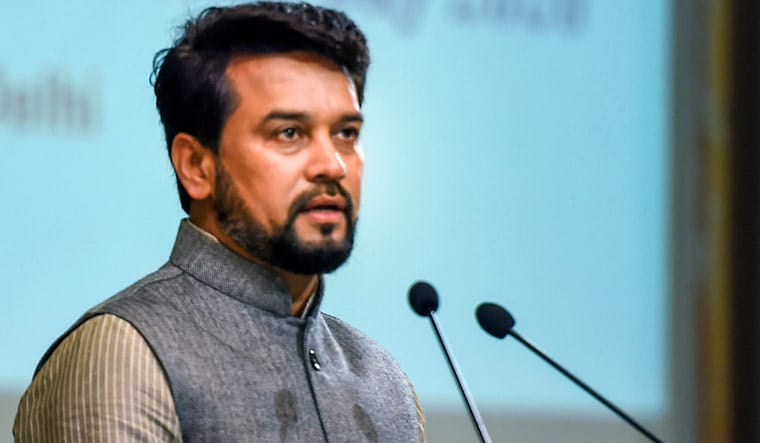
Anurag Thakur, a Member of Parliament from the Bharatiya Janata Party (BJP), has made serious allegations against Rahul Gandhi, the Leader of the Opposition in the Lok Sabha. During a press conference on Monday, Thakur claimed that Gandhi is attempting to create instability and chaos within the country. He stated that these actions are directed at weakening constitutional institutions and harming India’s international reputation.

Thakur characterised Gandhi’s behaviour as unprecedented, labelling it as “theatrics and tantrums” seldom seen from an opposition leader. He referred to Gandhi as “destabilising, chaotic and unserious”, particularly criticising his allegations concerning vote rigging. Thakur contended that Gandhi’s continued assertion of “vote chori” explicitly challenges the electoral mandate awarded by the public.

In his remarks, Thakur labelled Gandhi as a “hawa hawai” leader, which implies an individual reliant on superficial rhetoric rather than substantial actions. He accused Gandhi of engaging in shallow statements, unsubstantiated claims, and meaningless protests that fail to address genuine issues faced by the country.

Concerns Regarding Institutional Integrity

Thakur expressed that Gandhi’s frequent criticism of key institutions, such as the Election Commission and the chief election commissioner, is increasingly concerning. He highlighted that Gandhi has been shifting blame onto these institutions rather than fostering constructive dialogue. Thakur alleged that the situation has escalated to a point where Gandhi is resorting to using language more typical of street-level conflicts.

These are accompanied by what he labelled as baseless accusations against the government. During the press conference, Thakur urged Gandhi to move away from a blame-oriented narrative, stating, “The country needs truth, not noise. It needs evidence, not allegations.” He further emphasised the importance of providing clear responses rather than engaging in politically charged statements that do not contribute to effective governance.

In addition to his criticism, Thakur pointed out that when Gandhi made an approach to the President of India, he was instructed to furnish corroborative evidence to support his complaints but allegedly did not respond. This led Thakur to question Gandhi’s sincerity and commitment to substantiating his claims.

Judiciary and Political Strategy

Thakur’s comments also touched upon Gandhi’s interactions with the judiciary. He claimed that the Supreme Court had made it explicit that Gandhi could not exploit the court system for his political agenda. This statement is indicative of Thakur’s assertion that Gandhi’s behaviour not only undermines the electoral mandate but further jeopardises the independence of judicial institutions.

He voiced concerns over Gandhi’s overall approach to the judiciary, particularly in cases that remain pending. Thakur’s allegations suggest that such a method of operation threatens to create confusion and challenges the established constitutional protocols in India.

Ultimately, Thakur emphasised that Gandhi’s repetitive jabs at constitutional institutions and his approach towards questioning the public’s mandate could lead to significant ramifications for the political landscape in India. By focusing on institution-targeted allegations, Gandhi is purportedly creating unrest that could erode public trust in governance.

Long or Short, get news the way you like. No ads. No redirections. Download Newspin and Stay Alert, The CSR Journal Mobile app, for fast, crisp, clean updates!

App Store –  https://apps.apple.com/in/app/newspin/id6746449540 

Google Play Store – https://play.google.com/store/apps/details?id=com.inventifweb.newspin&pcampaignid=web_share

Latest News

Popular Videos
