


app-store-logo
play-store-logo
March 9, 2026

Andrej Karpathy Project Shows AI Improving Its Own Training Code
The CSR Journal Magazine

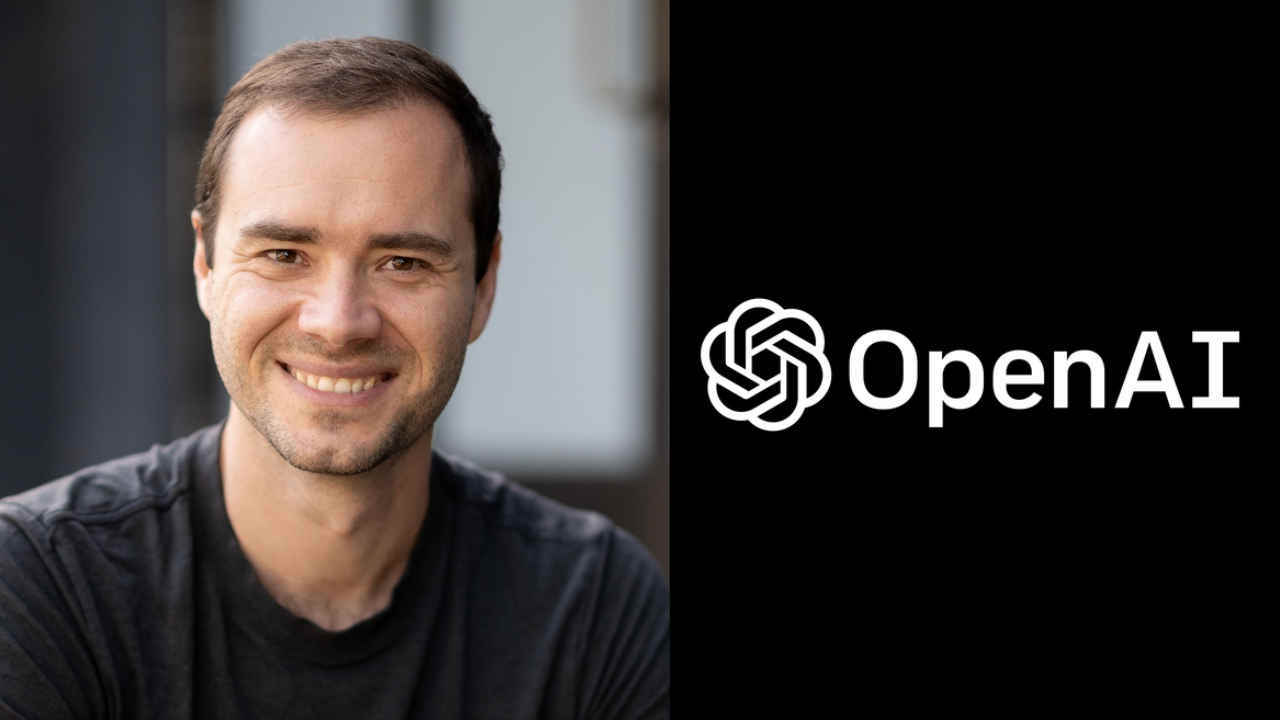
In an intriguing development for the artificial intelligence sector, Andrej Karpathy, co-founder of OpenAI and former AI director at Tesla, has initiated a project called “autoresearch.” This project demonstrates how an AI agent can autonomously refine and enhance training code for a language model. Instead of relying on human researchers to modify code and evaluate results, this AI system proposes its own modifications, conducts experiments, and retains the versions that yield better performance.

Karpathy’s innovative experiment illustrates the potential of an AI to improve itself without ongoing human input. According to recent statements, the AI agent autonomously executed hundreds of experiments, gradually enhancing the model’s capabilities. In a post on X, Karpathy noted, “Who knew early singularity could be this fun? I just confirmed that the improvements autoresearch found over the last two days of (~650) experiments on a depth-12 model transfer well to depth-24, so nanochat is about to get a new leaderboard entry for ‘time to GPT-2’ too. Works.”

Community Reactions and Implications

The project quickly sparked discussions within the AI community, as it provides early indicators of what is often referred to as the technological singularity. Tobi Lutke, a prominent figure in technology, remarked, “The singularity has begun. so many signs,” a sentiment echoed by Elon Musk. This term, singularity, describes a moment when AI is predicted to surpass human intelligence and begins self-enhancing rapidly.

Experts assert that once machines reach the capability of designing improved versions of themselves, advancements will occur at an unprecedented pace. This phenomenon is linked to the concept of Artificial General Intelligence, suggesting that AI could soon exceed current limitations significantly.

Predictions on AI’s Future Capabilities

While Karpathy’s project is still in the prototype stage, it offers valuable insights into the possibilities of self-improving AI. In discussions surrounding the future of AI, several technology leaders suggest that the timeline for achieving superintelligent systems is closer than anticipated. During prior engagements at the World Economic Forum, Musk indicated that AI may transcend individual human intelligence by the end of 2026, with the potential to outpace the combined intelligence of all humans by around 2030.

According to Musk, the rise of such capable AI could ultimately eliminate the need for traditional jobs, resulting in what he describes as a “universal high income.” Other industry voices, including Sam Altman, have expressed similar views. In his essay titled “The Gentle Singularity,” published in June 2025, Altman suggested that humanity might already be nearing the “event horizon” of the singularity, indicating that the technological transformation has begun.

Demis Hassabis has also weighed in on the topic, suggesting that the world is nearing a “threshold moment” with the emergence of autonomous AI systems. However, he cautions that true Artificial General Intelligence is still several years away, likely five to eight years before we reach that level of capability.

Long or Short, get news the way you like. No ads. No redirections. Download Newspin and Stay Alert, The CSR Journal Mobile app, for fast, crisp, clean updates!

App Store –  https://apps.apple.com/in/app/newspin/id6746449540 

Google Play Store – https://play.google.com/store/apps/details?id=com.inventifweb.newspin&pcampaignid=web_share

Latest News

Popular Videos
