


Ancient Comet 3I/ATLAS, Older Than the Sun, Offers Clues to the Early Universe
The CSR Journal Magazine

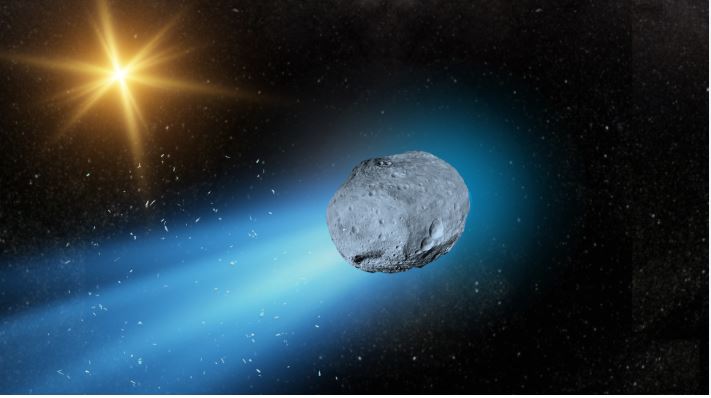
Comet 3I/ATLAS, which is older than the Sun, has provided astronomers with significant information regarding the conditions that existed over 10 billion years ago. This interstellar comet is only the third confirmed object to enter our solar system from outside it. Its ancient origins were studied using NASA’s James Webb Space Telescope (JWST), which allowed researchers to observe the comet during its perihelion in December 2025.

As 3I/ATLAS approached the Sun, the heat caused its frozen surface to emit gas and dust. This process created a bright coma around the comet, enabling scientists to examine its chemical composition in detail. The findings of this research were published in the journal Nature on June 22, revealing that the chemical signatures of 3I/ATLAS differ significantly from those of any known comet within our solar system.

The comet is thought to have formed in an exceptionally cold environment, where ice remained unchanged over billions of years. This suggests that its parent star system could have existed in a dense, cold molecular cloud, subjected to radiation yet retaining low temperatures over time.

Chemical Composition and Isotopic Analysis

Utilising the Near-Infrared Spectrograph (NIRSpec) on JWST, researchers mapped key compounds such as water, carbon dioxide, and carbon monoxide surrounding 3I/ATLAS. Notably, they discovered very high levels of deuterium, a heavier isotope of hydrogen, which were almost thirty times greater than those found in comets from our solar system. This finding supports the notion of 3I/ATLAS forming in extreme cold, further contributing to the understanding of early cosmic conditions.

Moreover, scientists recorded unusually low levels of carbon-13 compared to carbon-12 in the comet’s composition. This discrepancy indicates that 3I/ATLAS has an ancient origin, as galaxies gradually become enriched with carbon-13 over time through stellar processes. The isotopic evidence suggests that 3I/ATLAS was created between 10 and 12 billion years ago, during the epoch referred to as the universe’s “cosmic noon,” when star formation was particularly extensive across the Milky Way.

The unique characteristics of 3I/ATLAS’s chemical composition assist researchers in reconstructing the conditions present in a planetary system that has since vanished, offering a fascinating window into the early universe.

Implications for Future Research

A supplementary study led by astronomer Cyrielle Opitom from the University of Edinburgh examined additional carbon and nitrogen compounds within the comet using the European Southern Observatory’s Very Large Telescope. This collaborative research aims to deepen the understanding of the building blocks of life in the cosmos.

NASA scientist Stefanie Milam remarked on the significance of uncovering these rare isotopes, noting their importance in understanding the potential for life elsewhere in the galaxy. The findings from 3I/ATLAS contribute to a growing body of knowledge regarding the ingredients that may be foundational for life beyond Earth.

The discovery of Comet 3I/ATLAS has provided one of the clearest chemical insights into the materials that existed long before the formation of our solar system. This knowledge may pave the way for future investigations that continue to explore the origins and evolution of cosmic bodies and the conditions conducive for life throughout the universe.

Long or Short, get news the way you like. No ads. No redirections. Download Newspin and Stay Alert, The CSR Journal Mobile app, for fast, crisp, clean updates!

App Store –  https://apps.apple.com/in/app/newspin/id6746449540 

Google Play Store – https://play.google.com/store/apps/details?id=com.inventifweb.newspin&pcampaignid=web_share

Latest News

Popular Videos
