



New commitments strengthen independent oversight, transparency, due diligence and conservation in countries of origin, while giving NGOs, experts and media a greater role
Vantara has announced a sweeping set of voluntary reforms to strengthen governance, transparency, due diligence and wildlife conservation, following concerns, criticism and recommendations raised by organisations, experts, journalists and other stakeholders.
The commitments, submitted to the Indian CITES Management Authority and filed with the Supreme Court for overall compliance, represent a significant shift in Vantara’s approach. The organisation says it has accepted the recommendations of its Governing Council in full and will implement them through a strengthened framework.
Most importantly, the announcement demonstrates that constructive criticism can lead to meaningful institutional change. Instead of treating scrutiny as an obstacle, Vantara says it will engage more closely with NGOs, conservation organisations, experts and the media, respond to credible concerns through dialogue and transparency, and incorporate constructive recommendations wherever appropriate.
For those who have consistently raised questions about Vantara, this is therefore a significant moment. Greater independent oversight, stronger verification mechanisms and a formal commitment to listen to external criticism represent important outcomes of that scrutiny.
A Major Shift Towards Conservation Where Animals Belong
Perhaps the most important change is Vantara’s stated intention to increasingly prioritise rescue, rehabilitation and conservation in India and in animals’ countries of origin, rather than focusing primarily on bringing animals to its Jamnagar campus.
International conservation efforts will increasingly support rescue centres, veterinary hospitals and conservation programmes in range states, backed by a dedicated international conservation fund and in-country technical expertise.
Vantara will also publish internal procedures, submit progress reports every six months to the CITES Management Authority, invite inspections and maintain an open-door policy towards media, NGOs and conservation organisations.
The organisation has further pledged to address criticism through dialogue, transparency and evidence rather than litigation, potentially creating greater space for independent conservation advocates to engage with it.
Independent Oversight and Tougher Due Diligence
The governance reforms are equally significant. Vantara plans to establish an independent international CITES Due Diligence Committee, comprising former senior CITES Secretariat officials and leading wildlife experts. A mandatory three-stage review will apply to future acquisitions, alongside an Advisory Board and a Global Governing Council.
Former CITES Secretary General John E Scanlon AO will chair the Governing Council, while Dr Kushal Konwar Sarma joins the Council. An autonomous Office of Compliance and Due Diligence, headed by former Indian Forest Service officer Ajit Kulkarni, will report directly to the Chairman of the Governing Council rather than management.
Major Restrictions on Future Animal Imports
Vantara says it will withdraw all pending applications to import live animals and make no new applications until India’s new CITES Standard Operating Procedure is operational, the CITES Management Authority confirms implementation of the voluntary commitments, and at least 12 months of the new governance programme has been completed.
Future applications will require consultation with the CITES Management Authority. Vantara has also committed not to import wild-caught animals from range states and not to import great apes or big cats from range states under any circumstances. Imports will be considered only from recognised government-supported or internationally accredited zoological institutions.
From Moving Animals to Building Conservation Capacity
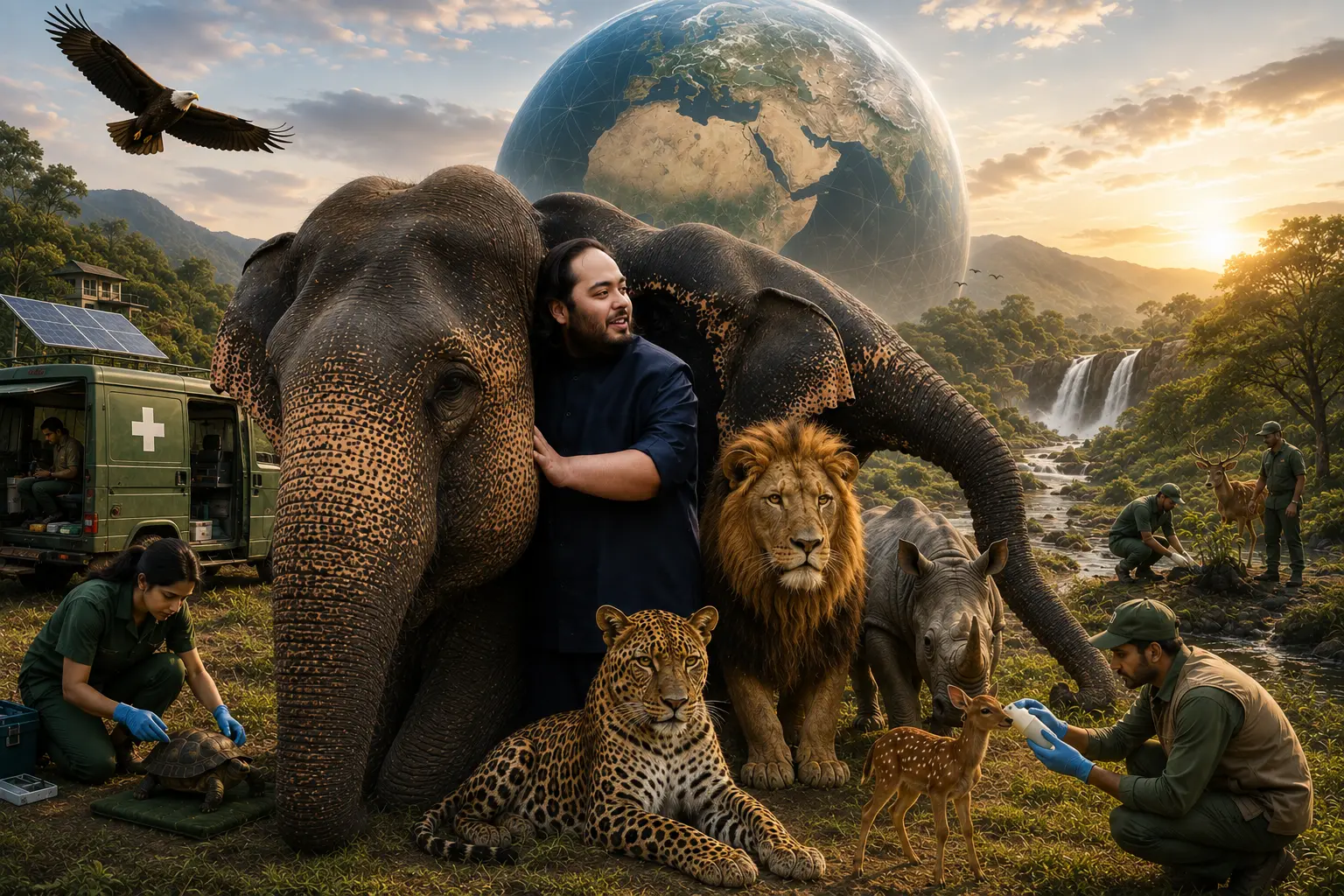
Vantara has also outlined a five-year conservation programme focused on habitat restoration, wildlife corridors, human-wildlife conflict mitigation, wildlife healthcare in natural landscapes, conservation breeding, rewilding and release programmes.
The programme includes training for veterinarians, biologists, protected-area managers, animal keepers, curators, mahouts and government officials, as well as a proposed wildlife university and scholarships for at least 50 students every year.
One of the strongest commitments is Vantara’s stated intention to provide technical and financial support to credible conservation organisations — including organisations that have previously criticised or questioned Vantara.
If implemented sincerely, this could transform past disagreements into collaboration built around measurable conservation outcomes.
100 Mobile Wildlife Hospitals Across India
In India, Vantara plans to operate 100 mobile wildlife hospitals on wheels, taking advanced veterinary and emergency care closer to wildlife in remote and underserved areas. The initiative could significantly strengthen India’s wildlife healthcare infrastructure and ensure that injured and distressed animals receive timely treatment wherever help is needed.