


Spain Train Crash That Killed 68 Sparks Protests and Calls for PM Sánchez to Resign
The CSR Journal Magazine

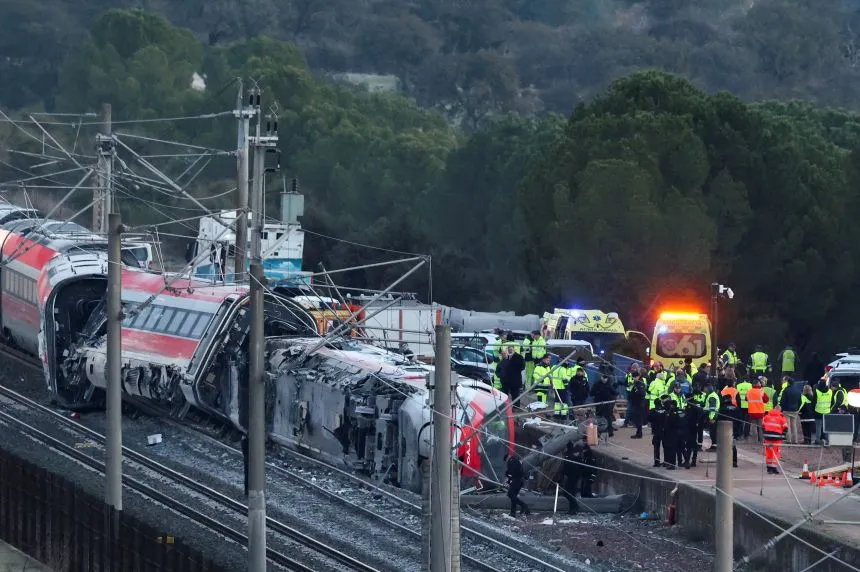
Approximately 1,500 individuals gathered outside the Spanish transport ministry in Madrid on Wednesday evening to protest against a tragic train accident in Toledo that resulted in 68 fatalities. The demonstrators expressed their anger by demanding the resignation of Prime Minister Pedro Sánchez and transport minister Óscar Puente, seeking accountability for the incident, as reported by the BBC. The unrest escalated when far-right demonstrators clashed with law enforcement, prompting the deployment of riot police.

Police forces resorted to using tear gas to disperse the crowds after protesters allegedly threw bottles and flares. The demonstration was reportedly organised by a union associated with the far-right Vox party, which called for protests outside the transport ministry. Fortunately, no injuries were reported during the unrest.

Details of the Train Crash

The incident on Wednesday marked Spain’s second significant train disaster of the year. Earlier in January, a collision between two trains in southern Spain claimed the lives of 46 people. The recent crash occurred when one train collided with another from behind, reportedly due to a failure in communication. Transport minister Puente stated that at approximately 8.30 am (local time), the automatic safety system of the Spanish railway ceased functioning.

In response, all trains in the affected region were halted, and operations were taken over by a control centre in Madrid, managed by the state-owned railway infrastructure company Adif. However, at around 8.36 am, an individual at the Adif control centre allegedly instructed a train operated by state-owned Renfe to continue its journey, despite a red signal indicating that another train was stationary further down the line.

The Renfe train subsequently travelled an additional 25 kilometres along a stretch where speeds of up to 200 kilometres per hour were permitted, before crashing into a stationary train operated by Iryo, a company controlled by Italy’s state-owned Ferrovie dello Stato. Minister Puente described the decision to allow the Renfe train to resume its journey as “inexplicable,” asserting that the train drivers bore no blame for the incident.

Political Reactions and Accountability

Puente emphasised that the train should never have been permitted to move while a “stop signal” remained active on the line. The political ramifications of the disaster have been significant, with opposition leader Núñez Feijóo acknowledging that the tragedy has prompted tough questions from the public that require answers. He stated that the government cannot ignore the concerns raised by the citizens.

In contrast, Vox leader Santiago Abascal launched a vehement critique of Sánchez shortly after the crash, expressing his outrage over the loss of life. He stated, “More dead. Another tragedy. More rage over being left to fend for ourselves, the despair and the betrayal that Spaniards are enduring.” This incident has reignited discussions regarding safety measures and accountability within Spain’s railway system.

The aftermath of the crash continues to unfold, with ongoing investigations aimed at uncovering the precise causes of the incident. As the nation mourns the loss of life, the calls for accountability and reform within the transport sector are likely to intensify in the coming days.

Long or Short, get news the way you like. No ads. No redirections. Download Newspin and Stay Alert, The CSR Journal Mobile app, for fast, crisp, clean updates!

App Store – https://apps.apple.com/in/app/newspin/id6746449540

Google Play Store – https://play.google.com/store/apps/details?id=com.inventifweb.newspin&pcampaignid=web_share

Latest News

Popular Videos
