


Trump Announces Full Withdrawal of US Troops from Iraq, Ending Two-Decade Military Presence
The CSR Journal Magazine

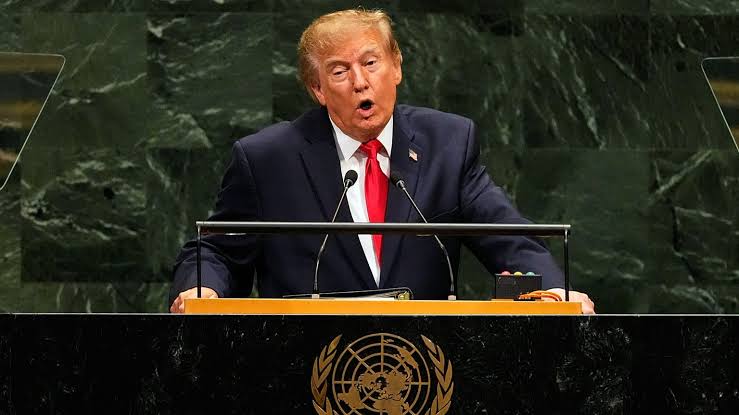
On October 1, 2026, President Donald Trump announced the departure of the last contingent of American soldiers from Iraq, officially concluding Operation Inherent Resolve. In his statement, Trump described this event as a significant victory not just for the United States but also for Iraq, emphasising the defeat of ISIS. He stated, “Today, I’m pleased to announce that the last American forces are leaving Iraq,” marking the end of more than two decades of military involvement.

Trump acknowledged the lengthy history of American presence in Iraq, starting with Operation Inherent Resolve in 2003 under President George W. Bush and continued through the administrations of Barack Obama and Joe Biden. He declared that this operation will officially conclude in 2026, asserting that this day represents a historic victory over ISIS, which he claimed has been completely defeated.

In a statement via social media, Trump referred to the quagmire in which the US became embroiled, suggesting that poor decision-making had led to the prolonged involvement. However, he asserted that it was now time for America to “go home” and that there was no longer a caliphate to fight.

Significance of the Withdrawal

President Trump highlighted the differences between the withdrawal from Iraq and the previous exit from Afghanistan in 2021, where significant military equipment was reportedly abandoned. He stated that the departure from Iraq was conducted in an organised manner, contrasting it with the chaotic withdrawal from Afghanistan that resulted in casualties. “I set a clear mission… I had a choice to stay or to leave, and felt, without question, that it was time for America to go home!” he remarked.

The withdrawal process was negotiated by the Biden administration, with a deadline set for September 30, 2023. Trump reinforced that this plan had continued under his administration, which successfully managed the logistics of the final departure. Prior to this, American troops had first left Iraq in 2011, after an eight-year military presence initiated by the invasion in 2003, only to return in 2014 due to the rise of ISIS.

Recent months had seen the US military consolidating its presence in northern Iraq, which has diminished ahead of this final withdrawal. Reports indicate that only a minimal US force remained in the region, particularly around Erbil, before the full exit took place.

Political Context and Future Challenges

The withdrawal from Iraq occurs within a complex regional security landscape, particularly in light of historical ties with Iran. Iraq’s government has long maintained connections with Iranian-backed Shiite militias, complicating its internal security dynamics. Reports suggest that these militias have resisted disarmament despite government efforts to assert state authority.

The Washington Post indicated that remaining US personnel are relocating to Jordan, where they will oversee ongoing operations against ISIS fighters. The Pentagon has expressed that operations launched from Jordan will continue to safeguard US personnel and interests in the region.

Iraq is planning to commemorate the US military exit with a series of “Sovereignty Days,” highlighting the significance of regaining operational control. Prime Minister Ali al-Zaidi has announced intentions for his government to strengthen its authority, including a commitment to disarm militias by June 2027. He has publicly asserted that the Iraqi state must maintain its role as the principal decision-maker in matters concerning peace and conflict.

Long or Short, get news the way you like. No ads. No redirections. Download Newspin and Stay Alert, The CSR Journal Mobile app, for fast, crisp, clean updates!

App Store –  https://apps.apple.com/in/app/newspin/id6746449540 

Google Play Store – https://play.google.com/store/apps/details?id=com.inventifweb.newspin&pcampaignid=web_share

Latest News

Popular Videos
