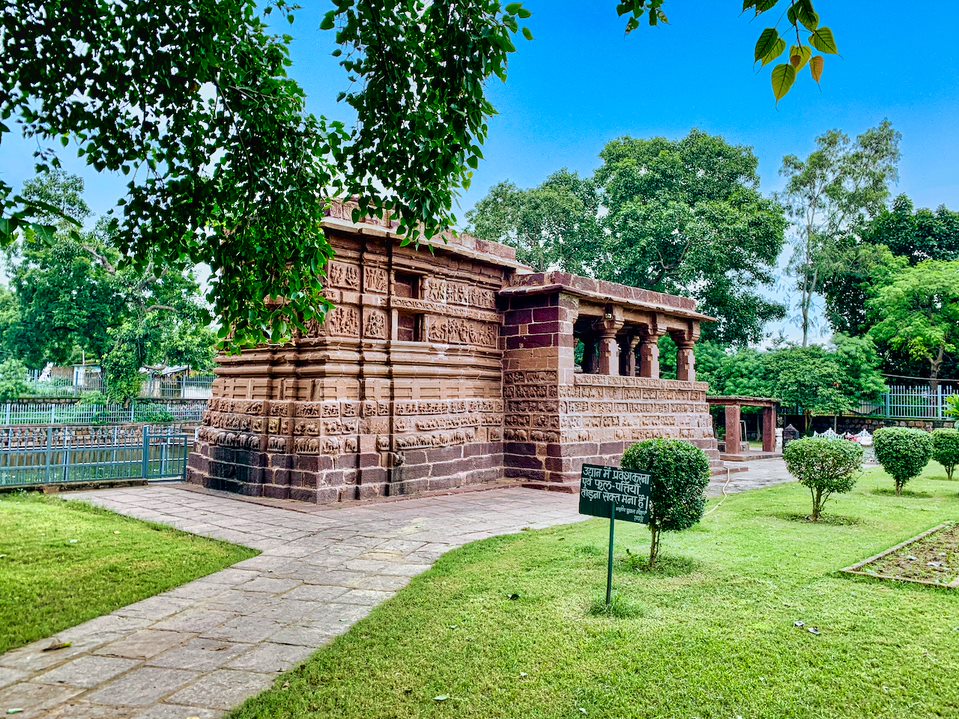
The ancient Deobaloda Mahadev temple located near Bhilai district in the state of Chhattisgarh is yet another example of the rich cultural history of the region that continues to intrigue and captivate people till date and inspires numerous legends surrounding it, preserved till date in the form of carvings and etchings in it. The temple architecture and sculptures reflect the artistic excellence of the time and provide a glimpse of the society that built it.
The Six-Month Temple
The main attraction of the temple is its unique history in the making. The locals call it Chhamasi Mandir or the Six-Month Temple. As per legend, this majestic structure was completed within six months. However, the one seen today is the result of excavations, as the shikhara or the tower was missing. What remains of the Deobaloda Mahadev temple complex is the sanctum and the pillared Navaranga mandapa in addition to the anachronistic shikhara that adheres to the nagara style.
The temple’s construction period is also shrouded in mystery. It has been conventionally attributed to the later Kalachuri era or the 13 th -14 th century AD. However, AH Longhurst, an early excavator of the site, believed it to be constructed in the early 11 th century AD. Either way, it predates the Kalachuri period, making it an important historical monument.
The Carver and the Woman in the Kalash
However, the most interesting legend pertains to the carver. He was so engrossed in his work that he lost track of time and space as he kept working on the temple. So intense was his concentration that he failed to notice that his clothes were tearing as well! It is said that he only realized that he was not dressed appropriately when he finally saw the woman bringing the kalash to the temple. Overcome with shame, he immediately plunged into the well nearby.
The woman in the kalash followed suit, and both of them disappeared into thin air, leaving behind the unfinished temple. While many of the details of this legend might have been exaggerated, the kund or the well has been retained till present times, and remains a prominent feature of the complex.
The Tale Beyond Stories and Legends
A walk around the temple complex unveils the real reason behind its fame. The carvings depict scenes of people and animals of that period, giving a true-to-life view of the daily activities and lifestyle of people of that time. Flanking the Shiva linga, carvings of animals, hunters, dancers, musicians, gods and goddesses including Shiva, Parvati, Ganesha, Vishnu, Mahishasuramardini, Bhairava, etc., have been etched on the walls.
It is this attention to detail that makes the Deobaloda Mahadev temple so special and unique. While most temples are dedicated to Gods and Goddesses, they also depict glimpses of history through the various symbols, carvings and even stories that are etched on them and then preserved for eternity. The hunters, the musicians, the dancer, all the everyday activities of people have been captured in rock and stone, to create one of the most spectacular temple complexes of its time.
The Unfinished Temple That Stands to This Day
Facing east, this sandstone mandapa or the hall is the last remaining structure of the ancient temple that has stood the test of time and continues to draw people till date. Apart from the intricate artwork adorning the temple, the complex also has ancient sculptures and a remarkable architectural style. The very fact that some parts of the temple were excavated and not constructed, adds mystery to this intriguing monument.
However, what makes the Deobaloda Mahadev temple so fascinating is that it provides two very different perspectives. The very existence of this temple complex speaks volumes about the rich artistic legacy, intricate craftsmanship and the attention to detail of the artisans of those times. Even today, the temple complex continues to intrigue historians who study the etchings and carvings on it so as to uncover more glimpses of the history. At the same time, the rich cultural heritage of the region has been preserved in the form of numerous legends like the one about the six-month temple, the carver and the woman in the kalash. Both history and legends are as fascinating as they are important, and complement each other in narrating the story of the Deobaloda Mahadev temple. After all, the temple complex may have stood the test of time, but the stories have been surviving it all along.