


Spanish Prime Minister Calls Snap Election Amid Housing Crisis
The CSR Journal Magazine

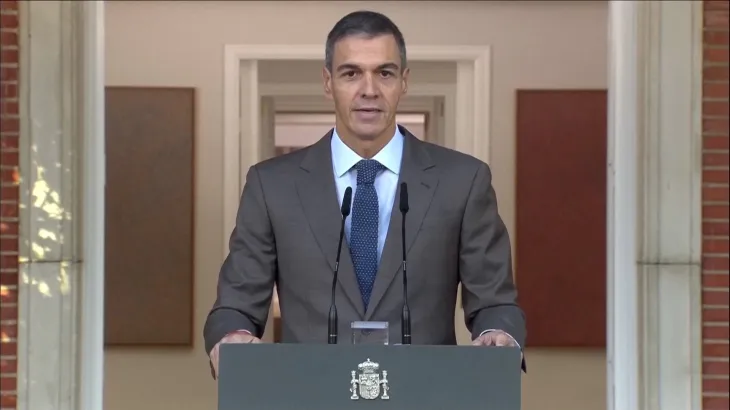
Spanish Prime Minister Pedro Sánchez has announced a snap general election scheduled for November 29. This decision comes in response to rising public discontent over increasing rents and the rejection of his government’s housing reforms. Sánchez, who has been in office since 2018 and has led a leftist minority administration since 2023, shared the news during a televised address. The election was declared just three days after right-wing parties dismissed emergency legislation aimed at alleviating Spain’s housing challenges. Originally, the election was anticipated to occur before the end of summer 2024.

Defining Choices for Voters

Sánchez framed the forthcoming election as a pivotal choice for the Spanish electorate: a decision to pursue a “broader progressive majority” in parliament versus allowing the establishment of the most right-leaning government since the dictatorship of Francisco Franco, which lasted until 1975. While acknowledging that his administration has faced challenges, Sánchez urged voters to express their preferences. In his televised remarks, he stated, “It’s up to you now,” highlighting global uncertainties and significant changes brought by technological advancements.

Sánchez illustrated the political landscape as a contest between progressive values and the conservative agenda. He emphasised that voters must consider whether they wish to embrace a far-right movement associated with regression or support a Spain that prioritises openness, social equity, and environmental responsibility.

Public Outcry Over Housing Issues

The decision to hold an early election stems from escalating frustration regarding elevated rents and housing insecurity among the public. Sánchez’s government had aimed to implement two significant decrees intended to enhance housing access, including a moratorium on evictions until 2030 and new rules governing temporary rentals. Nevertheless, these proposals faced outright rejection in Congress from the conservative People’s Party (PP), the far-right Vox party, and the right-leaning Catalan independence party Junts.

The PP, currently leading in opinion polls, contended that increasing construction rather than imposing regulations would be the more effective approach to resolving the housing crisis. The withdrawal of the housing measures prompted protests outside Congress, where demonstrators expressed their dissatisfaction with chants of “shame” and “Your profits; our misery.” The PP welcomed Sánchez’s decision to call the early election, asserting that it would allow Spaniards to take charge of the future direction of their country.

The surge in public sentiment around housing was significantly amplified following the eviction of 87-year-old Maricarmen Abascal from her Madrid residence, where she had lived for seventy years. Faced with an exorbitant 230 per cent rent increase from her new landlord, Abascal’s eviction catalysed widespread outrage, resulting in protests across the country. Tens of thousands gathered in various cities to demand immediate interventions on the housing crisis, with a reported 70,000 participants in Madrid and estimated numbers reaching 500,000 according to organisers.

Complications Surrounding Sánchez’s Administration

Polls indicate a consistent lead for the PP over Sánchez’s Spanish Socialist Workers’ Party, with Vox also gaining traction. In light of these dynamics, Sánchez is hoping that the housing crisis will become a central theme of the election campaign, persuading left-wing voters to mobilise in response to their frustrations over housing. The focus on housing could possibly detract from growing criticism regarding the government’s management of a significant crisis involving Spain’s North African enclave of Ceuta, where approximately 70,000 individuals crossed the border from Morocco within a short period.

Additionally, Sánchez’s administration has faced scrutiny regarding allegations of corruption over the last two years. In July, his brother was barred from holding public office for nine years due to administrative misconduct linked to his employment with a Socialist-led council. Furthermore, Sánchez’s wife is set to stand trial on various charges, including embezzlement. Both individuals have denied any improper conduct. Sánchez has claimed that his political adversaries have pursued a campaign to malign his family and undermine his government.

Long or Short, get news the way you like. No ads. No redirections. Download Newspin and Stay Alert, The CSR Journal Mobile app, for fast, crisp, clean updates!

App Store –  https://apps.apple.com/in/app/newspin/id6746449540 

Google Play Store – https://play.google.com/store/apps/details?id=com.inventifweb.newspin&pcampaignid=web_share

Latest News

Popular Videos
