


RBI’s New FEMA Regulations for Service Exports Start October 1
The CSR Journal Magazine

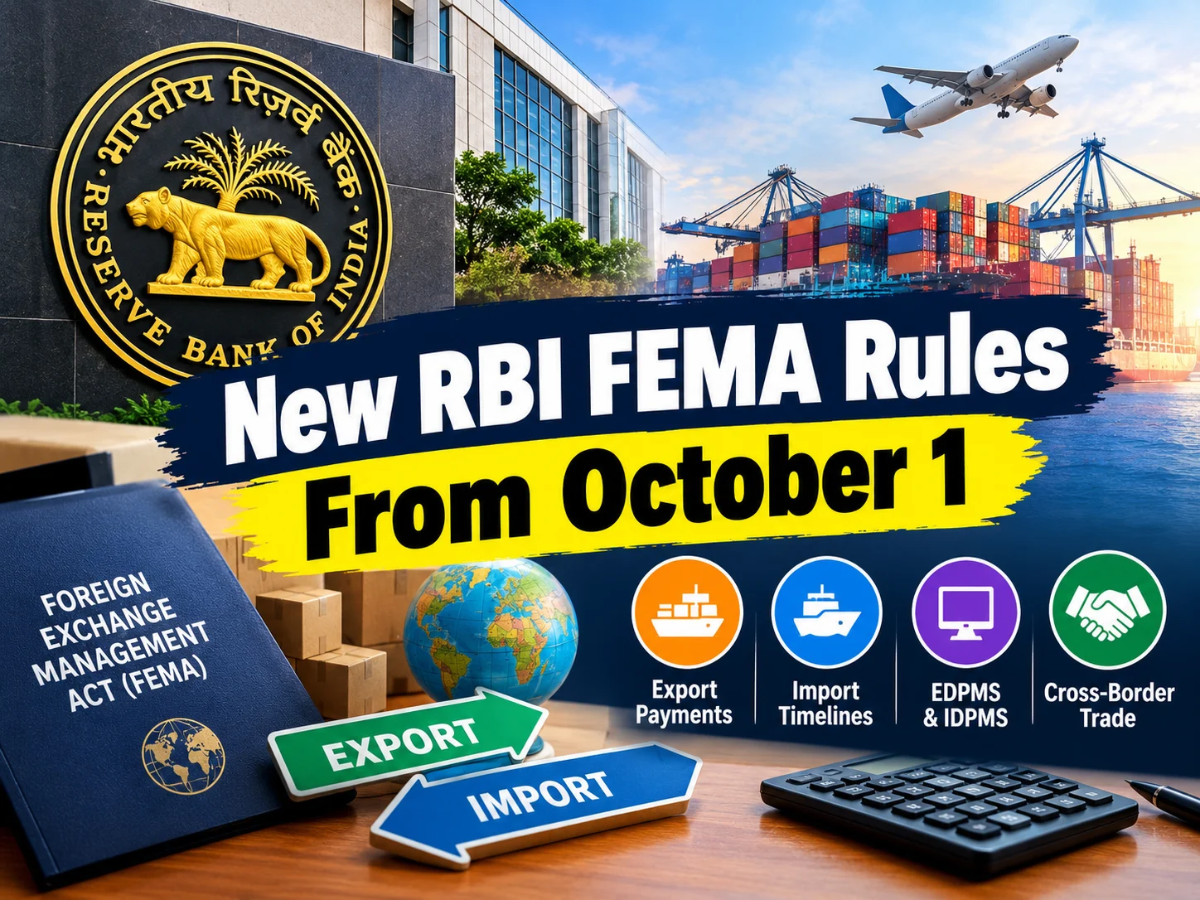
The Reserve Bank of India (RBI) has instituted new foreign exchange management rules that took effect on October 1, 2026. These regulations now encompass service exports under the Export Declaration Form (EDF) framework, impacting various professionals and organisations that provide services to overseas clients. This is particularly relevant for freelancers, IT firms, consultants, and software exporters.

The recent changes arise from the RBI’s new Foreign Exchange Management (Export and Import of Goods and Services) Regulations, 2026, which replaced the previous framework starting from the same date. This updated legislation includes provisions for both goods and service exports, with software classified alongside other services.

A significant aspect of the new rules is the mandatory requirement for service providers to file an EDF when exporting services. This means that any professional transmitting a service from India for a fee from a client abroad must declare the value of that service through this formal submission.

Who Is Required to File the EDF?

The EDF requirement applies to a broad spectrum of individuals and businesses engaged in service exports from India. This could involve a freelancer creating a website for an American client, an Indian IT company delivering software for a customer in the UK, or a consultant collaborating with an overseas firm. Furthermore, online tutors offering lessons to foreign students and business process outsourcing (BPO) service providers are also subject to this obligation.

It is essential for those exporting services and receiving payments in foreign currency to understand that these transactions now fall under the new reporting requirements. Consequently, invoices for overseas work must now comply with the foreign exchange reporting structure.

Freelancers and independent professionals must take note that the handling of international invoices has transitioned from being a straightforward process to one that necessitates additional compliance measures regarding foreign currency transactions.

Filing Deadlines for the EDF

The deadline for filing the EDF is interconnected with the invoice date. Exporters must submit the EDF within 30 days after the conclusion of the month in which the invoice was issued. For instance, if an exporter raises an invoice on October 12, the EDF must be filed by November 30. An invoice issued on October 20 shares the same deadline. Conversely, an invoice dated December 10 must have its EDF filed by January 30, 2027.

Exporters dealing with multiple clients within a month can consolidate their EDF filings into one submission, covering all transactions undertaken with those international clients.

After the EDF is filed, the process continues beyond submission. The EDF must be sent through the exporter’s authorised dealer (AD) bank or, for software exporters, through STPI or SEZ authorities. The bank assesses whether the reported value corresponds with the actual transaction, subsequently entering the details into the Export Data Processing and Monitoring System (EDPMS) used by the RBI.

Importance of the EDF for Exporters

The EDF serves as a crucial documentation tool that connects invoices issued with payments received from international clients. Mismatches in declared values may lead to complications during reconciliation processes. This is particularly pertinent for small businesses and freelancers without dedicated financial teams, as accurate matching of invoices and payments is essential.

Additionally, the framework establishes a timeline for realising export proceeds, which exporters typically have nine months from the invoice date to collect. In cases where exports are priced in Indian rupees, exporters have a year to receive payment. Adhering to these timelines is particularly relevant for engagements where clients may take extended periods to settle invoices.

For invoices amounting to Rs 10 lakh or less, the authorised dealer bank may validate the entry based on the exporter’s declaration of payment receipt. Exporters can also opt to submit quarterly summaries of service invoices, reducing administrative burdens.

Long or Short, get news the way you like. No ads. No redirections. Download Newspin and Stay Alert, The CSR Journal Mobile app, for fast, crisp, clean updates!

App Store –  https://apps.apple.com/in/app/newspin/id6746449540 

Google Play Store – https://play.google.com/store/apps/details?id=com.inventifweb.newspin&pcampaignid=web_share

Latest News

Popular Videos
