


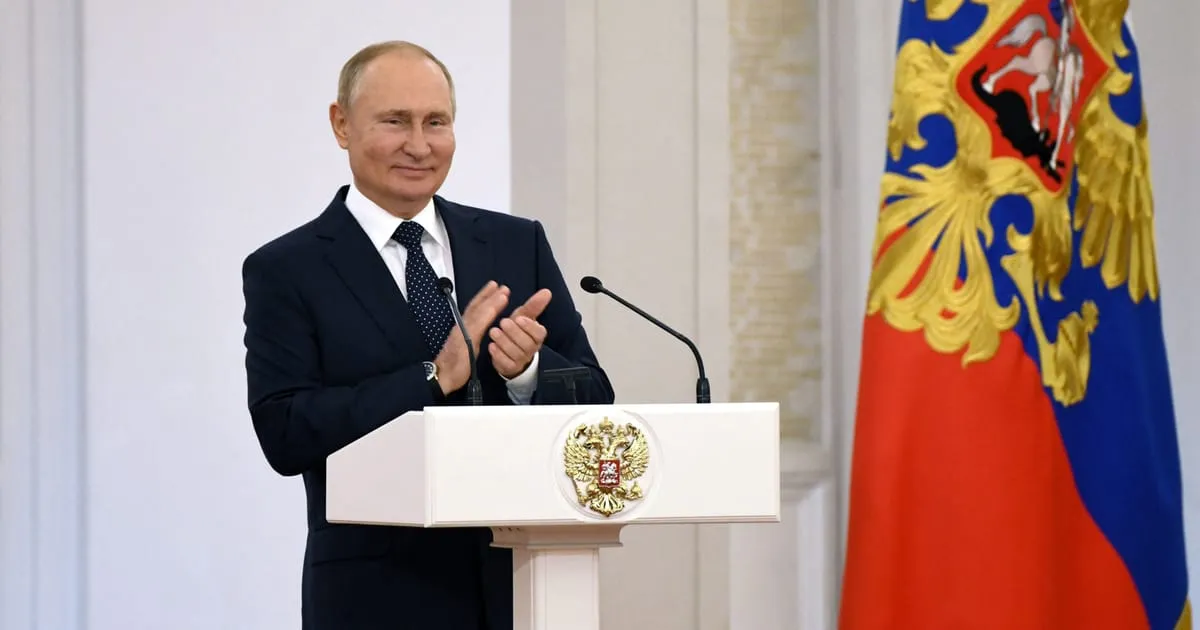

Putin’s United Russia Party Achieves Supermajority In Parliamentary Elections

The CSR Journal Magazine

Russian President Vladimir Putin’s United Russia party has achieved a supermajority in the recent parliamentary election, securing 355 of the 450 available seats in the State Duma, based on preliminary official results released after a tightly controlled three-day voting period. The elections marked the first parliamentary contest since the full-scale invasion of Ukraine by Russia in February 2022.

According to Ella Pamfilova, the head of the electoral commission, United Russia garnered 57.83 per cent of the votes, representing its largest share of seats in the Duma’s history and assuring its constitutional majority. The Kremlin has framed these results as indicative of a public consensus supporting Putin’s leadership and policies.

The reported voter turnout for the election exceeded 59 per cent, with Pamfilova asserting that the election was conducted securely, despite a significant drone attack from Ukraine that occurred on the final day of voting.

Party Standings and Implications

In addition to United Russia, other political parties also participated in the elections. The Communist Party finished in the second position, securing 40 seats, followed by the nationalist Liberal Democratic Party of Russia (LDPR) with 25 seats and the New People party with 20 seats. Just Russia obtained the remaining seats, but all four of these parties have shown significant support for the Kremlin during major policy decisions, including those related to the ongoing war in Ukraine.

The acquisition of 355 seats allows United Russia to surpass its previous record of 343, granting the party the capacity to propose constitutional amendments independently. Kremlin representatives have interpreted this achievement as a solidification of public support for Putin’s administration.

Moreover, 49 veterans of the ongoing conflict in Ukraine are reported to be entering the Duma as representatives of United Russia, further strengthening the party’s influence within the legislative body.

Yabloko’s Regional Progress and Broader Concerns

While the Yabloko party, known for its anti-war stance, did not secure any seats in the federal parliament, it managed to achieve a breakthrough in the Novgorod regional legislature. Yabloko received just over 6 per cent of the vote in that region, surpassing the five-percent threshold, with over 12,000 votes in its favour. However, the party was excluded from competing in the federal elections, with many of its candidates also barred from running in regional contests.

Criticism regarding the conduct of the elections has been voiced by Russia’s opposition and various Western governments. EU foreign policy chief Kaja Kallas commented on the suppression of dissent, while countries such as Britain, Australia, and Canada expressed disapproval regarding voting that occurred in areas of Ukraine under Russian occupation.

The Kremlin has dismissed these criticisms, standing by the legitimacy of the electoral process. Observers maintain that the environment surrounding the elections reflects a constrained political landscape for opposition parties and dissenting voices within Russia.

Long or Short, get news the way you like. No ads. No redirections. Download Newspin and Stay Alert, The CSR Journal Mobile app, for fast, crisp, clean updates!

App Store –  https://apps.apple.com/in/app/newspin/id6746449540 

Google Play Store – https://play.google.com/store/apps/details?id=com.inventifweb.newspin&pcampaignid=web_share

Latest News

Popular Videos